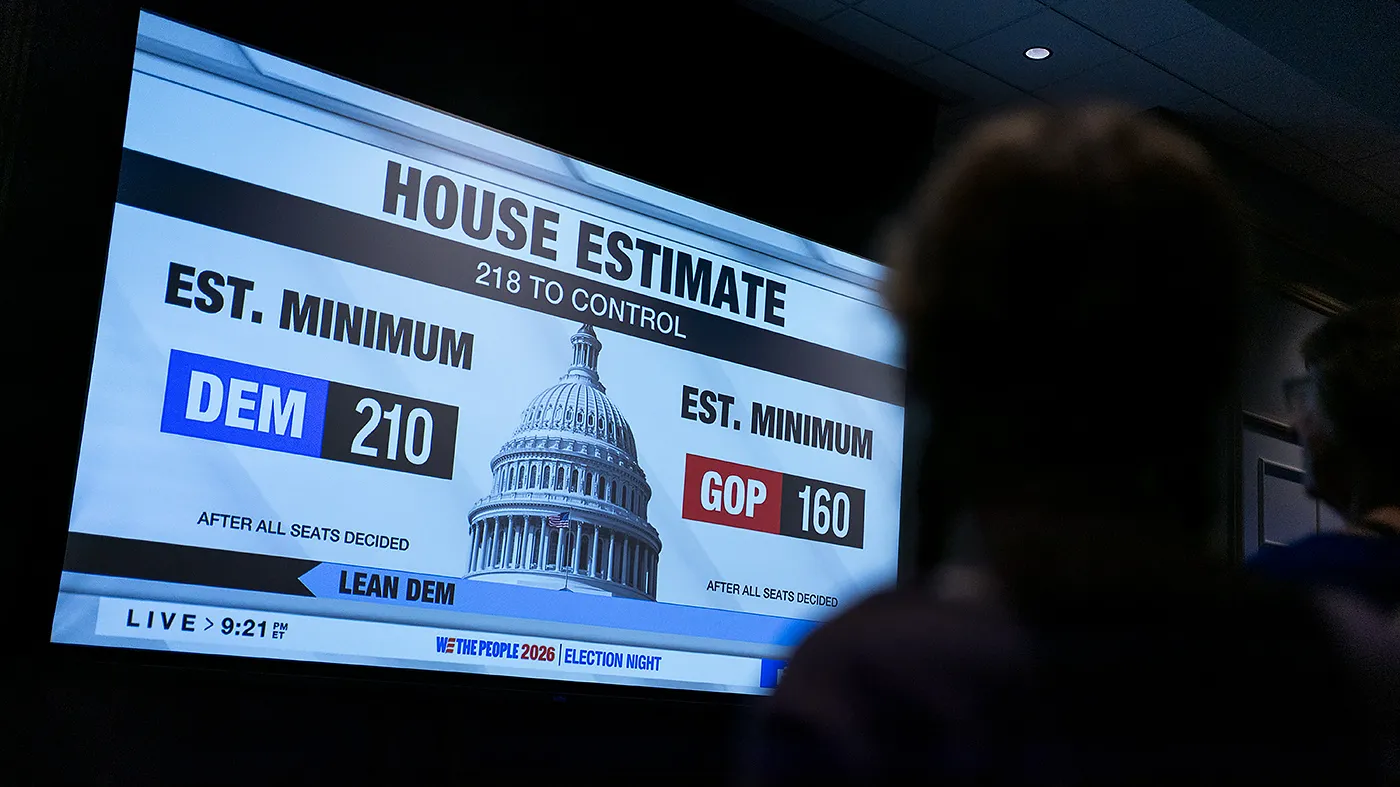
A dominant performance by Democrats in the midterm elections created a political earthquake, shifting the balance of power in Washington, D.C. But most of Tuesday's results were foretold in the hours before polls closed by online prediction markets.
Platforms, like Kalshi and Polymarket, have proven capable in recent election cycles of providing an increasingly accurate view into the public perception of likely political outcomes and current events.
They performed with impressive accuracy again on Tuesday, as traders poured billions of dollars into election markets at a time when the platforms face growing scrutiny from lawmakers about the dangers of insider trading and gambling addiction.
There is no way around it, the prediction markets seem to be highly accurate, said Ross Dahlke, an expert in computational social sciences and a professor at the University of Wisconsin-Madison.
The markets just react so quickly to new information in a way that a lot of traditional media is not set up to do, particularly with their concern over accuracy, fact-checking, for better or for worse, he added.
Democrats were expected to perform well on Tuesday, given widespread voter concern about the economy and war with Iran.
But the volume of trading on prediction markets this election cycle and the speed with which the platforms were able to correctly predict races was notable.
Many of Tuesday's key race results were being projected accurately on prediction market platforms hours before major TV networks, which use decision desk data and voter analysis to make race calls, declared winners.
Kalshi, one of the nation's most widely used prediction market platforms, said Wednesday its markets had correctly predicted 98 percent of House, Senate, governor, attorney general, lieutenant governor and secretary of state races.
The company said it compared market favorites at 5 p.m. EST shortly before the first polls closed in Indiana and Kentucky to races that have been called so far.
Background On Online Forecasting Platforms
Prediction markets allow participants to buy and sell contracts based on the outcome of future events, such as elections or economic indicators. Over the past decade, these platforms have gained mainstream attention and substantial financial backing from venture capitalists and retail traders alike.
Economists and data scientists often study these forecasting tools because they aggregate dispersed information from thousands of individual traders. This collective intelligence frequently translates into rapid price adjustments whenever new polling data or news breaks.
Regulatory bodies in the United States, including the Commodity Futures Trading Commission, have scrutinized event contracts due to concerns over election integrity and financial risk. Despite legal battles and strict oversight, platforms continue to expand their offerings into politics, pop culture, and macroeconomic trends.
How Midterm Outcomes Reshaped Congress
The midterm elections delivered a sweeping victory for the Democratic Party, altering the political landscape across the federal government. Voters headed to the polls amid fierce debates over inflation, federal spending, and international conflicts.
Lawmakers and political analysts spent election night tracking closely contested races across multiple states as early returns rolled in. The Democrats seize U.S. House control from Republicans in midterms shift marked a major turnaround for the legislative branch. Control of both congressional chambers determines the trajectory of federal legislation, committee chairmanships, and executive branch nominations for the remainder of the presidential term.
Supporters of the winning party celebrated major gains in competitive districts that previously favored the opposition. Campaign strategists noted that grassroots mobilization and economic anxiety played decisive roles in driving voter turnout across key swing states.