The death toll from a Russian attack during the ukraine school strike komyshuvakha has reached 40 people, marking one of the highest civilian death tolls of the war so far. Ukrainian president Volodymyr Zelensky said on Wednesday that dozens more people could still be buried in the rubble as rescuers continue to scour the site in southeastern Zaporihzhia.
When Vladimir Putin blitzed the building on Monday, civilians were arriving to collect much-needed supplies. After striking the school, Russian forces launched a second attack on a nearby shelter, with Zelensky branding the barbaric attack a double-tap strike.
Those killed in the devastation included two rescue workers and four police officers. The Ukrainian president stated that the rescue and recovery operation was extremely difficult and being carried out under virtually constant threat of new Russian strikes.
Around 59 people are still missing, local official Ivan Fedorov wrote on Telegram on Wednesday. Some bodies pulled from the rubble have been so badly damaged that they are yet to be identified, officials said.
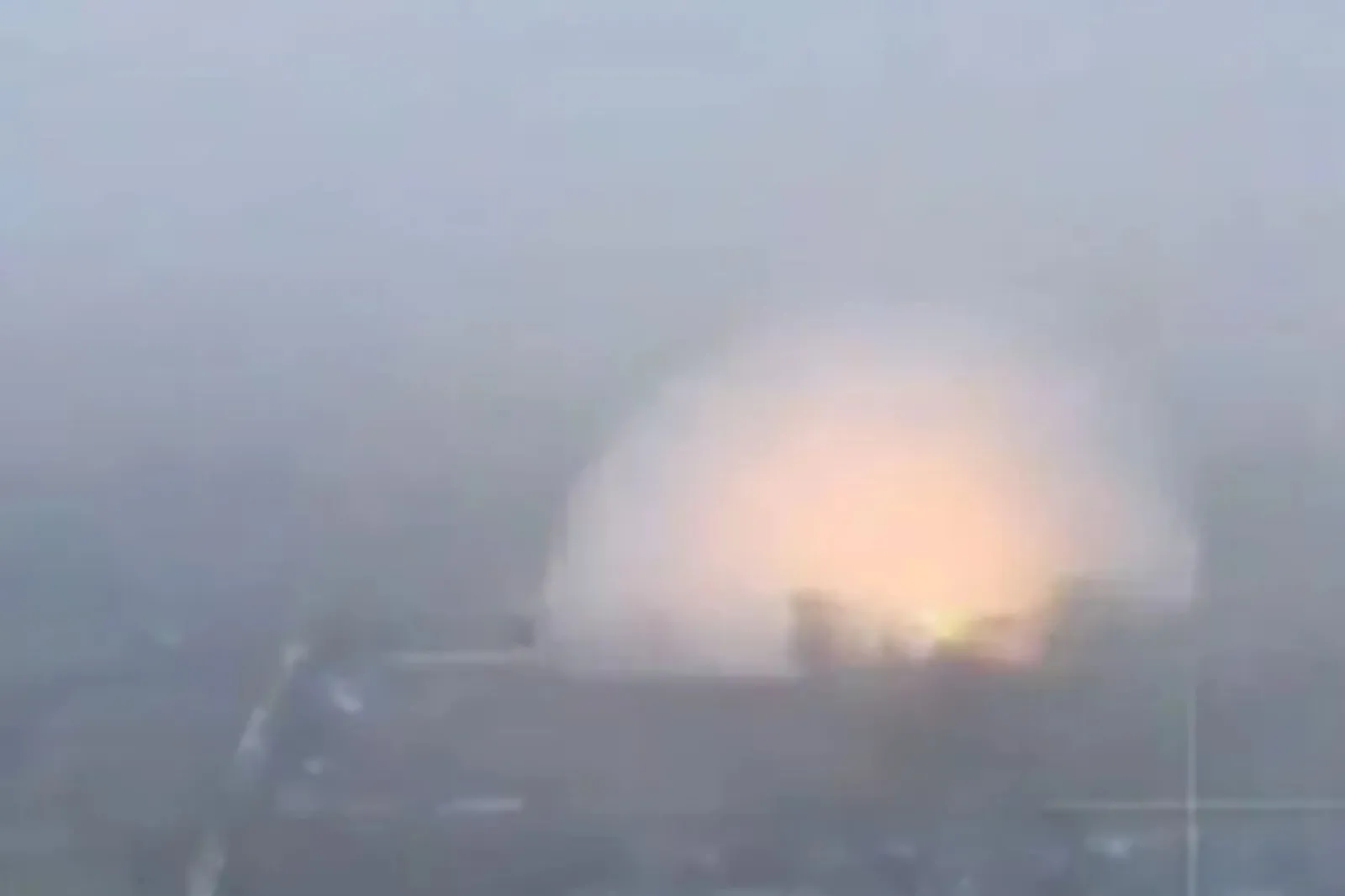
It comes as horrifying video revealed an explosion as part of the glide bomb attack on the school in Komyshuvakha, southeastern Zaporihzhia. Footage released by Russia showed an enormous fireball erupting as their forces blitzed the civilian hub.
At least nine 3,000kg aerial bombs blasted the village with terrifying force, regional governor Mykhailo Semikin said. The Ukrainian president raged on Wednesday that there had been very little reaction from the world to this insane attack.
He added that the incident, like thousands upon thousands of other war crimes Russia has committed against Ukraine and Ukrainians, demands a strong response. Evil always goes further if it is left unanswered, according to the head of state.
He slammed the blitz as a vile, terrorist strike, noting that the strikes targeted a school used for humanitarian purposes where people were receiving humanitarian aid. After the first aerial bomb strike, there was a double-tap strike with nine more bombs, specifically targeting the shelter where people were taking cover.
Body camera footage from one of the police officers killed revealed the panic after the school was struck as survivors scrambled to the shelter, which was then blitzed. Zelensky raged that the Russians could not have been unaware that every week residents who have remained in Komyshuvakha were receiving assistance aid right there.
This is yet further proof that Russia does not want any kind of de-escalation, any real justice, the Ukrainian leader stated. The World Central Kitchen charity, which delivers food and water to the community, confirmed the building was a humanitarian and administrative centre for locals.
Yuliya Stefanyuk, WCK response director for Ukraine, said that this strike hit a place where a community was organising help for its own residents. Russia claimed it was targeting Ukrainian military units during the operation.
It comes as Russian attacks triggered power and water outages for hours Wednesday across Kyiv and surrounding regions. Russia sent an enormous overnight assault of 310 drones, including 81 jet-powered drones, Ukraine's air force reported, many targeting civilian infrastructure.
Putin resumed strikes on the southern region of Kherson after a local ceasefire expired as outlined in prior updates on regional truces. Hopes of peace are fading ahead of a new round of US-brokered peace negotiations next week in Abu Dhabi following earlier announcements regarding diplomatic breakthroughs.
Humanitarian Operations at the Komyshuvakha School
Humanitarian operations at the Komyshuvakha school served as a vital lifeline for local residents trapped near frontlines in the Zaporihzhia region. Aid organisations such as World Central Kitchen used the facility to distribute food, water, and essential supplies to civilians who chose to remain in their homes despite ongoing hostilities.
Local administrators coordinated welfare programs from the building, turning the school into a civilian hub rather than a military installation. Residents relied on these scheduled distributions to secure basic survival provisions as regional supply chains collapsed under the weight of continuous military engagements.
Volunteers and municipal workers operated the center daily, welcoming vulnerable citizens seeking relief from harsh economic and physical conditions caused by the conflict. The presence of clear humanitarian markings and regular daytime crowds made the site widely known within the local community.
International aid groups have repeatedly emphasized the protected status of civilian relief structures under international humanitarian law. Relief coordinators document each delivery site to ensure transparency and to prevent military assets from being stationed near civilian operations.
The Mechanics of Glide Bomb Attacks in the Conflict
Glide bomb attacks have become a prominent feature of military operations in Ukraine, using modified munitions equipped with wings and guidance systems. These weapons allow aircraft to release heavy payloads from a distance, keeping warplanes outside the range of many short-range air defense systems.
The munitions deployed in Komyshuvakha weighed up to 3,000kg, carrying immense explosive power capable of destroying reinforced structures and deep underground shelters. When multiple heavy bombs strike a single location, the shockwaves cause structural collapses that trap occupants beneath heavy concrete debris.
Military analysts note that the deployment of guided glide bombs against civilian population centers creates catastrophic destruction compared to traditional artillery shellfire. The sheer mass of the ordnance generates massive fireballs and wide blast radiuses that endanger surrounding residential neighborhoods.
Emergency responders face extreme hazards when attempting to clear sites struck by heavy aerial weapons due to the risk of unexploded ordnance and subsequent secondary strikes. Specialized heavy machinery is often required to lift large concrete slabs during rescue operations.
Wider Infrastructure Assaults Across Ukrainian Regions
Wider infrastructure assaults across Ukrainian regions accompany military offensives, targeting power plants, water facilities, and transport networks. Recent aerial campaigns involved hundreds of drones and missiles aimed at degrading public services in major urban centers including Kyiv and surrounding districts.
Energy grids sustain heavy damage during mass drone barrages, leading to extended power outages that disrupt heating and water supplies for millions of residents. Utility crews work around the clock in hazardous conditions to repair damaged transformers and transmission lines following overnight bombardments.
Air defense units monitor incoming vectors for hundreds of loitering munitions, attempting to intercept threats before they reach populated areas. Jet-powered drones present unique interception challenges due to their higher speeds and complex flight paths compared to propeller-driven models.
Regional authorities issue frequent air raid alerts as aerial threats traverse multiple oblasts, urging civilians to remain in designated shelters until all clearance signals are verified by military command structures.
Diplomatic Efforts and Upcoming Negotiations
Diplomatic efforts and upcoming negotiations face severe setbacks following high-casualty incidents involving civilian infrastructure across the country. International intermediaries continue to facilitate talks between delegations in neutral venues such as Abu Dhabi, attempting to establish stable frameworks for future ceasefires.
Previous local ceasefires, including truces in southern sectors, demonstrated the temporary viability of localized truces but often collapsed as strategic imperatives shifted back to active combat operations. Negotiators grapple with deep-seated mistrust and conflicting territorial demands from both governments.
Foreign ministries coordinate diplomatic pressure through multilateral channels, urging restraint and adherence to international legal standards regarding the protection of non-combatants. Public statements from global leaders frequently address the humanitarian toll of ongoing hostilities as peace summits approach.
observers monitor the diplomatic calendar for signs of compromise, though recent escalations on the ground complicate efforts to achieve a lasting political settlement to the conflict.