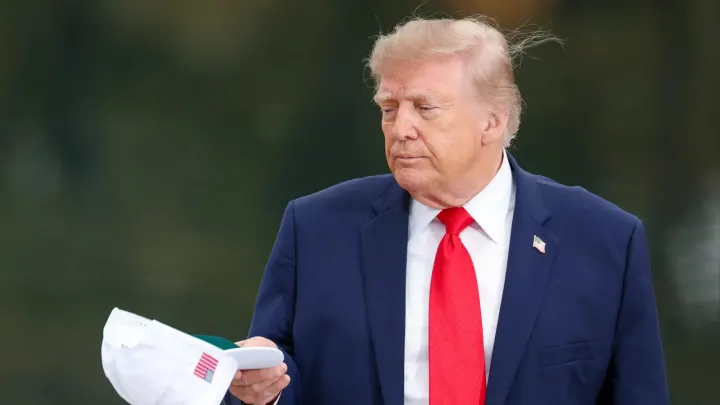
Democrats on Tuesday seized control of the United States House of Representatives, flipping the chamber after four years in the minority wilderness to usher in a new era of divided government, Decision Desk HQ projects. The change in power will have immediate repercussions for the workings of Washington next year, slamming the brakes on President Donald Trump's legislative agenda and setting the stage for countless clashes between the House and the White House over everything from immigration enforcement and government spending to Trump's global tariffs and the Iran war.
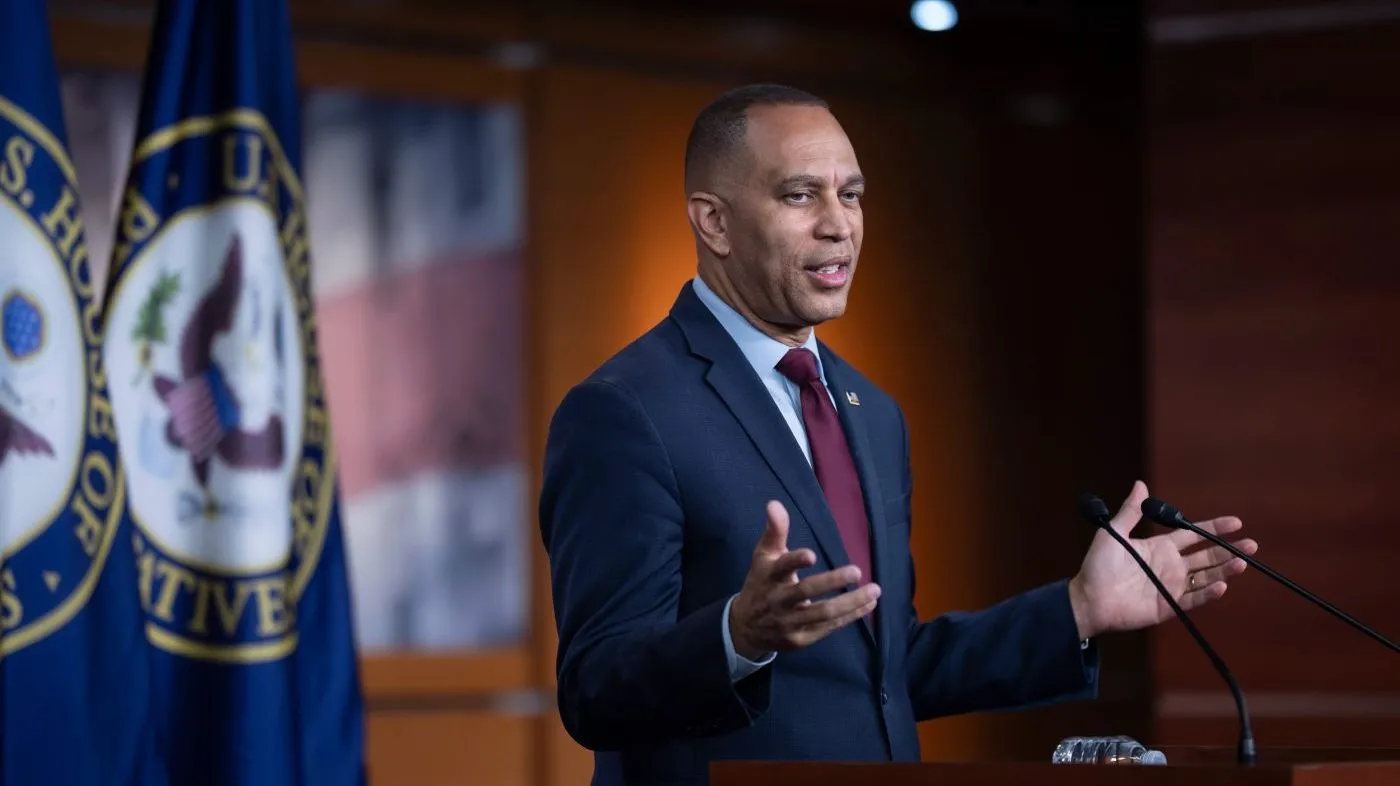
Democrats have vowed to launch an exhaustive list of investigations into Trump and his inner circle, featuring deep dives into the Jeffrey Epstein scandal; the violence that has accompanied Trump's deportation surge; and the president's personal and family finances, which have ballooned since his return to office last year. House Minority Leader Hakeem Jeffries, a Democrat from New York, who is expected to be the next Speaker, has said those investigations will begin immediately.
"Our promise to the country in the new Congress is that, beginning on Day 1, we're going to hold the crooks accountable," Jeffries said heading into the elections. Democrats have already started many of those probes in the current Congress, but they will escalate next year given the broad new authorities Democrats will have in the majority, including the powers to control the floor agenda, dictate committee hearings and issue subpoenas in seeking documents and witness testimony. Trump's Cabinet leaders and family members, Democrats say, will be high on the list.
Democrats are also readying an aggressive legislative agenda featuring efforts to bring down the high cost of consumer goods, for everything from groceries and gas to housing and healthcare. In the earliest weeks, that is likely to include legislation to restore the ObamaCare subsidies that expired in January and reverse the Medicaid cuts enacted by Republicans last year. Those bills are not expected to become law, since Trump will still be in the White House with his veto pen, but they could prove to be tough votes for vulnerable Republican lawmakers, and they will provide Democrats with a concrete policy track record heading into the 2028 elections.
The shift in power was not a surprise, as the midterm cycle is historically tough on the party that controls the White House, and the trend was only exacerbated this year by the volatility of the economy, an unpopular war in Iran and the high cost of living, which has dogged Trump's return to the White House. Heading into Election Day, the president's approval ratings were at historic lows, creating challenges for GOP candidates even in some districts Trump won easily just two years ago. Sensing a difficult environment, Trump and his allies had sought to cushion the Republicans' House majority by pressing Republican-led states to redraw their maps in favor of Republican candidates.
That effort allowed Republicans to pick up a few seats that otherwise would have gone to the Democrats, but it was not enough to insulate them from the wave of restive voters who appeared to treat the midterms as a referendum on Trump and an opportunity to put a check on the president's executive power. The Democrats' victory puts Jeffries in line to make history as the country's first Black Speaker, a vote that will take place on the House floor on Jan. 3. Immediately below Jeffries, the party's leadership roster is not likely to change, as Representative Katherine Clark of Massachusetts, the Democratic whip, is expected to remain the number two Democrat as majority leader, while Representative Pete Aguilar of California, the caucus chair, is expected to remain in the number three spot as the new whip.
Beyond that, the Democrats' ascension to the majority is likely to trigger a number of contested races for the lower rungs of the leadership ladder, including the caucus chair and vice chair positions, which will play an outsized role in communicating the Democrats' message heading into the 2028 elections. Democrats will confront their own unique challenges in the majority, and Jeffries, in particular, will face a delicate balancing act in navigating between the competing demands of progressive and socialist Democrats clamoring for a more aggressive response to the Trump administration and more moderate members from competitive districts who are wary of the party moving too far to the left. Across the aisle, the transition to the House minority forces Republicans to reassess their leadership and strategy heading into the next Congress.
Speaker Mike Johnson of Louisiana has indicated that he wants to remain the party's leader even in the minority, while House Majority Leader Steve Scalise of Louisiana and House Judiciary Committee Chair Jim Jordan of Ohio are both expected to launch bids for the minority leader role. The coming weeks will be critical for Republicans as they race to advance as much of Trump's agenda as possible before Democrats assume power. Key items on their list include the National Defense Authorization Act and legislation that would reauthorize funding for food and agricultural programs, on top of legislation to fund the government and prevent a federal shutdown in mid-December. Some Republicans also want to move a third reconciliation bill, a massive package of partisan priorities that would move on a special procedural track requiring no Democratic support, though it is unclear if there will be an appetite to remain in Washington to do that work after the Republicans' demoralizing losses on Tuesday.
Background on the United States House of Representatives and Midterm Elections
The United States House of Representatives serves as the lower chamber of the United States Congress, sharing legislative powers with the United States Senate. The chamber consists of 435 voting representatives, each elected from distinct congressional districts apportioned among the fifty states based on population. Members serve two-year terms, meaning the entire body faces election every two years. Midterm elections, which occur midway through a president's four-year term, historically result in the party holding the White House losing seats in Congress. Political scientists attribute this phenomenon to a combination of voter fatigue, a desire for checks and balances against the executive branch, and the mobilization of opposition voters. In the American political system, control of the House grants substantial power over federal spending, taxation, and the initiation of impeachment proceedings, alongside the authority to investigate executive branch agencies and presidential policies.
Understanding Divided Government and Congressional Investigations
A divided government occurs in the United States political system when one major political party controls the executive branch, represented by the presidency, while another party controls one or both chambers of the legislative branch. This institutional arrangement frequently results in legislative gridlock, where passing major federal laws requires bipartisan compromise or negotiations between congressional leaders and the president. When the opposition party takes control of the House of Representatives, it gains the power to chair powerful committees such as the House Judiciary Committee and the House Oversight Committee. These committees possess subpoena power, enabling them to compel testimony from federal officials, subpoena internal government documents, and launch high-profile investigations into executive branch operations, administrative decisions, and presidential conduct.
Leadership Structures in Congressional Politics
Congressional leadership structures dictate how each political party organizes its legislative strategy, manages floor debates, and communicates its policy goals to the American public. In the House of Representatives, the Speaker of the party in the majority acts as the presiding officer of the chamber, wielding significant influence over which bills reach the floor for a vote and committee assignments. Below the Speaker, parties elect a majority or minority leader and a whip, whose primary responsibility involves counting votes and ensuring party discipline among rank-and-file members. In the minority party, leaders coordinate the opposition strategy to challenge the governing majority's agenda, propose alternative legislation, and prepare their members for subsequent election cycles. Leadership elections often involve competitive internal caucuses where lawmakers weigh regional representation, ideological balance, and communication skills before selecting their official representatives.