Jubilant House Democrats celebrated their midterm rout on Tuesday night in Washington, reveling in the voters' resounding rejection of the reigning Republicans and vowing to escalate their battles with President Donald Trump just as soon as they take power in the earliest days of next year.
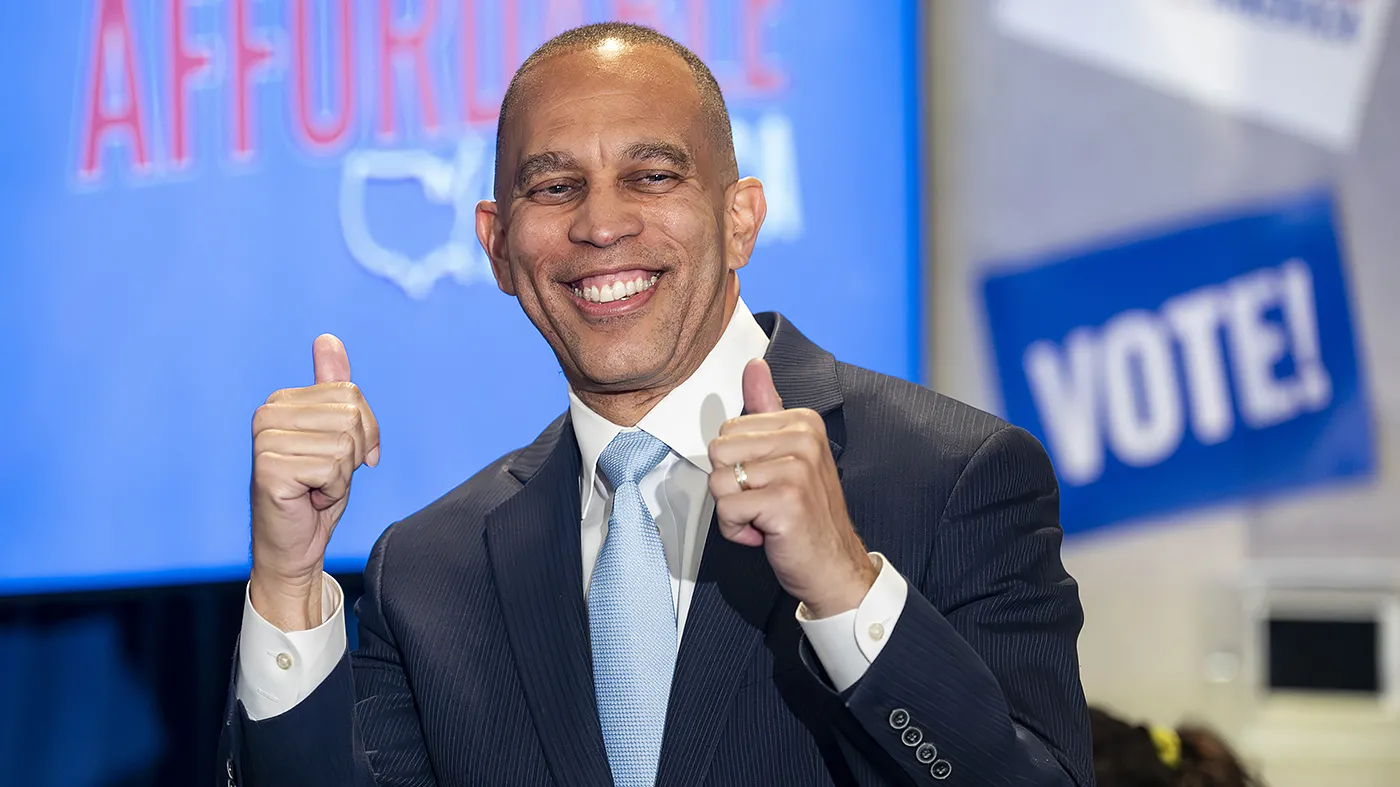
Gathered at the AC Hotel, a trendy Marriott property in the trendy Navy Yard section of Washington, House Minority Leader Hakeem Jeffries and other Democratic leaders portrayed the outcome as a repudiation of Trump's turbulent return to office. And they greeted the results with a level of exuberance that has been dormant over the past two years as they have roamed without much power in the minority wilderness.
"Today begins the great American comeback," Jeffries told the cheering crowd. "This is a change election, and we understand as House Democrats that we need to deliver dramatic change."
The Democrats' watch party, just a few blocks from the United States Capitol, was more subdued than those of cycles past, at least initially.
Throughout the day, Democratic operatives worked the phones in a final push to nudge battleground voters to the polls. Only after 8 p.m. did a few dozen young staffers turn their attention to the news networks broadcasting the returns. The bar was open, but almost no one was drinking.
That changed as the results began to trickle in, showing the momentum clearly shifting in the Democrats' favor.
Incumbents clung to seats in Florida and Ohio that were redistricted to knock them off. Challengers flipped GOP seats in Kentucky and North Carolina that Trump had carried by double digits. And inside the AC Hotel, the Democrats' anxious hopes shifted to open revelry on the news that restive voters were on track to put them in control of both chambers in the next Congress.
The wine began to flow freely.
Then, shortly after 9:30 p.m., CNN broadcast live from the event, and the room exploded. That was followed, at 10:05 p.m., by CNN's announcement that Democrats had seized House control. The chants began immediately: "Jeffries! Jeffries! Jeffries!"
The Democrats' victory was not a surprise.
Heading into Tuesday, polls, pundits and election handicappers predicted that Democrats would not only win, but win big. And Jeffries and other party leaders were publicly bullish that the House was theirs to lose.
Still, polls, pundits and election handicappers have been wrong before, and Democrats have burned themselves more than once over the last decade by undercounting Trump's supporters and overestimating their own.
Those disappointing showings have been at the front of Democrats' minds this year, and many of them have been treading cautiously into Tuesday, careful not to overpromise or take anything for granted. After voting in New York, Senate Minority Leader Charles Schumer summed up the sentiments of his party: "We are nauseously optimistic," he said.
The exuberant mood late Tuesday marked a dramatic shift for a party that has had little to celebrate through the first half of Trump's second term, when the majority Republicans powered through a host of their legislative priorities, most notably last year's massive package of tax cuts, Medicaid cuts and immigration enforcement funding, and Trump has operated virtually unchecked by the Republican-led Congress.
Many of those policies, however, appeared to backfire on the GOP on Tuesday. The Iran War has splintered Trump's MAGA coalition. His deportation surge has eliminated the gains he had made with Hispanic voters in 2024. His efforts to scale back race-based voting protections might have animated Black voters in key districts. His tariffs have alienated traditional free-market conservatives. And the increase in consumer costs during his term has angered many working-class populists who supported him in the past, including farmers who have been clobbered by Trump's trade wars and the spike in diesel fuel costs.
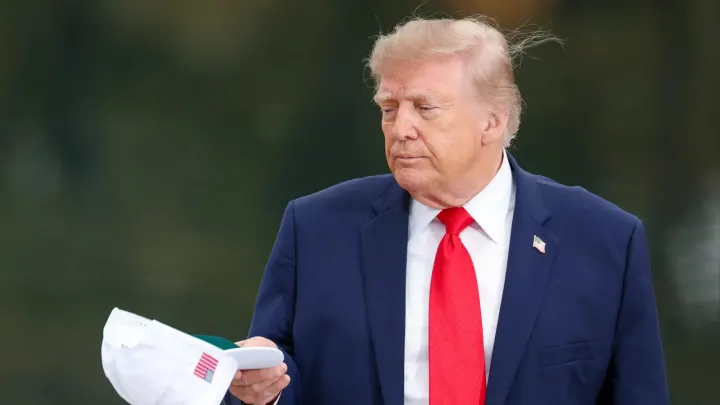
Trump, who was watching the returns from the White House, had hand-picked some of the GOP candidates who lost, particularly those in the Senate. The White House blamed the candidates for running lackluster campaigns.
The midterm wave marked a major victory for Jeffries, who rose to the top Democratic leadership spot four years ago but has come under fire this cycle from liberals who think he has done too little to push back against Trump. He has also had big shoes to fill, following the long reign of Representative Nancy Pelosi, a liberal icon and the first female Speaker in United States history.
But Jeffries was disciplined throughout the cycle, keeping his diverse caucus largely united in opposition to Trump's policy agenda, while fighting to ensure the focus of the campaign remained centered around the issue of affordability, a topic of universal interest that seemed to help Democrats up and down the ballot.
The Democrats' victory puts him in line to become the first Black Speaker in United States history, a vote that will take place on January 3. In that role, Jeffries will face his own challenges managing an ideologically diverse caucus. Tuesday's results, however, will give him a comfortable cushion with which to operate, eroding the leverage of the democratic socialists and other small blocs of lawmakers who might band together with designs to demand their priorities.
Background on United States Midterm Elections
Midterm elections in the United States take place halfway through a presidential four-year term. Voters decide all four hundred and thirty-five seats in the House of Representatives and approximately one-third of the one hundred seats in the United States Senate. These congressional elections often serve as a referendum on the sitting president and the performance of the governing political party in Washington.
Control of Congress determines which party holds committee chairmanships, dictates the legislative calendar, and possesses the power to advance or block presidential initiatives. Historically, the party holding the White House loses seats during midterm elections due to voter fatigue or frustration with economic and social conditions. Voter turnout in midterms typically trails presidential election years, though recent cycles have seen heightened participation across all major political groups.
Role of House Leadership and Party Dynamics
The Speaker of the House directs legislative activity, schedules votes, and acts as the political head of the majority party. Winning a majority requires securing at least two hundred and eighteen seats in the lower chamber of Congress. Party leaders must balance diverse ideological factions within their ranks, ranging from moderate lawmakers representing competitive districts to progressive members pushing for sweeping structural reforms.
Campaign strategies heavily focus on local economic issues, campaign finance fundraising, and grassroots voter mobilization. National committees provide financial backing and polling data to competitive congressional districts, while state parties handle local ballot access and early voting logistics. The outcome of these races shapes federal policy for the remainder of the presidential term and sets the stage for the next White House election cycle.