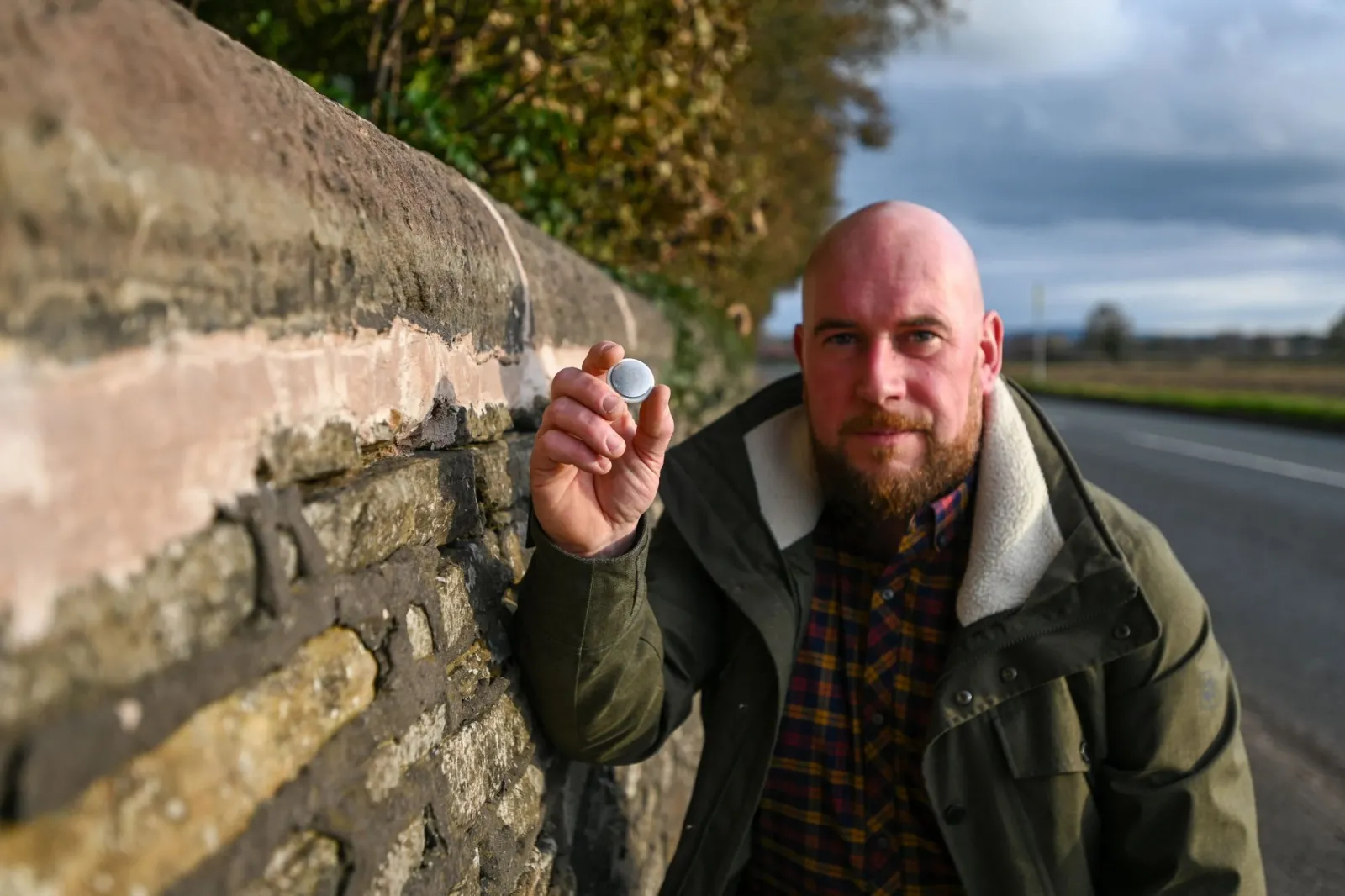
Villagers in Lancashire caught a thief stealing thousands of pounds worth of historic stones after crafty residents hid an Apple AirTag inside a 300-year-old boundary wall. People living in Holmeswood and Rufford experienced severe distress after 30 stones vanished from the mile-long structure connecting the two rural communities. When local law enforcement stated they could not help recover the missing property, furious villagers took matters into their own hands to track down the perpetrator.
How Villagers Tracked the Stolen Heritage Stones
Rufford and Holmeswood parish councillor Matt Smith devised a plan to catch the criminal by placing an Apple AirTag into one of the loose stones. The 43-year-old dad-of-two hoped the marked stone would be taken during a future raid and lead residents straight to the suspect. His strategy proved successful, bringing police officers directly to the back garden of Craig Barker, where authorities discovered a substantial amount of coping stones. Barker, 41, received a 12-month prison sentence suspended for 22 months following the investigation.
History of the Rufford and Holmeswood Wall
The targeted wall dates back to around 1730 and was originally constructed for the Grade-II listed Rufford New Hall. This grand property underwent conversion into a hospital during the 1900s before closing its doors permanently in the 1980s. Following the hospital closure, the building was refurbished, split in half, and transformed into luxury apartments while the surrounding estate experienced modern housing development. Today, the surviving historic structures remain deeply valued by local residents who take pride in their area's architectural heritage.
Timeline of the Lancashire Wall Thefts
Matt Smith, who operates a landscaping business in the area, noted that worried locals first realized stones were missing in May 2025. Over the subsequent months, two additional raids targeted the historic boundary wall in June and October of the same year. The parish councillor initially reached out to Lancashire Police, but officers explained they could not investigate due to a lack of CCTV coverage and forensic opportunities. Residents attempted to deter the criminal by erecting signs warning that the area was under surveillance, but the measures failed to stop the ongoing thefts.
Using Tracking Technology to Catch the Culprit
Following a third theft on October 4, the parish councillor asked the wall owner, outdoor maintenance firm Green Belt, for permission to attach a tracking device to a loose stone. On the morning of October 25, digital notifications on his phone revealed the marked stones had been taken overnight. He immediately contacted law enforcement regarding the precise location of the stolen property. The South Rural Task Force attended the property and recovered coping stones valued at approximately 7,000 pounds, alongside dozens of other stones from across the region that brought the estimated total value up to 40,000 pounds.
Legal Proceedings and Community Response
Four local farmers collected the recovered stones from the suspect's yard on the same day and transported them to police headquarters. Craig Barker subsequently faced charges of handling stolen goods and two counts of theft, entering not guilty pleas before changing them on May 19. Wigan Magistrates Court sentenced him last month, issuing a 22-month probation requirement and a 587 pound fine. Matt Smith expressed satisfaction that justice was served and thanked community members for their dedication throughout the ordeal.
Rebuilding the Historic Lancashire Wall
The parish councillor helped reinstall the recovered stones in December last year with assistance from Anthony James Construction. PC Sean Dalby of the South Rural Task Force noted that rural crime carries significant financial and emotional consequences for local communities. Mark Harrison, Head of Heritage Crime at Historic England, emphasized that protecting traditional stone walls helps maintain the distinctive character of the Lancashire region for future generations.