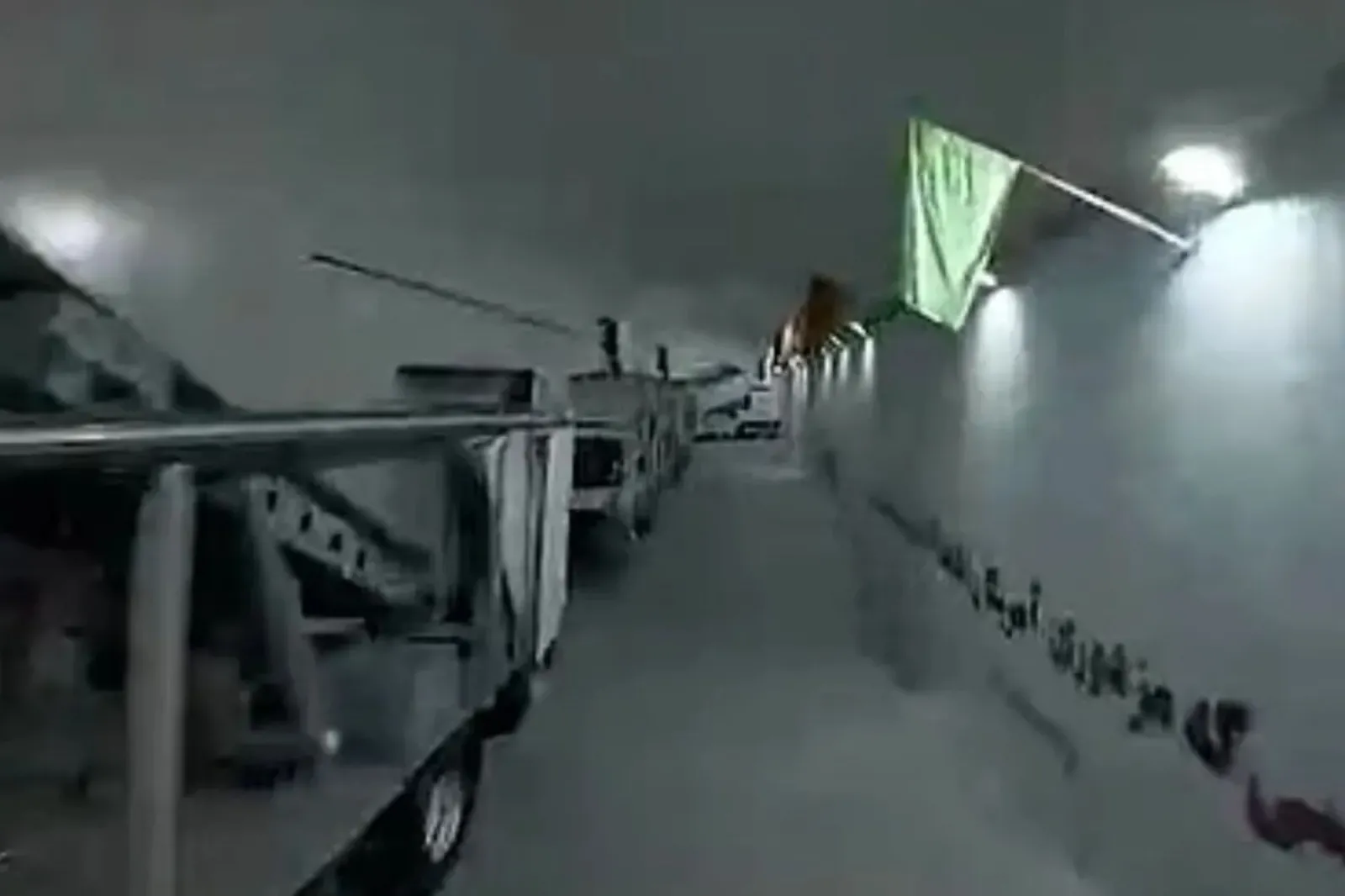
Iran has shared a chilling video of tunnels packed with missiles as United States President Donald Trump threatens the regime's notorious nuke-packed mountain hideout. Missile launchers can be seen lined up in the vast network of winding corridors, with Iranian flags adorning the walls in the menacing footage. The regime also released threatening videos of missiles blasting off in the desert, as fears grow that the US will resume large-scale strikes on the country.
Telegram Release Follows Secret Bombing Campaign Reports
Iran's Islamic Revolutionary Guard Corps (IRGC) shared the clips on Telegram after the Wall Street Journal revealed a secret bombing campaign by the US on Tuesday. And last week, the US reportedly told Gulf countries to get ready for a short, intense military campaign after today's midterm elections. Donald Trump also threatened to take aim at Iran's Pickaxe Mountain, the regime's key nuclear site. He told Fox News on Tuesday: "We bombed out all of their potential nuclear power. Now we might have to go after Pickaxe but that's not a big deal. We can do that in literally one hour, as soon as we want and anytime we want."
Changes To Israeli Financial Aid And Military Support
It comes as the US president declared he would stop sending £2.9billion of aid to Israel each year, saying that the country doesn't need the money. Donald Trump said: "Look, we give them $4 billion of things and money, and they don't need it. And I was approached by Bibi Netanyahu, and we've been talking about it for a couple of years because it's a lot of money." Israel believes Iran has moved thousands of uranium-enrichment centrifuges into tunnels deep inside Pickaxe Mountain, officials told the Wall Street Journal in July. The facility lies more than 300ft beneath Kolang Mountain. When asked what is going on beneath Pickaxe, Iran has said: "It's none of your business."
Military Assessments Of Iran Fortified Mountain Base
Experts say it could be more secure than any of the facilities struck by the US and Israel. Donald Trump insisted it would be easy to target the fortified mountain, saying Iran's defences had been left in a terrible state after US-Israeli blitzes earlier in the war. He said: "Their military is gone, their navy is gone, their air force is gone... They have some missiles but they don't have many and they have very little capacity to build more." In early September, the US president declared he might strike Iran's Pickaxe Mountain very soon after months of threatening to blitz site.
Strait Of Hormuz Strikes And Ongoing Regional Operations
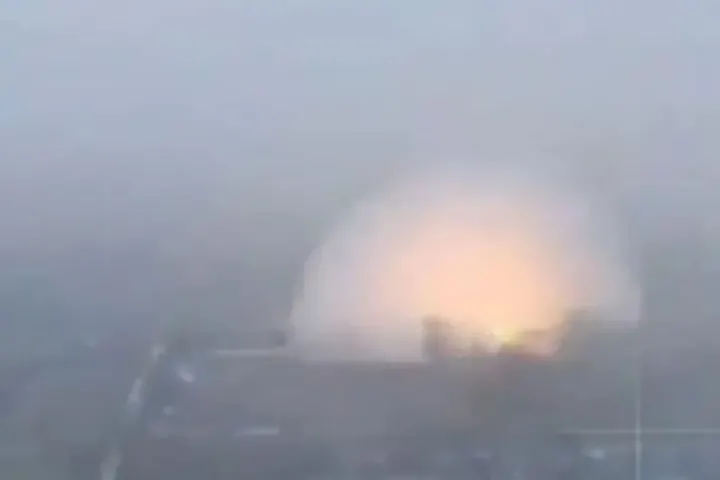
Donald Trump launched strikes on Iran just hours before today's US midterm elections, targeting a key island in the Strait of Hormuz. Washington officials also revealed they have secretly been blitzing the regime for weeks, reports say. Explosions rocked Qeshm island on Monday, just hours after Tehran shot at two US fighter jets, according to local media. The territory has been described as Iran's unsinkable aircraft carrier. It hosts an underground missile site, a naval base and a sprawling desalination plant in a strategic position in the Strait of Hormuz.
Background On The US-Iran Conflict
The geopolitical standoff between the United States and Iran has spanned decades, characterised by economic sanctions, proxy conflicts, and naval tensions in the Middle East, particularly around vital shipping lanes like the Strait of Hormuz. Following the 1979 Iranian Revolution, diplomatic ties between Washington and Tehran were severed, leading to an enduring cycle of hostility. In recent years, concerns over Iran's nuclear enrichment programme have escalated international anxieties, prompting extensive intelligence monitoring and covert operations by Western and allied intelligence agencies.
Details Of Pickaxe Mountain And Underground Facilities
Pickaxe Mountain, also referred to in relation to Kolang Mountain, represents a heavily fortified underground installation designed to withstand heavy conventional and bunker-busting munitions. Military engineers constructed these subterranean complexes deep within mountainous terrain to protect sensitive military hardware, ballistic missiles, and nuclear research infrastructure from aerial bombardments. The depth of these facilities, often hundreds of feet below solid rock, presents significant tactical challenges for military planners seeking to neutralise strategic assets without deploying ground troops.
Role Of The Islamic Revolutionary Guard Corps
The Islamic Revolutionary Guard Corps operates as a distinct branch of the Iranian armed forces, established following the 1979 revolution to protect the country's Islamic system. Distinct from the regular Iranian military, the IRGC holds substantial political and economic influence within the nation, overseeing Iran's ballistic missile arsenal and strategic naval operations in the Persian Gulf. Communications from the organisation are frequently disseminated through digital messaging platforms like Telegram to project military readiness and signal deterrence to foreign adversaries.