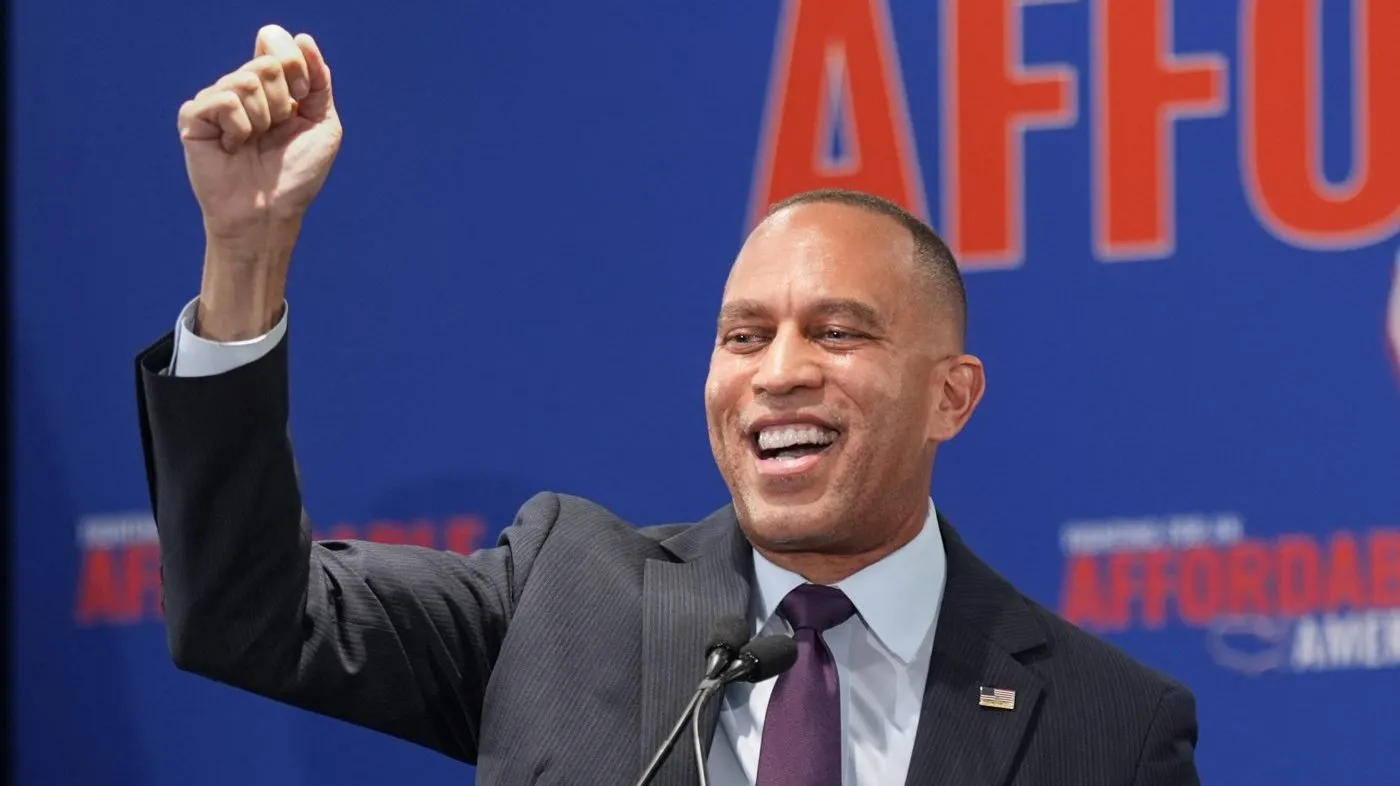
As Democrats prepare to take control of Congress in January, they are shaping a health care agenda that includes restoring Affordable Care Act tax credits, rolling back Medicaid cuts, and advancing Medicare for All. Reinstating the Affordable Care Act's enhanced premium tax credits, reversing the Trump administration's Medicaid cuts and even making progress toward Medicare for All are on the table as the party prepares for its new congressional majority.
While ObamaCare tax credits and Medicaid will be low hanging fruit in the party's legislative agenda, Democratic leaders will have to navigate tensions between progressives itching to pursue Medicare for All and moderates who want more incremental change. House Minority Leader Hakeem Jeffries (D-N.Y.), likely to be the next House speaker, outlined these priorities during a victory speech Tuesday.
“We're going to fight hard to make sure that we can ensure that every single American can afford to go see a doctor when they need one,” Jeffries said during the address. He added that the party will fight for hospitals, nursing homes, community-based health clinics, and the reversal of painful Medicaid cuts.
Passing legislation to lower costs will prove difficult without a 60-vote, filibuster-proof majority in the Senate. Attempts to roll back or even delay President Trump's sweeping Medicaid cuts will likely be met with a veto from the White House, assuming the bills clear Congress. Americans are facing a health care affordability crisis, and Democrats recognize a need to go bold to fix it.
Some new Democratic Senate winners from election night, such as Michigan's Abdul El-Sayed and Maine's Troy Jackson, are supporters of Medicare for All. When it became evident Tuesday night that Democrats were headed for a major takeover, Sen. Ed Markey (D-Mass.) wrote on social media, “WHO WANTS MEDICARE FOR ALL?”
Sen. Ron Wyden (D-Ore.), the top Democrat on the Finance Committee, said in a statement his panel will create a new foundation for America's health care system that Democrats get their health agenda ready ahead of takeover, gives Americans cheaper and better health care, and ends the corporate chokehold on our nation's health care system.
In the House, Rep. Frank Pallone Jr. (D-N.J.) launched a bid to chair the powerful Energy and Commerce Committee. Pallone stated that Democrats must relentlessly pursue an agenda that puts working people first and focuses on resolving the outrageous price increases making it impossible for families to make ends meet.
“Over the last two years, Republicans have driven up the cost of virtually everything and imposed the largest health care cuts in history - stripping health care from millions, forcing people to pay more for less, and shuttering hospitals,” Pallone said. He also pledged to advance policies that lower costs and expand access to quality and affordable health care.
Background On The Affordable Care Act And Medicaid
The Affordable Care Act, signed into law in March 2010, created marketplace health insurance exchanges and expanded Medicaid eligibility across participating states. Enhanced premium tax credits were later introduced through pandemic relief legislation to lower monthly insurance premiums for millions of enrollees. These credits significantly increased enrollment in marketplace plans by making coverage more affordable for middle- and low-income households.
Medicaid provides health coverage to millions of low-income Americans, including children, pregnant women, elderly adults, and people with disabilities. Federal funding rules and state-level administration dictate how programs operate, leading to ongoing policy debates over funding levels and eligibility requirements. Changes implemented by successive presidential administrations have frequently altered the scope of benefits and overall enrollment numbers across the country.
Congressional Dynamics And Legislative Challenges
Securing legislative changes in Washington requires navigating narrow margins in both the House of Representatives and the Senate. Because major legislation in the upper chamber typically requires sixty votes to overcome procedural hurdles, party leaders often rely on budget reconciliation or bipartisan compromises to advance priorities. These institutional rules shape how quickly lawmakers can move on high-profile promises related to medical coverage and prescription drug pricing.
Committee leadership positions play a central role in drafting and advancing health bills before they reach the full floor for a vote. Key panels such as the House Energy and Commerce Committee and the Senate Finance Committee hold jurisdiction over federal health programs, insurance regulations, and public health funding. Lawmakers vying for these chairmanships outline specific regulatory and legislative targets to satisfy their caucuses.