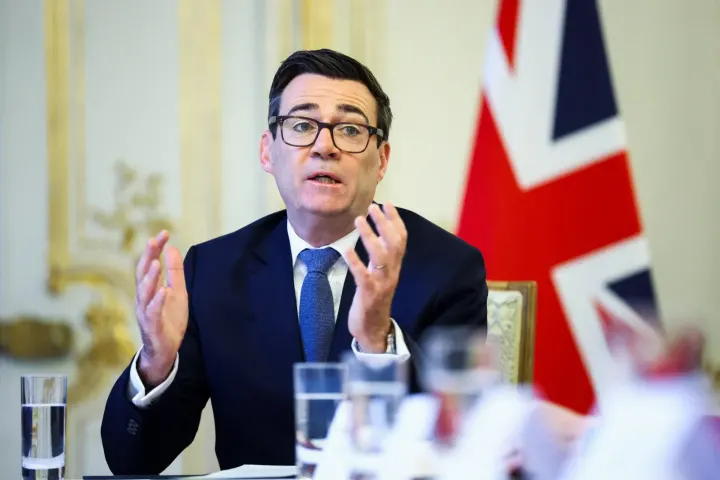
Brexit is back dominating British politics as Prime Minister Andy Burnham has just signed a new deal for closer ties with the European Union, but many in the Centre and Left of politics are now calling for him to go even further and reverse Brexit altogether. They want the Prime Minister to promise to start talks on rejoining the European Union in Labour's next election manifesto. But I would advocate caution, because haste could turn out to be a grave mistake.
The British public voted for Brexit in a referendum just a decade ago and Labour agreed to respect that vote. Reopening that debate risks opening up a Pandora's Box. Campaigners who want the United Kingdom to rejoin the European Union point to opinion polls which show the country no longer backs Brexit. But I am sceptical.
It is my judgement that, despite the polls, the electorate are not yet ready for even bolder moves to reintegration, in whatever form, with the European Union. It is worth remembering that a majority of our country voted for Brexit, despite overwhelming arguments that it would damage our economy. It was a vote based on emotion, not on spreadsheets.
People voted, in part, because they had an instinctive dislike of the bureaucracy of Brussels and a nostalgia for our history as a proud island nation. But don't get me wrong, we should congratulate those who have negotiated the deal announced on Friday, but a very heartfelt warning to take great care in presentation in the months and years ahead.
I do think Andy Burnham is right to try to have negotiated a better deal with the EU. The job of the prime minister is to get the best possible deal for our country and to put British interests first. The world has changed over the past decade.
Russia's war on Ukraine has now lasted longer than the First World War. The United Kingdom is quite rightly working with partners in Europe to put together the Coalition of the Willing to continue helping Ukraine. It is the moral cause of our time.
The urgency of this was highlighted by another meeting held this week, between Donald Trump, Vladimir Putin and Xi Jinping. It was a display of power designed to send a message to the world that these three men are in charge. That is why it matters that Andy Burnham was chairing his own meeting in Berlin this week which agreed to step up sanctions on Russia and provide vital aid to the Ukrainians as they face a brutally harsh winter ahead.
Our defence and security depends on collaboration and cross-border working with the EU. Europe is also our closest trading partner, and in this cost of living crisis we cannot afford to ignore that.
The war in Iran has sent prices here rocketing. The predicted rise in energy bills this January is eye-watering. Whilst we cannot immediately counter the impact from these global challenges, closer ties with those sharing common cause can go some way to protecting us from even worse outcomes.
Our trade with the EU has plummeted 20 per cent since Brexit. Despite this, the EU remains by far our largest trading partner, and in the uncertain world we are living in, it is just common sense to try and protect ourselves, and improve our relations with our nearest partners.
In order to make progress, the British government have changed the tone, and therefore the climate, in which talks have taken place. That is a good thing. With improved relations, modest agreements might be made which are of great benefit in the long run to us all.
Estimates vary, but over the years ahead a deal on food and agriculture could yield a £5 billion boost to Britain, whilst the Emmissions Trading Scheme could bring an additional £3.8 billion a year, twice that amount by 2040, according to the government. We are also expecting a youth exchange scheme which would allow up-to 100,000 young adults from Europe to temporarily live and work in the UK.
If the numbers are balanced by same number of Brits travelling abroad, this can be manageable. This is a similar scheme which has operated, for some years now with commonwealth countries. So, I believe that when it comes to security, trade and exercising influence on wider world events, the UK working together with partners in Europe is a no brainer.
However, my message to my friends in government is very simple. Steady as you go, but keep the British people with you. Politicians ignore voters at their peril!
Background on the European Union Referendum
The United Kingdom held a historic referendum on European Union membership on June 23, 2016. Voters were asked whether the United Kingdom should remain a member of the European Union or leave it. A total of 51.9 percent of participating voters chose to leave the bloc, setting off years of complex negotiations and political realignment across the country. The official departure took place on January 31, 2020, followed by a transition period that concluded at the end of that same year. Since then, the economic and political relationship between London and Brussels has remained a central theme in British elections and domestic policy debates.
Geopolitical Shifts and European Security
European security architecture has faced unprecedented strain following the escalation of regional conflicts and major international friction. The ongoing war in Ukraine has reshaped defense strategies across the continent, prompting nations to forge closer military and intelligence partnerships. Prime Minister Andy Burnham and other European leaders frequently convene in capitals such as Berlin to coordinate economic sanctions against aggressor states and organize humanitarian relief. These diplomatic efforts aim to stabilize regional security while addressing severe energy vulnerabilities stemming from global market disruptions and international trade shifts.
Economic Impact and Future Trade Agreements
British trade patterns experienced significant readjustments following the implementation of post-Brexit regulatory frameworks. The European Union continues to represent the primary destination for British exports and imports, despite a recorded decline in trade volume over the past decade. Government projections indicate that targeted sectoral arrangements, including potential pacts concerning agricultural goods and carbon pricing mechanisms, could generate billions of pounds for the national economy. Officials also anticipate implementing controlled mobility frameworks, such as youth exchange programs, to facilitate reciprocal travel opportunities for young adults across participating European nations.