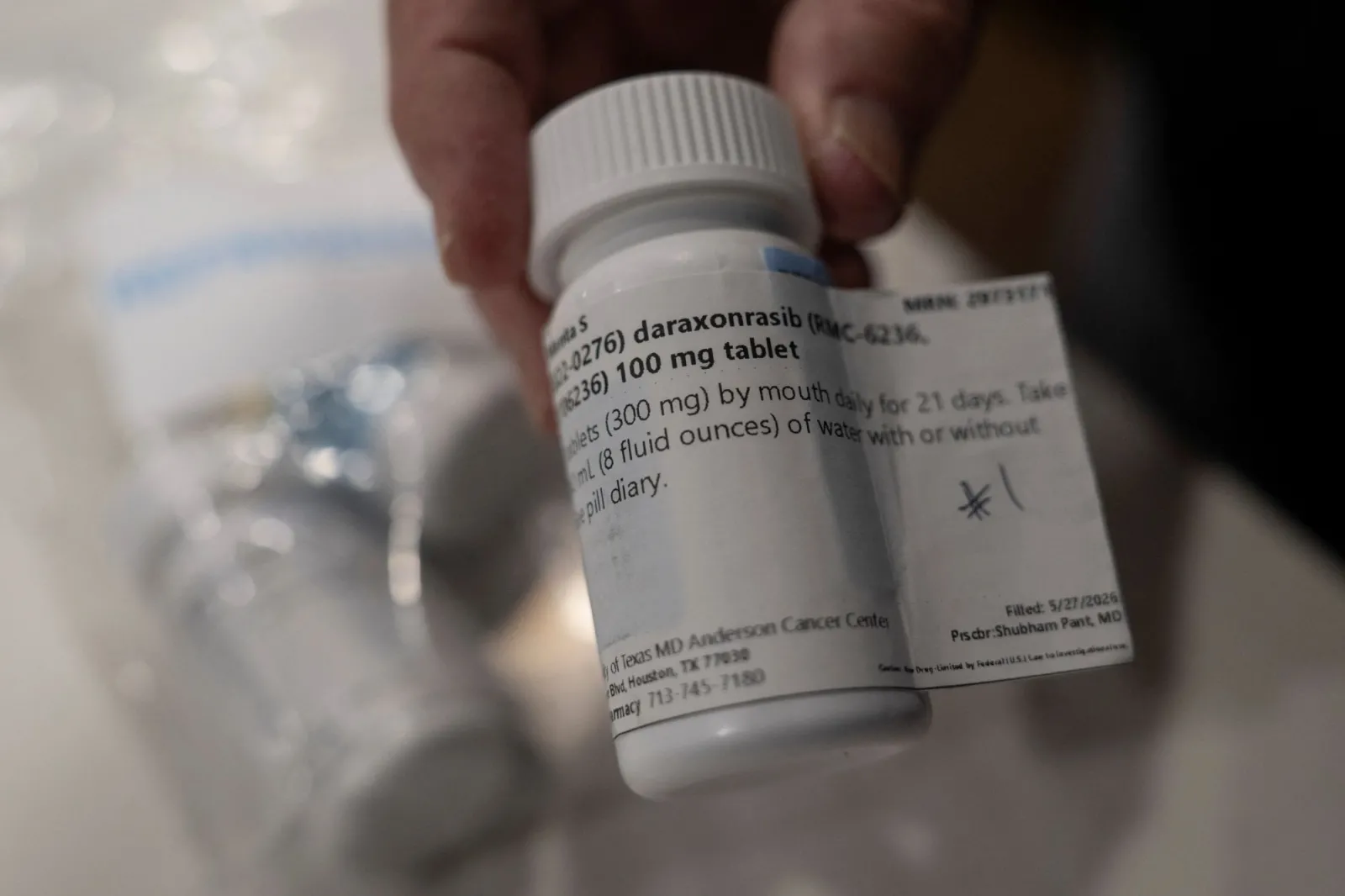
A novel daily medication for advanced pancreatic cancer has been praised as the closest thing to a cure following a clinical trial where it successfully eradicated all visible signs of the illness. Among the participants, one out of twelve individuals who received daraxonrasib alongside standard chemotherapy showed zero detectable tumours roughly a year and a half after undergoing the therapy.
This medication pairing also assisted a greater number of people in surviving past the one-year mark when evaluated against conventional treatment methods. Cancer Research UK chief executive Michelle Mitchell described the outcome as the most substantial advancement witnessed in decades for individuals battling the condition, providing genuine optimism for those confronting one of the most lethal and challenging malignancies.
Medical charities note that pancreatic cancer is widely considered the deadliest common cancer because over half of patients pass away within three months following their formal diagnosis. Common indicators such as abdominal discomfort, back pain, unexpected weight loss, and indigestion frequently get confused with less severe conditions, meaning the disease usually gets identified only at advanced stages.
Roughly 11,500 new cases get diagnosed annually across the United Kingdom, while 10,200 individuals lose their lives to the illness each year according to Cancer Research UK statistics. International headlines previously featured daraxonrasib in May after researchers discovered it nearly doubled survival time for patients suffering from aggressive and advanced forms of the disease compared to chemotherapy by itself.
The therapeutic pill also triggered fewer adverse side-effects, leading medical specialists to celebrate it as a major turning point in managing the condition. Daraxonrasib functions by attaching directly to the mutated KRAS gene, a genetic alteration present in over ninety percent of pancreatic tumours that continually prompts malignant cells to multiply.
Blocking this specific signal allows the medication to halt the further spread of tumours throughout the body. During the recent evaluation presented at the European Organisation For Research And Treatment Of Cancer gathering in Barcelona, tumours either shrank or vanished entirely in 60.7 percent of participants who received the daraxonrasib and chemotherapy combination.
Furthermore, 8.2 percent of trial participants exhibited completely undetectable tumours following a typical monitoring period of 18 months. Across all 61 individuals monitored over the course of a year and a half, tumour growth stopped in 90.2 percent of the cases.
One full year following the intervention, 76.6 percent of the participants remained alive, contrasting sharply with the roughly 40 to 45 percent survival rate typically observed among patients receiving only chemotherapy. For those whose disease eventually resumed growth or returned, the average timeframe before progression occurred reached 12.8 months.
Dr Wungki Park, an oncologist stationed at the Memorial Sloan Kettering Cancer Centre in New York who shared the data publicly, stated he had never previously witnessed such patient responses, characterizing the outcome as a massive breakthrough. He noted that in approximately one out of every twelve patients, the cancer vanished entirely, adding that with such extended monitoring periods the results represent a tangible reality.
When questioned about whether the patients with invisible tumours could be classified as cured, Dr Park replied that the outcome represents the closest thing to a complete remission. He emphasized that watching disease disappear on a computed tomography scan over an average span of 18 months is truly incredible.
Additional long-term survival statistics will emerge as the ongoing study progresses, though the current evidence confirms that the treatment successfully elevates one-year survival to 76.6 percent. Fewer than five percent of the trial participants chose to stop taking the medication, a discontinuation rate that experts consider notably low.
Dr Park explained that while malignancies frequently develop resistance to pharmaceutical interventions, the dual therapy approach delays that resistance as long as possible. Dr Madina Kara, who serves as head of research at Pancreatic Cancer UK, acknowledged that loved ones of patients would sacrifice anything for extra time given that half of individuals succumb within three months of diagnosis.
Although describing the research as a small initial study, she emphasized that these encouraging outcomes demonstrate how daraxonrasib and chemotherapy can function effectively together. The research team anticipates the conclusions of a larger clinical trial, noting that these insights contribute to a growing foundation of evidence that inspires hope.
Ms Mitchell added that these outcomes introduce the thrilling possibility that this breakthrough might eventually open doors for treating other malignancies driven by KRAS gene mutations. Additional clinical evaluations remain necessary prior to assessing this therapeutic approach for deployment across the National Health Service, and overall survival rates for the disease remain constrained.
Further investigation must determine how this pharmaceutical agent might integrate alongside alternative treatments to grant patients the highest probability of overcoming the illness.
Understanding Pancreatic Cancer Symptoms
Pancreatic cancer does not consistently generate noticeable signs during its initial developmental phases. As the malignancy expands and physical indications begin to manifest, these warnings can fluctuate and remain non-specific, complicating timely diagnosis according to Pancreatic Cancer UK.
Frequent indicators include indigestion involving a painful burning sensation in the chest paired with an unpleasant mouth taste, along with tummy or back discomfort that may begin as mild tenderness and intensify while lying flat while easing when leaning forward. Other signs involve diarrhea and constipation lasting beyond seven days alongside unexplained weight loss, as well as steatorrhoea marked by pale, oily, bulky stools possessing an unpleasant odour that float on water.
Patients also frequently experience substantial unintentional weight reduction and jaundice, which is characterized by yellowing of the skin and eyes alongside dark urine, pale bowel movements, and itchy skin.