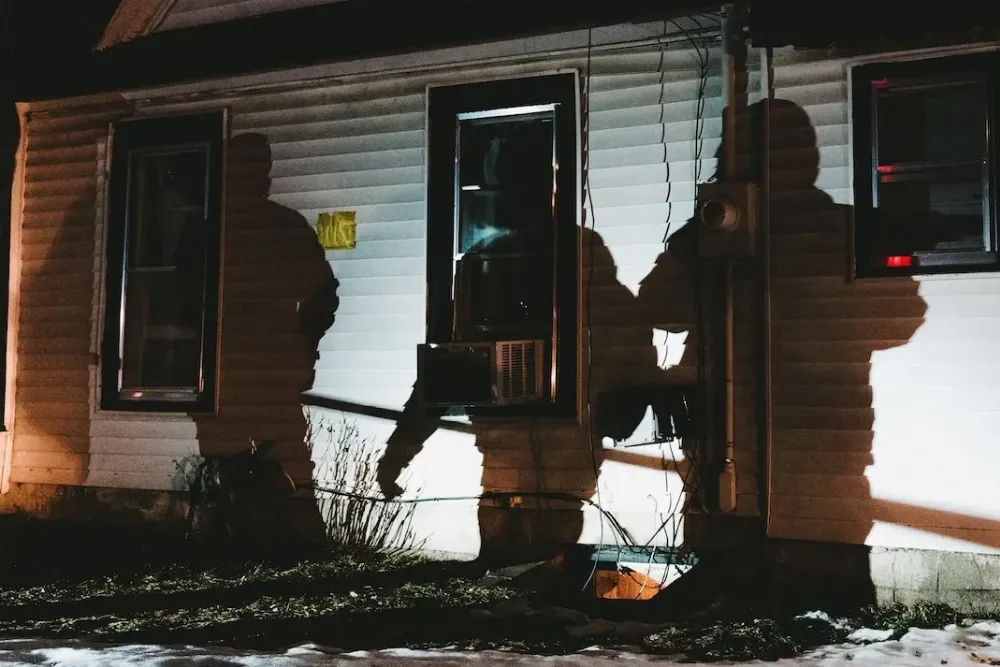
Oscar-winning documentary filmmaker Laura Poitras has released the short film "They're Here," which exposes the violent actions of U.S. Immigration and Customs Enforcement (ICE) during raids in Minneapolis in January 2024. The film, co-directed with Rachel Lauren Muller, mixes footage shot by Poitras and Muller with material supplied by activists on the ground after the deaths of Alex Pretti and Renée Good. Poitras describes the situation as a paramilitary occupation that created an effective war zone in the city.
ICE Raids in Minneapolis
In the weeks following the fatal shooting of Alex Pretti and Renée Good, ICE conducted a series of raids across Minneapolis. The short film documents a victim who barricaded himself inside a car trunk to reach his workplace and shows a volunteer resistance organization that tracks ICE activity through a citizen-fed counter-surveillance software system. Poitras says that the language used by ICE, terms like deportation, does not reflect the reality of the situation. She calls for the use of words such as execution, abduction, kidnapping, occupation and paramilitary force to describe the events accurately.
Citizen Counter-Surveillance
One of the film's key themes is the use of everyday technology by citizens to monitor ICE operations. Poitras believes that state powers must be aware that they are being watched and that this visibility will bring accountability. The footage captured by residents is presented as both a deterrent and evidence that can be used to expose the lack of accountability in the U.S. The filmmaker says, "There is a record that can be used both as a deterrent and as evidence and to tell the truth."
Language and Narrative
In an interview with Variety at the International Documentary Film Festival Amsterdam (IDFA), Poitras emphasized the importance of rejecting euphemistic language. She said, "We have to reject the euphemisms of the government to describe things. This was a paramilitary occupation of an American city that created an effective war zone." Muller, who lives in the neighborhood where the film was shot, added that helicopters were hovering, tanks were present, and people were being executed in broad daylight. She urged the use of stark terms such as execution, abduction and kidnapping to avoid capitulating to the government's narrative.
Visual Style and Influences
The film's aesthetic draws on dystopian cinema, borrowing elements from Alfonso Cuarón's "Children of Men" and RaMell Ross's "Nickel Boys." Poitras explains that the goal was to capture the horror of the raids while creating an uncanny distance that forces viewers to confront the abnormal reality unfolding in the United States. She said, "We're seeing so much violence, and we don't want to repeat it. How can we denormalize it and put the audience in a perspective of both fear and terror, but also a critical distance?"
Hope and Resistance
When asked whether the citizen-led efforts in Minneapolis inspired hope, Poitras responded that she is unsure if hope is the right word, but she believes resistance does have an impact. She also noted that the progressive victories in the U.S. mid-term elections were the result of years of groundwork and that such successes indicate a turning point in American politics.
Showcasing at IDFA
During her time at IDFA, Poitras presented "They're Here" to the festival jury and hosted an awards screening and Q&A for the documentary "You Can See Everything" by Lance Oppenheim and Nathan Fielder. She described the film as a 100 % documentary, emphasizing its ethical questions and the "chess match" between the filmmakers and their subjects. Poitras expressed excitement for the success of Oppenheim and Fielder's film, which she says is on track to surpass $100 million worldwide before the end of the month and could be a Best Picture nominee.
Impact on Documentary Education
According to Poitras, "They're Here" will be taught in film schools because it offers valuable lessons about documentary filmmaking. She sees the film as a tool that challenges viewers to question reality and the way it is captured on camera. Poitras concludes that the film's provocative nature will spark endless questions rather than provide definitive answers.
Background: Laura Poitras
Laura Poitras is an American documentary filmmaker best known for her 2008 feature "Citizenfour," which won an Academy Award for Best Documentary Feature and chronicled Edward Snowden's NSA whistleblowing. She has also explored the opioid crisis in "The Opioid Crisis: The Family's Story" and the Iraq war in "The Iraq War: The American Occupation." Poitras' work is characterized by a focus on civil liberties, government accountability and the use of technology in activism.
Background: Rachel Lauren Muller
Rachel Lauren Muller is a filmmaker and activist based in Minneapolis. She co-directed "They're Here" with Poitras and has lived in the neighborhood where the ICE raids occurred. Muller's involvement brings a local perspective to the film's coverage of the city's response to federal enforcement actions.
Background: ICE and Minneapolis
U.S. Immigration and Customs Enforcement (ICE) is a federal agency responsible for enforcing immigration laws and conducting investigations related to national security. In January 2024, ICE conducted a series of raids across Minneapolis, targeting individuals suspected of immigration violations. The raids followed the shooting deaths of Alex Pretti and Renée Good, which drew national attention to the agency's enforcement tactics.
Background: Citizen Counter-Surveillance
Citizen counter-surveillance refers to the use of publicly available technology, such as smartphones and open-source software, by ordinary people to monitor and document government or law-enforcement activity. In Minneapolis, activists developed a counter-surveillance platform that collects and shares real-time data on ICE raids, allowing residents to track the movements of federal agents and share evidence with the public.
What Happens Next
"They're Here" premiered at the International Documentary Film Festival Amsterdam (IDFA) and will continue to be screened at film festivals worldwide. Poitras plans to use the film to spark discussions about government accountability and the role of technology in resistance. The documentary is expected to influence academic curricula and inspire new filmmakers to explore the intersection of activism and documentary storytelling.