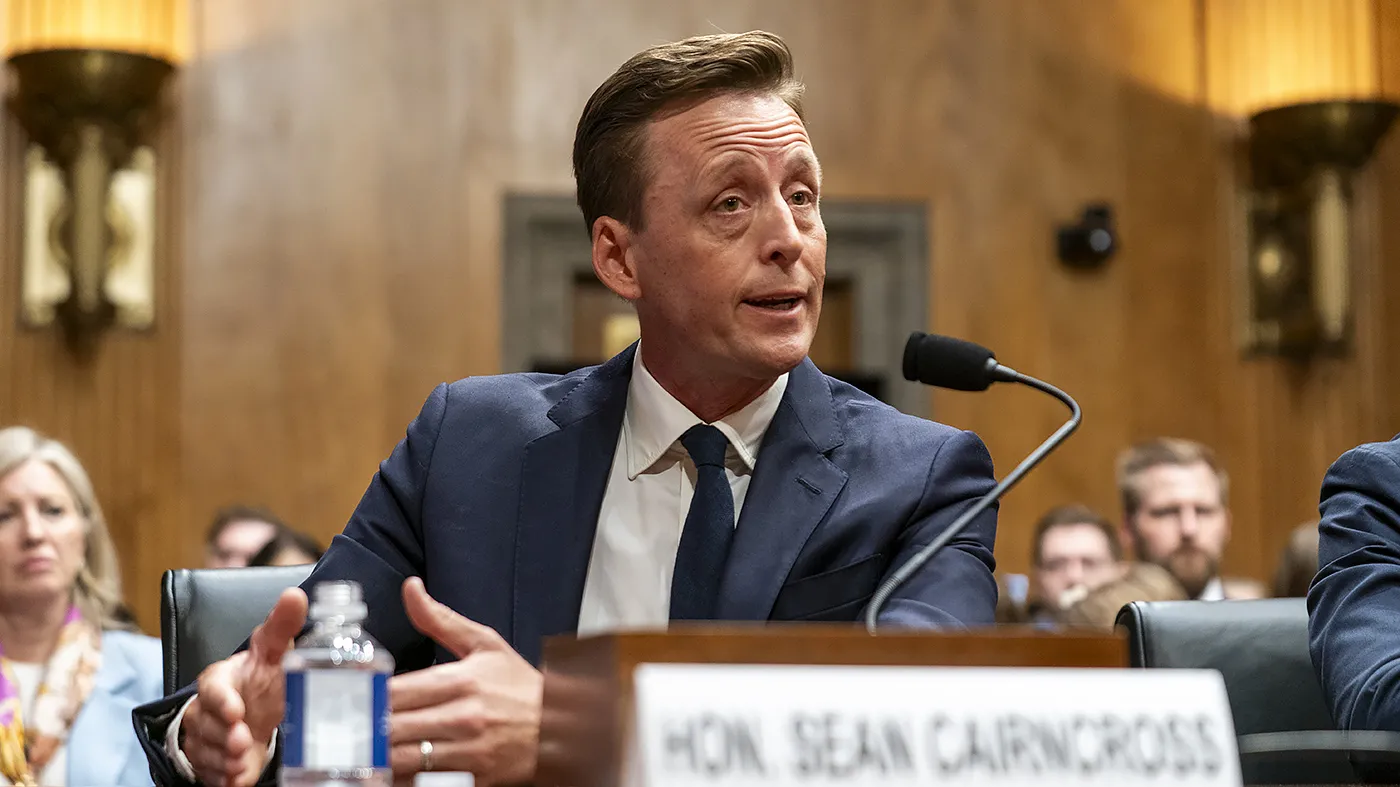
Trump Fires Cyber Director After Outages
President Trump announced the removal of Sean Cairncross from his position as National Cyber Director on Thursday, citing concerns about his cyber credentials. The decision came after a week of widespread system outages that affected banks, tech firms and aviation services across the United States.
White House officials said the dismissal was a response to the confusion and scrutiny that followed the outages, which prompted speculation about potential cyberattacks and an AI-related "doomsday" scenario. The timing of the decision sparked online discussion, though the White House did not confirm whether the outages directly caused the leadership change.
Sean Cairncross's Background
Cairncross had led the Office of the National Cyber Director (ONCD), the agency responsible for shaping cybersecurity policy and strategy across the federal government. Prior to his appointment, he served as chief of staff on National Security Council committees during President Trump's first term. From 2019 to 2021, he was an executive at the Millennium Challenge Corporation, a U.S. government agency that manages foreign aid programs.
Acting Director Kirsten Davies
Kirsten Davies, the Pentagon's chief information officer, has been named acting National Cyber Director. The White House said Davies has the necessary credentials for the role. Davies previously oversaw the Defense Department's cybersecurity and information technology strategy and has extensive experience in the cyber sector.
Context: System Outages and AI Concerns
The recent outages disrupted financial institutions, technology companies and airlines, raising questions about the resilience of critical infrastructure. Over the past year, advances in artificial intelligence have heightened concerns that AI could be weaponized by adversaries and hackers, prompting the federal government to prioritize cybersecurity. The ONCD's work has increasingly focused on how AI can be used to launch sophisticated attacks or manipulate information.
Internal Disagreements
Reports suggest that Cairncross clashed with other White House officials over cybersecurity priorities. He allegedly felt the Treasury Department had become too involved with the ONCD's efforts. Treasury Secretary Scott Bessent and his allies argued that Cairncross had not been urgent enough in addressing questions about AI, according to Axios, which first reported the departure.
Impact on Other Cyber Leadership Positions
Senator Thom Tillis (R-NC) announced he would not allow President Trump's nominee for director of the Cybersecurity and Infrastructure Agency (CISA) to advance, creating another gap in cyber leadership. Nick Anderson currently serves as CISA's acting director.
What This Means for Federal Cybersecurity
The removal of a senior cybersecurity official signals a shift in the Trump administration's approach to cyber policy. With Kirsten Davies stepping in, the ONCD will continue to coordinate federal cybersecurity strategy, but the leadership change may affect the agency's focus and priorities. The ongoing debate over AI's role in national security and the need for robust cyber defenses remain central to the administration's agenda.
Background: The Office of the National Cyber Director
The Office of the National Cyber Director was established to centralize federal cybersecurity policy and strategy. It works closely with other agencies, such as the Department of Homeland Security and the National Security Agency, to protect government networks and critical infrastructure. The ONCD also advises the President on cyber threats and coordinates responses to cyber incidents.
Future of Cyber Leadership
With Kirsten Davies as acting director, the ONCD will likely maintain its current initiatives while addressing the challenges posed by AI and emerging cyber threats. The administration's decision to remove Cairncross may influence how future appointments are evaluated, emphasizing technical expertise and crisis management skills. The White House's stance on cybersecurity will continue to be shaped by ongoing incidents and the evolving threat landscape.
Related Stories
For more on Trump's tech policies, see Trump Seeks White House Reset In Friday News Conference and Trump Urges Europe to Halt Ukraine Aid in Heated Call After Summit with Putin and Xi.