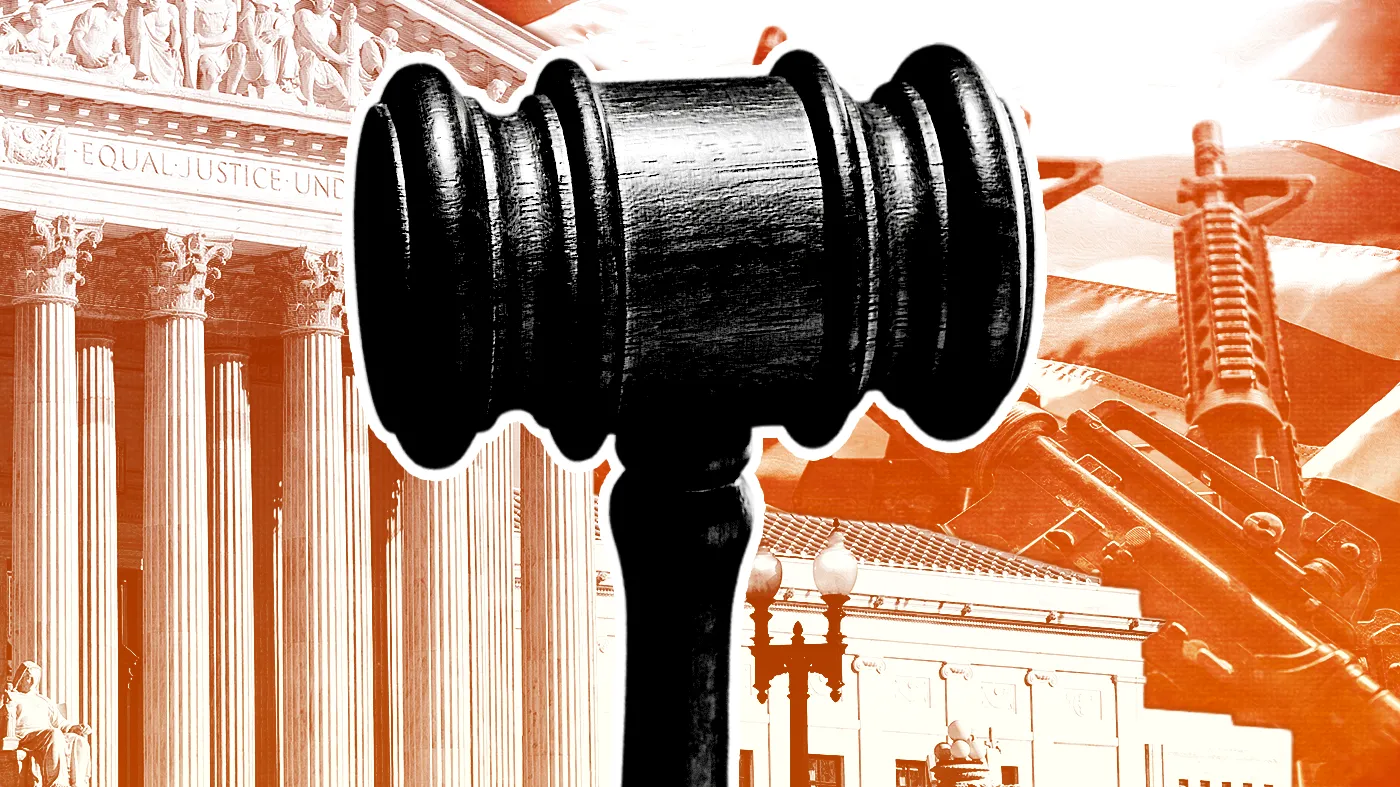
Supreme Court justices are hearing oral arguments Wednesday to determine whether bans on AR-15 rifles and other firearms enacted by Democratic-led states fall within the protections of the Second Amendment. Advocates on both sides of the gun control debate are preparing for a major legal clash as the high court weighs the constitutionality of these restrictions.
The Significance of the Second Amendment Case
Billy Clark, associate litigation director for Giffords Law Center to Prevent Gun Violence, described the litigation as the most important Second Amendment case in almost 20 years. Giffords and other gun control organizations hope to secure a victory despite facing a 6-3 conservative majority that has previously expanded Second Amendment rights. Gun control advocates aim to convince the justices that the AR-15, which is the most popular rifle in America, functions as a weapon of war that lawmakers maintain the right to regulate.
Legal Challenges from Chicago and Connecticut
The Supreme Court is reviewing challenges directed at bans passed in the Chicago area and Connecticut. Gun control groups note that those regulations resemble laws enacted in several other jurisdictions, including California, Delaware, Maryland, Massachusetts, New Jersey, New York, Rhode Island, Virginia, and Washington. The upcoming decision also stands to dictate whether Congress could ever revive the 1994 nationwide assault weapons ban.
Historical Tradition and Recent Supreme Court Rulings
That 1994 ban expired before the Supreme Court implemented recent expansions of gun rights, which included a 2022 decision requiring gun control measures to align with the historical tradition of firearm regulation that withstands the Second Amendment. That ruling has led judges to strike down an array of gun laws across the country and left Democrats attempting to fashion new ones. Billy Clark predicted the upcoming case could prove even more impactful over time by shaping the next decade of Second Amendment law and gun violence prevention.
Arguments Over Dangerous and Unusual Weapons
At the crux of the dispute is whether AR-15s qualify as dangerous and unusual weapons under legal standards. The Supreme Court has previously indicated such firearms can be regulated even under recent Second Amendment decisions. Gun rights groups argue that state laws still go too far by banning a rifle as popular as the AR-15, with tens of millions estimated in circulation across the nation.
Perspectives from Gun Rights Organizations
Bill Sack, senior director of legal operations at the Second Amendment Foundation, a gun rights group challenging the Chicago area ban before the justices, defended the utility of firearms. All weapons are supposed to be dangerous, right, because that represents their purpose, according to Bill Sack. If the government can ban weapons solely because they are dangerous, then the Second Amendment holds no teeth, he continued.
Debating Historical Quotations and Legal Precedent
Lawyers have also debated a recent New York Times report suggesting the late conservative Justice Antonin Scalia misquoted dangerous and unusual when he cemented the exception in a seminal 2008 Second Amendment decision. Justice Antonin Scalia was invoking influential 18th-century English jurist William Blackstone, whom the Times reported had actually said dangerous or unusual rather than using the word and. Conservative lawyers dispute that Justice Antonin Scalia made a historical error, and Bill Sack stated his understanding that the history includes both terms.
The Position of the Trump Administration
The arguments presented by gun rights advocates find backing from the Trump administration, which will appear at Wednesday's argument to urge the justices to invalidate the state laws. In short, AR-15 rifles are in common use among law-abiding citizens for lawful purposes, and the challenged bans are therefore invalid, Solicitor General D. John Sauer wrote to the court.
Complications Regarding Legal Standing
As the argument has approached, a procedural wrinkle has emerged regarding the plaintiffs. Cutberto Viramontes, one of the two individual gun owners suing Cook County, Illinois, dropped out of the case without providing an explanation. The county argued in court filings that the most natural inference from the barebones motion is that Cutberto Viramontes' circumstances have changed in some significant fashion.
Court Response to Mootness Claims
Cook County asserts that the remaining plaintiffs lack legal standing without Cutberto Viramontes and that the case is now moot. The justices have indicated they will not resolve the issue until after Wednesday's argument takes place. Bill Sack declined to comment on the development while describing it as personal business for Cutberto Viramontes, adding that the legal assertion regarding why he wanted out is complete nonsense and immaterial.
Outlook for a Supreme Court Opinion
Advocates on both sides of the case expect the Supreme Court will still issue an opinion one way or another. Regardless of the status of the Illinois challenge, the high court still has the Connecticut challenge to decide.
Background
The Second Amendment of the United States Constitution protects the right of the people to keep and bear arms. Over the past two decades, the Supreme Court has increasingly taken up cases defining the scope of these constitutional protections, notably shifting the legal landscape with landmark rulings in District of Columbia v. Heller in 2008 and New York State Rifle and Pistol Association, Inc. v. Bruen in 2022. These decisions established frameworks requiring modern firearm regulations to demonstrate historical analogues from the founding era.