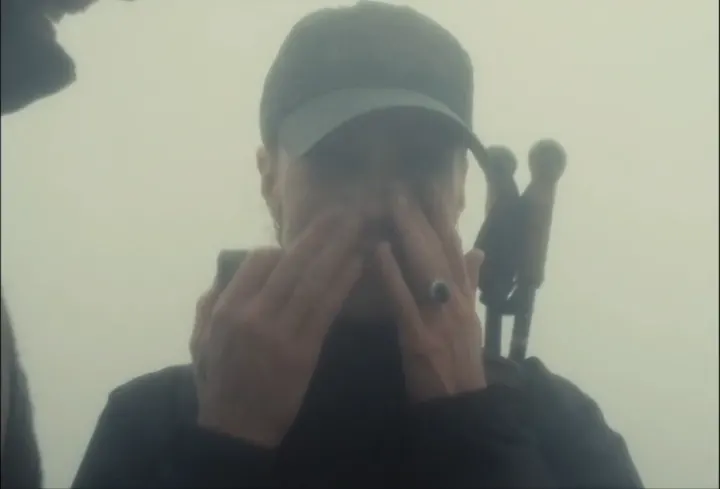
Ivory Coast's International Salon for Audiovisual Content of Abidjan (SICA), helped bring to life "Ebinto," one of the country's latest homegrown film success stories. The fiction feature has drawn audiences across West Africa and sold out six screenings at Paris' Grand Rex cinema.
Directed by Luc Gnepa, the film is an adaptation of Amadou Koné's 1975 novel "Les Frasques d'Ébinto," a mainstay for generations of schoolchildren in Ivory Coast. Ivorian writer Gauz penned the screenplay. The coming-of-age story explores young love, ambition and the consequences of an unplanned teenage pregnancy.
"When I read his screenplay, I realized that he had really gone to the essence of the novel. He had highlighted the most important and powerful moments from the book," Gnepa says of Gauz's adaptation. "I trusted him."
It was at SICA that producer Charly Kodjo connected with Ivorian private broadcaster Nouvelle Chaîne Ivoirienne (NCI), leading to a co-production agreement between his company Instant2vie Studio and the broadcaster's production arm, NCI Création.
"It's the first feature film for NCI. It's a historic moment for us as Ivorians," Kodjo tells Variety at the fourth edition of SICA. "An Ivorian private broadcaster joined forces with an Ivorian production company to bring this project to life. It's never been done before."
Budgeted at around €1 million ($1.1 million) and financed predominantly with local capital, the film took five years to bring to the silver screen. Initial private investment helped secure support from Ivory Coast's ministries of communication, culture and youth, paving the way for further private-sector investment.
Beyond its financial contribution, NCI mobilized its television and radio channels to promote the film, including broadcasting promotional spots during World Cup matches.
Unlike many Ivorians of his generation, Gnepa had chosen not to read Koné's novel at school. He says he was troubled by his classmates joking about the book's darker themes and felt the novel was inappropriate for children their age. It was only when Kodjo approached him after acquiring the adaptation rights that the filmmaker discovered the classic.
"The author's meticulous descriptions of emotions and places really touched me," recalls Gnepa. "As I was reading it, I was already imagining how I was going to make the film."
Determined to preserve the novel's original period setting, Gnepa and Kodjo spent nearly eight months scouting locations across Ivory Coast, constructing sets where suitable locations could not be found. Among the most ambitious undertakings was building the protagonist's entire village from scratch.
"I remember shooting a scene in the old quarter of Grand-Bassam. For just one minute of film, we had to spend four hours preparing the set," Gnepa explains. "We had to empty the street, replace modern shops with period ones and position our extras strategically. It was complicated, but it was also thrilling."
Getting the film in front of audiences presented another challenge. "We tried to contact all the distributors who distribute African films on the continent and internationally. They didn't respond, so we said, 'OK, let's create our own distribution company,'" Kodjo recounts.
Through Conter l'Afrique Distribution, Kodjo assembled a 10-person marketing team and organized screenings beyond Abidjan, using hotels, town halls and small theaters to reach audiences across the country.
Having secured an exceptional exhibition permit from France's National Cinema Center (CNC), Kodjo rented the Grand Rex himself. A nationwide theatrical release in France is planned for the first quarter of 2027 in partnership with Pathé and the Grand Rex. The film is also being dubbed into English, Portuguese and local languages, with a Nigerian theatrical release slated for March 2027. The team is currently seeking an international sales agent.
Kodjo describes "Ebinto" as a "research and development prototype," hoping it will serve as a model for financing, producing and distributing other African films.
"Unlike in Europe or the United States where the industry is already established, we're pioneers building an industry. It takes more work, more sacrifice, but that's what needs to be done for things to move forward," he stresses.
For Gnepa, one of the greatest rewards has been hearing from audience members inspired to read Koné's novel after watching the film.
"Africans want to see themselves on screen. They want to see people who look like them, telling their own stories, in their own languages," the filmmaker observes.
"It's good news for African cinema. We now know that the interest is there, and it's up to us to continue down this path, to bring all our stories, our legends and our customs to the screen. We must reclaim our history. We must reclaim the narrative of African history."
Background on the Novel and Filmmaking in West Africa
The literary origins of the project lie in the rich soil of West African storytelling, specifically through the 1975 publication of Amadou Koné's novel. Amadou Koné established himself as a prominent voice in Ivorian literature by capturing the social dynamics, educational challenges and moral dilemmas faced by young people during a period of rapid post-colonial development.
For decades, educational institutions across Ivory Coast assigned the book as compulsory reading. This widespread academic inclusion cemented its status as a cultural touchstone that resonated with multiple generations of students. The narrative deals unflinchingly with societal pressures, personal ambition and the heavy consequences of moral missteps in youth.
Translating such a beloved text to the visual medium required a delicate balance between respecting the source material and adapting it for modern cinema audiences. The collaboration between director Luc Gnepa and screenwriter Gauz bridged the gap between traditional literature and contemporary cinematic expression. Gauz brought his own literary sensibilities to the script, having gained international recognition for his own novels that dissect migration, urban life and West African identity.
The Economic and Production Landscape of Ivorian Cinema
Financing independent films in West Africa often presents immense hurdles due to limited traditional studio infrastructure and venture capital within the region. The production team behind the fiction feature relied heavily on private equity and grassroots fundraising before securing institutional backing from government bodies in Ivory Coast. Ministries responsible for communication, culture and youth eventually stepped in to support the venture after private investors demonstrated initial confidence in the project's viability.
Private broadcaster Nouvelle Chaîne Ivoirienne played a vital role by stepping outside traditional broadcasting boundaries to co-produce the feature through its NCI Création division. By leveraging its vast media reach across television and radio platforms, the broadcaster provided promotional exposure that typically remains inaccessible to independent domestic productions. This corporate partnership established a new precedent for cooperation between local media entities and independent filmmakers in West Africa.
Overcoming Distribution Barriers Through Independent Enterprise
Traditional international film distribution networks frequently overlook regional African cinema, leaving creators with few outlets to reach global or even continental audiences. Confronting this distribution deadlock, producer Charly Kodjo established Conter l'Afrique Distribution to bypass traditional gatekeepers and deliver the content directly to viewers. This entrepreneurial distribution model used unconventional screening venues such as hotels, town halls and independent neighborhood theaters to build grassroots momentum.
International ambitions for the project required navigating complex legal and administrative frameworks abroad, including securing special exhibition permits from cultural authorities in France. By taking direct financial risks such as renting the Grand Rex in Paris, the production team proved that strong market demand exists for authentic African stories beyond local borders. Future theatrical rollouts across Europe and Nigeria demonstrate a scalable framework for independent filmmakers seeking global reach without relying on legacy studio systems.