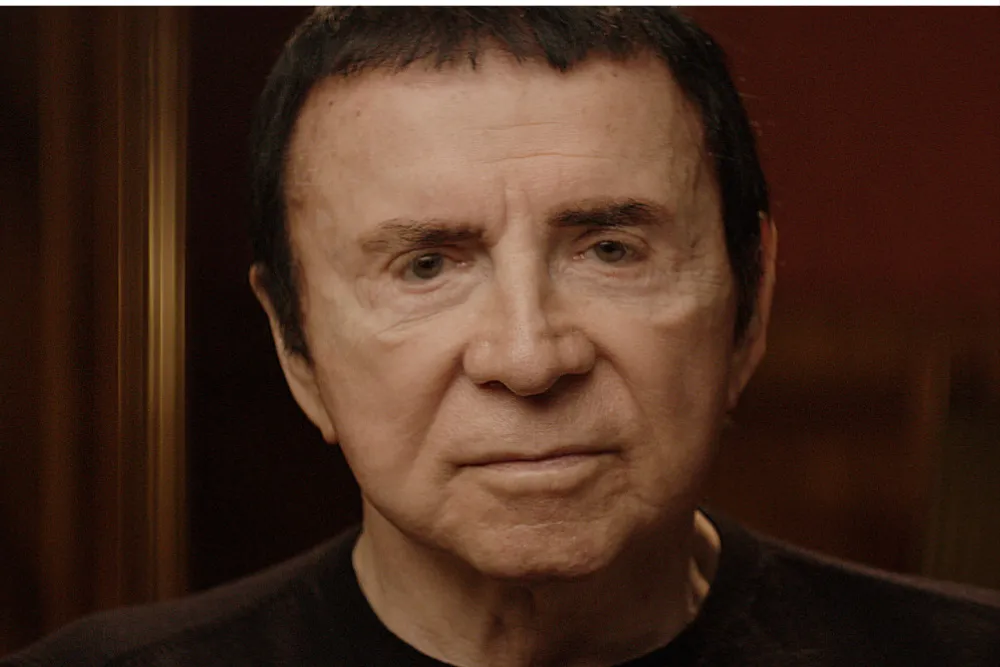
In the 1980s, Soviet households tuned into state-run channels to watch hypnotist Anatoly Kashpirovskiy, whose shows drew an estimated 300 million viewers across the bloc.
Kashpirovskiy, a trained medical doctor, first turned to hypnosis to keep sleep-walking medical students awake during lectures. His appearances on television turned him into a cult figure of epic proportions.
Polish filmmaker Lukasz Konopa screened the documentary "Kashpirovskiy. Under the Spell" in Ji.hlava's Testimonies section, describing the man as part of the landscape of life before the Soviet collapse.
"Kaspirovskiy is part of my childhood memories. When I first saw him on television, I was seven years old and I lived in a small village in gray, communist Poland. On the screen was a strange-looking man with black hair, speaking a language I didn't understand. Meanwhile, the light bulbs in our apartment were mysteriously flickering. As I discovered later, the electricity grid was under enormous strain due to the huge amount of electricity consumed by the bulky televisions of the time, as everyone was watching him at the same time."
Growing up in the UK and later working in film, Konopa had forgotten the experience until the 2020 lockdown, when he began to wonder what had happened to the hypnotist. He said the performer "was a very important part of the transition: The fall of communism and the early days of capitalism - a shift that changed everything in this part of the world."
Konopa felt the story deserved telling, especially during another period of political and social change. He added, "When I started watching Kashpirovskiy's seances, I was surprised how modern he sounded. He reminded me of a contemporary life coach. He tells people that everything will be OK and tries to give them advice on how to live their lives. Sometimes, he literally says: 'I will hold your hands and walk you through this.'"
The director located most of the compelling archival footage in Ukraine, where Kashpirovskiy began his career. He described the material as "Mesmerizing, beautifully crafted and shot on 35mm." One clip dates back to 1971, showing the hypnotist in a doctor's uniform, riding a bike, and performing tricks before a kolkhoz audience more than 15 years before he became famous.
Kashpirovskiy, called a hypnotist, healer, magician and conjurer, gained fame for acts such as operating on women without anaesthesia and persuading Chechen leader Shamil Basayev to release 1,500 prisoners. The director notes these were "just some of the stunts that captivated millions of citizens hungry for miracles amidst the wasteland of the impending collapse of perestroika and glasnost."
Konopa calls the "television medicine" experiment one of the earliest mass pop-culture phenomena in the Soviet Union, reaching 300 million people. He described the task of mining surviving broadcast recordings as a steep challenge, saying, "Working with old Soviet archives is a bit like detective work. You never know exactly what exists, where to find it, and who owns it. Sometimes, one discovery leads you to another, and suddenly you find something extraordinary."
With a research team in Ukraine, Poland, Georgia and the Czech Republic, Konopa collected hundreds of hours of material. HBO joined the production in 2025, providing essential completion funding, according to the director. He added, "Kashpirovskiy was already old and I felt that we needed to act quickly. Thanks to this funding, we didn't have to stop the process. We could continue filming and collecting archival material without interruption, while I still had access to Kashpirovskiy."
Regarding the possibility that the phenomenon was a con, Konopa concluded that Kashpirovskiy was "a master of stage hypnosis and psychological suggestions. For more than 25 years he perfected his craft by giving seances and performances in factories, villages and kolkhozes."
He said, "He was really good at it. The way he looked and sounded on stage, the music he played, the script of his shows - all these were carefully planned and executed. So I believe that he could really put many people in a state of trance or make them not feel pain. His powers got even stronger when he got the most powerful platform at that time - television."
Whether trickery was involved, Konopa said, "wasn't the most important question for me. I was much more interested in the persona he created and the image that television built around him. I wanted the audience to be seduced by him and to experience him in the same way people did back then. This sense of enchantment is the real story."