"Searching for SmarterChild" won the New Visions Award for the most promising U.S. project at the Ji.hlava Documentary Film Festival this week, as it probes why people often direct insults at AI bots.
The U.S.-Canadian feature is co-directed by Zan Gillies and Pulitzer-winning journalist Lindsey Sitz and produced by Erin Williams-Weir.
SmarterChild, a popular early chatbot that appeared on AOL, Yahoo and other platforms, attracted roughly 3 million users who interacted with it through text messages, often in rude ways, according to Gillies.
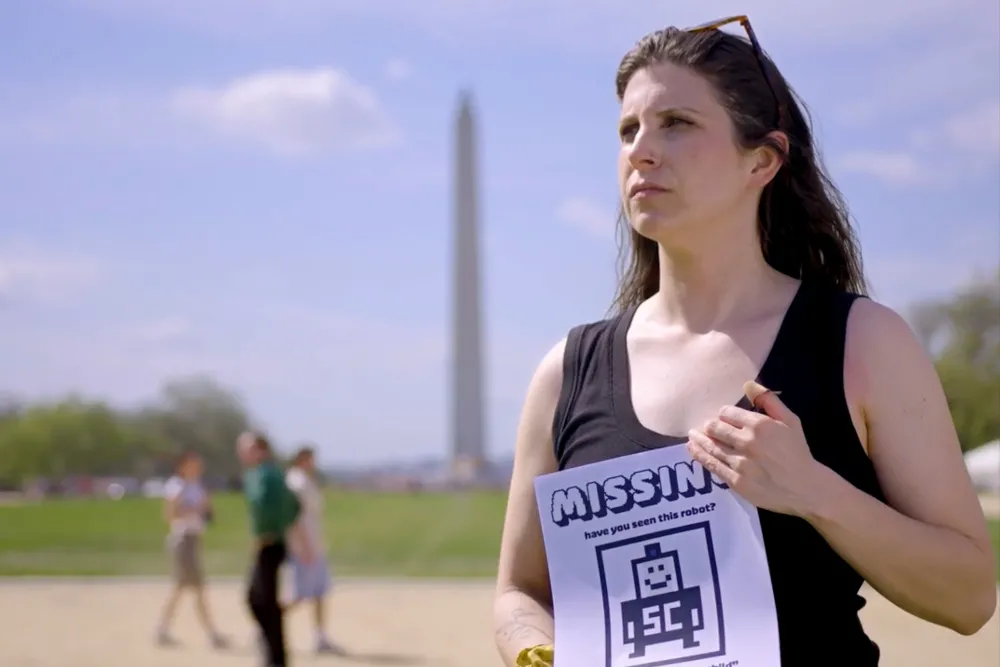
To uncover memories of the bot, the filmmakers walked through San Francisco streets, asking people if they remembered SmarterChild and whether they had ever apologized to it. One interviewee admitted, "Oh yeah - I was so mean to that bot."
Gillies says the film centers on the question, "What does our relationship with artificial intelligence reveal about ourselves?" He notes that early chat technology still raises similar questions about how we communicate with half-human-sounding entities and whether they serve as friends, therapists, assistants or lovers.
The directors found that early chatbot users worldwide, including those in Korea, also used insults in text conversations with the bots, revealing a common initial tendency to be mean to robots.
The idea for the documentary emerged when Gillies and Sitz realized that, as children, they had both abused SmarterChild. The bot would ask about a user's favorite hobby and then reply with a hostile line such as, "Setting things on fire," before suggesting an alternate activity, only to be met with a reply like, "Setting YOU on fire."
Gillies discovered that the original engineers kept digital logs of every chat session and that the early AI software would sometimes respond with snark or a temporary shutdown if the user continued to use abusive language. They had even created a rating system to calculate the relative weight of insults, a detail that surprised Gillies.
To date, the filmmakers have raised about $18,000 on crowdfunding platforms, which they estimate will cover roughly one-fifth of the final budget. They plan to interview additional experts in human-AT interactions, including a noted conflict-resolution specialist on apologies, and Lauren Kunze, CEO of Pandorabots, who has researched how AI triggers specific parts of the human brain.
In the final film, the team intends to feature a rebuilt SmarterChild bot that converses again with users, illustrating the evolution of the technology and the human response to it.