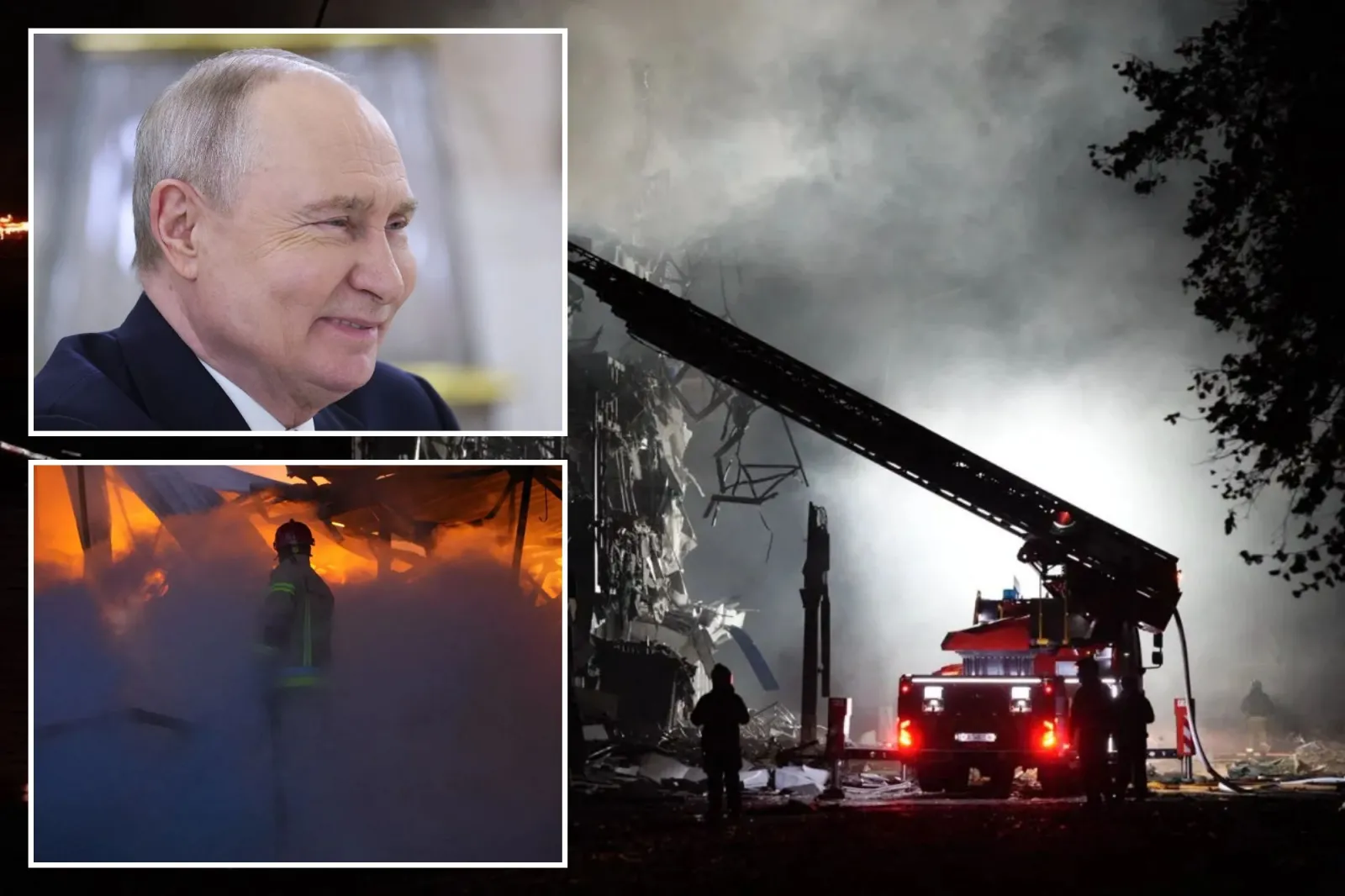
Vladimir Putin used his first conversation in more than a year with European leaders to lecture them on Slavic medieval history, according to reports.
The Russian president, known for sidestepping questions, turned the discussion toward his distorted view of history while Finnish President Alexander Stubb and Norwegian Prime Minister Jonas Gahr Støre called to press him to end the war in Ukraine.
Both leaders broke with the usual Western practice of avoiding direct Kremlin contact.
Readouts of the three-nation call vary in tone, but a source said Putin told the pair that European involvement was welcome and that the war should end "taking into account the realities on the ground".
When asked what that meant, the source explained it signalled Russia would not compromise on its aim to capture the whole of Ukraine's Donbas region.
The Europeans replied that a "just" peace was required, the source added.
"The discussion was frank and substantive," Stubb said after the 90-minute call. "We are neighbouring countries to Russia. The outcome of this war will have a direct impact on our and the broader European security. Ending the war requires direct discussions."
Later, speaking to Finnish journalists, Stubb said all Western allies had been consulted and noted that Ukraine had asked to open a new communications channel.
In a joint statement, Stubb and Støre said they wanted to "convey messages directly regarding future negotiations to help end the war", which are scheduled for Abu Dhabi in November.
The planned US-brokered talks, the first between Ukraine and Russia since February, will focus on future security guarantees after an eventual cease-fire.
Ukrainian Foreign Minister Andrii Sybiha praised the diplomatic effort, calling it "the right approach". He said Ukraine welcomed "active support for our diplomatic efforts and peace process".
Sybiha also expressed hope that a local cease-fire around the Russian-occupied town of Oleshky could "pave the way to other steps in the peace process".
Despite these diplomatic moves, Putin's stance appears unchanged.
The Kremlin emphasized that a just and lasting peace is possible only if the "legitimate interests of the Russian Federation are fully and unconditionally taken into account". It also blamed the "confrontational policies of EU and NATO countries" for prolonging the conflict.