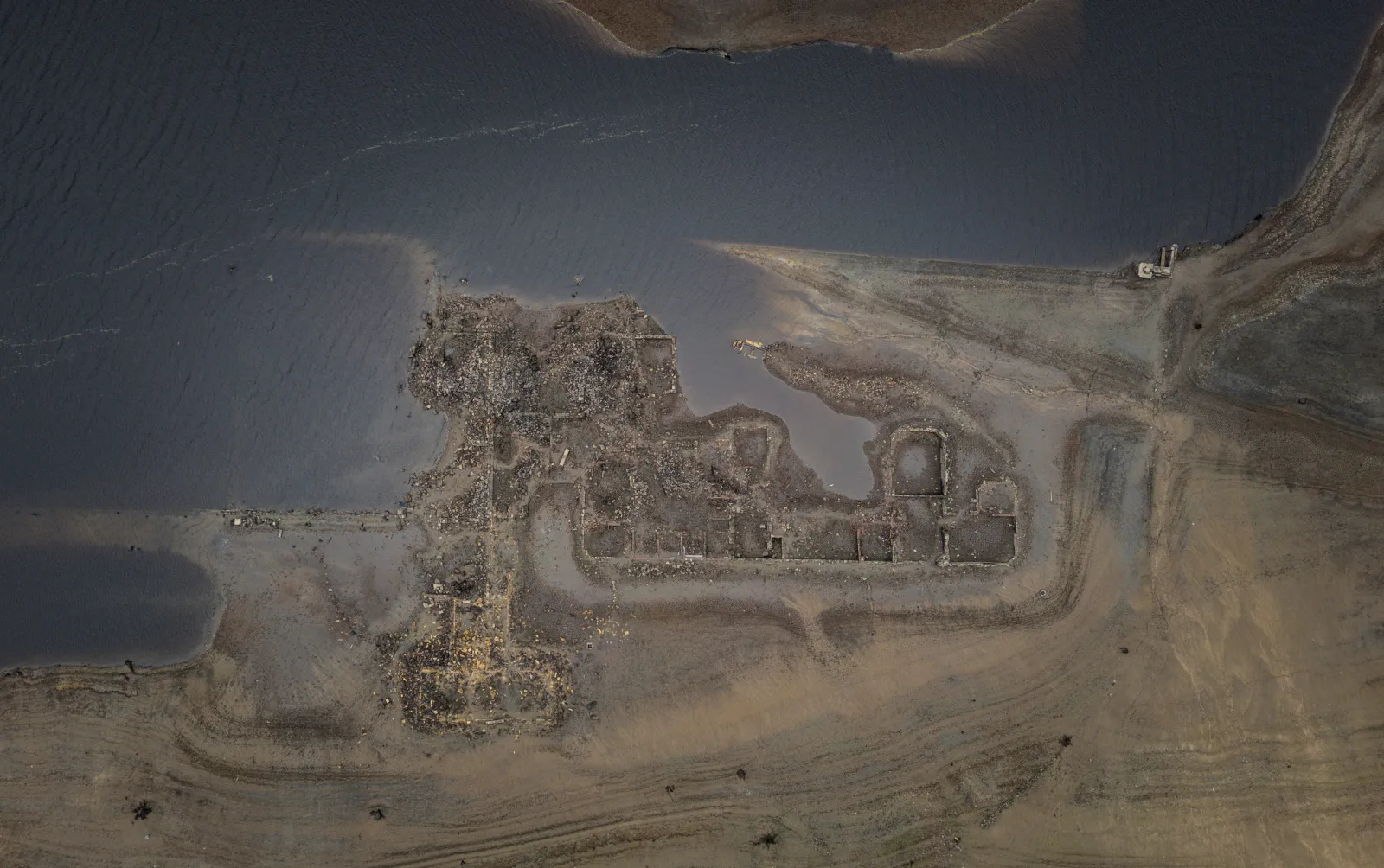
After a summer-long drought lowered water levels to about 32 percent of capacity, the sunken remnants of the former hamlets of Derwent and Ashopton have surfaced in Derbyshire's Ladybower Reservoir.
The two settlements were intentionally flooded in the 1940s to create a reservoir capable of storing 2,869 mega litres of water - the equivalent of more than 1,000 Olympic swimming pools.
Recent aerial photographs display the outlines of vanished streets and structures etched in the exposed mud, including a pump house that still stands upright and sections of finely cut stone walls that have survived decades underwater.
Historic churches, limestone cottages and other buildings vanished when the Derwent Valley was inundated between 1935 and 1943, forming a water supply for Derby, Sheffield, Nottingham and Leicester.
For the first time since 2018, the footprints of dozens of limestone homes that once housed over 100 residents are visible.
Ashopton, once a thriving community with its own pubs, a distinctive toll house and the elaborate Derwent Hall, has now reappeared as a ghostly outline.
The find follows a severe drought declared across six UK regions, affecting at least 24 million people who are subject to hosepipe bans.
Doug Clarke, Severn Trent's water resources lead, told the BBC: "We've seen six months of below-average rainfall and above-average temperatures and reservoir levels will take time to recover, but overall, across our region we've more stored than this time last year."
He added, "Reservoirs make up around a third of our water supplies, with the rest coming from rivers and groundwater, and our teams are continuing to work around the clock to treat more water and fix leaks at record levels."
Clarke concluded, "But we're also asking customers to continue using water wisely all year round, to help ensure there is always enough to go around."