U.S. artist and documentarian Lynne Sachs attended the Ji.hlava Documentary Film Festival in person for the first time this year, serving on the First Lights jury that assesses documentary debuts.
Sachs praised the festival's selection, noting that about 24 films are shown and that they span the globe, offering a wide range of filmmaking styles and viewpoints. She cited two early screenings - one from Argentina and another from Congo - as starkly different examples that challenge conventional documentary thinking.
She highlighted the question of "Positionality," asking whose perspective the audience sees and whether the filmmaker's role is visible or known.
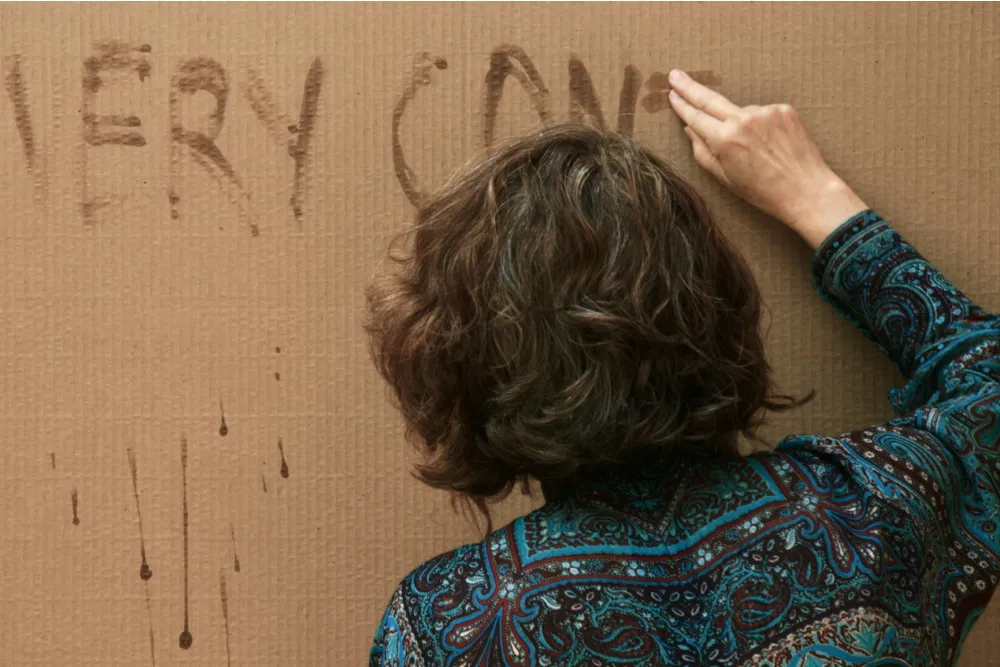
Her latest film, "Every Contact Leaves a Trace," made its Czech premiere at Ji.hlava, placing Sachs herself on screen as she investigates, connects clues, doubts herself and occasionally turns to her teenage niece and nephew for help while sorting through business cards that are decades old.
The work functions as a detective story, eventually incorporating forensic analysts as Sachs follows leads to locate people whose names appear in her box of hundreds of carefully saved cards, many of which have lost meaning for her.
She admits, "I actually hired a detective at one point."
Some cards have left lasting impressions, prompting her to wonder what happened to their owners, such as an artist whose work once moved her or a fellow filmmaker later canceled over misconduct allegations.
One card belonged to a Syrian woman whose family discouraged her from appearing on camera to discuss her refugee experience; Sachs instead filmed a tribute to the woman's cooking.
Sachs expressed discomfort with terms like "protagonists" or "characters" for documentary participants, preferring "on-camera participants" or "visible collaborators who are the people in front of the camera."
She reflected, "We're offered the chance to tell our story by the person behind the camera. What I don't know is, who is the person behind the camera?"
In "Every Contact," it is evident who is filming as Sachs visibly, sometimes awkwardly, tracks down individuals who once met her but never expected her to return with a camera. She notes this on-screen presence is a new approach for her.
She states, "I'm trying to reconstruct a life story of life experience from the interactions I've had with people...people who left a mark."
Since the film's release, people have offered Sachs their own collections of old business cards. She replies, "Oh, no! This combination of cards only goes back to one person. You're the person who had that dentist. You're the person who met that psychoanalyst. Or potential friend on a bus."
Sachs says she was drawn to cards that posed the biggest obstacles, noting that some donors may now be impossible to locate while others present different challenges, as past impressions are not always mutual.
She warns that recalling past encounters can trap the mind, which often edits memories and clings to specific moments. With family assistance, she observes that it is rarely up to us to decide which memories persist.
Sachs discovered that she does not always need to travel across time zones to find someone who may not even remember her, concluding, "I don't need to prove I did or didn't. I need to deal with the residue."