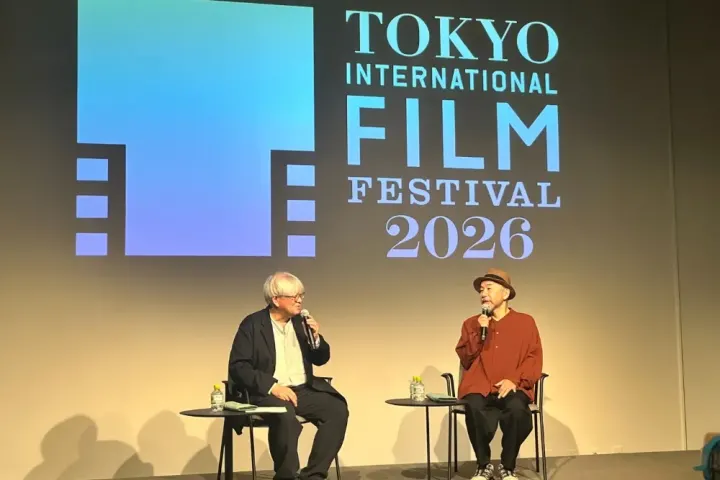
Exploring the connection between individuals and locations, the new documentary Okinawa Saudade is screening at the 39th Tokyo International Film Festival within its Nippon Cinema Now lineup. The project originated from director Matsubayashi Yoju spending time with a Brazilian community composed of Okinawan immigrants about 10 years ago.
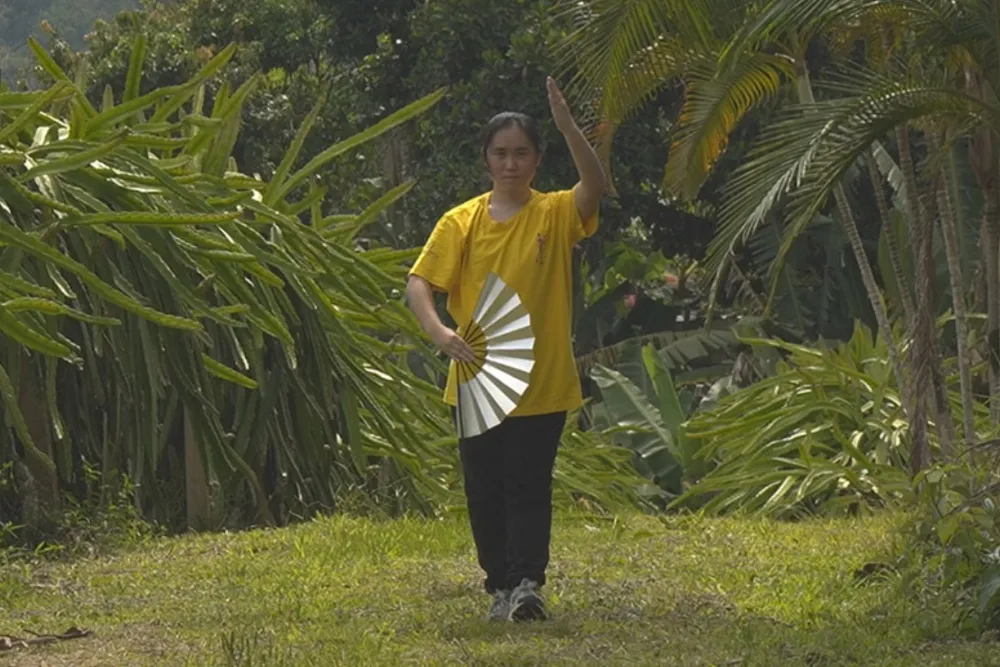
The feature focuses on contemporary descendants of Okinawan immigrants, featuring Yumi, a young practitioner of the classical Okinawan dance known as Ryukyu Buyo, and Everton, an instructor of the island festival drum dance called Eisa in Brazil. Both travel to Okinawa on an exchange program to discover more about the local culture and history.
Matsubayashi Yoju explains that in 2016 he spent a year living in Brazil. During that period he attempted to work on a separate project regarding Fukushima, but after facing difficulties he decided to relax and enjoy mornings in Brazil, which led him to discover the wartime forced relocation of Japanese Brazilians in Santos.
That wartime displacement, where roughly 60 percent of the displaced Japanese immigrants originated from Okinawa, became the central theme of the 2020 documentary film Okinawa/Santos directed by Matsubayashi Yoju.
Following that work, the director encountered the Urizunkai, a Brazilian Okinawa community organization. Through them, he learned about programs sending Okinawan Brazilians back to Okinawa for training and scholarships, establishing the starting point for his latest film.
The Bunkyo cultural center in the Liberdade district of Sao Paulo maintains an extensive archive of immigrant records in both Japanese and Portuguese. This facility provided essential research material, while the sheer volume of documents inspired the filmmaker.
Matsubayashi Yoju notes that documents for immigrants from the other 46 prefectures were numerous, while Okinawan records reached a nearly identical volume. He expresses amazement at the extensive information Okinawan immigrants preserved.
While producing the 2020 project, the director remained an outsider since he is not from Okinawa himself. However, conducting interviews allowed him to integrate deeply into the community.
He highlights the Okinawan dialect phrase Ichariba choodee, which signifies that once people are interviewed, they treat each other like brothers and sisters.
Matsubayashi Yoju believes that without completing Okinawa/Santos, he would never have created Okinawa Saudade. During production, the community volunteered to arrange transport and coordination without requiring him to hire external staff.
The Okinawan Brazilian community embraced him as one of their own members throughout the process.
By the year 2024, the filmmaker learned that the Brazilian government planned to issue an official apology to victims of the forced relocation that July, alongside scholarship exchange training scheduled for September. Brazil formally apologized that July for post-World War II persecution against Japanese immigrants.
The director structured the narrative around the pursuit of personal heritage, using Okinawan dance as the primary storytelling vehicle. He distinguishes between traditional dance forms and the creative styles developed later.
Creative Eisa in Brazil began approximately 45 years ago, which he considers a tradition in its own right. Traditional Eisa incorporates the sanshin instrument and singing, whereas Creative Eisa does not require the sanshin.
The documentary adopts a first-person perspective shared by Yumi, Everton, and the director himself. Matsubayashi Yoju appears in the film questioning his own identity, creating a three-way exploration of self.
This personal viewpoint guides his subjects closely as they navigate complex cultural surroundings.
While his previous works featured minimal voiceovers or brief appearances, the focus on dance in Okinawa Saudade introduces higher emotional resonance compared to the testimonial-driven structure of Okinawa/Santos.
This subject matter allowed the filmmaker to pursue a more subjective cinematic approach.
Matsubayashi Yoju notes that his earlier work on Okinawa/Santos benefited from television broadcasts with NHK, Japan public broadcaster, providing funding cycles of about JPY10 million or $63,000 for subsequent projects. However, weak currency exchange rates and smaller budgets have left NHK struggling.
These financial constraints directly impact independent filmmakers.
Without financial grants provided by Okinawa Prefecture, completing post-production on Okinawa Saudade would have been impossible, highlighting challenging economic conditions for Japanese documentary cinema.
Background on Okinawan Immigration to Brazil
Japanese migration to Brazil began in earnest in 1908 with the arrival of the ship Kasato Maru carrying agricultural laborers. Over subsequent decades, hundreds of thousands of Japanese citizens settled in South America, with a significant population establishing communities in Sao Paulo state and port cities like Santos. A large portion of these agricultural pioneers originated from the island prefecture of Okinawa, bringing distinct cultural practices, music, and dance traditions across the Pacific Ocean.
During the Second World War, geopolitical tensions led the Brazilian government under Getulio Vargas to enact restrictive measures against Axis nationals, including Japanese, German, and Italian immigrants. In 1943, authorities ordered Japanese residents living in coastal areas like Santos to evacuate within days. Okinawan immigrants formed a majority of those affected by these wartime displacement orders, losing homes, businesses, and farmland before rebuilding their communities in the postwar era.
The Evolution of Okinawan Dance Traditions Abroad
Cultural preservation played a vital role among Okinawan diaspora communities in South America, serving as a vital link to ancestral heritage. Ryukyu Buyo represents the classical dance tradition developed during the Ryukyu Kingdom era, characterized by graceful movements, traditional costumes, and classical accompaniment. Meanwhile, Eisa evolved into a dynamic drum-led festival dance performed widely during the Obon festival season.
As immigrant communities settled abroad, younger generations adapted these ancient art forms to fit their new cultural environment in Brazil. This gave rise to Creative Eisa, which modifies traditional instrumentation while maintaining the energetic spirit of the original festival dances. Cultural exchange programs sponsored by community organizations now allow Brazilian descendants to visit Okinawa, bridging geographical divides and fostering a renewed understanding of their shared history.