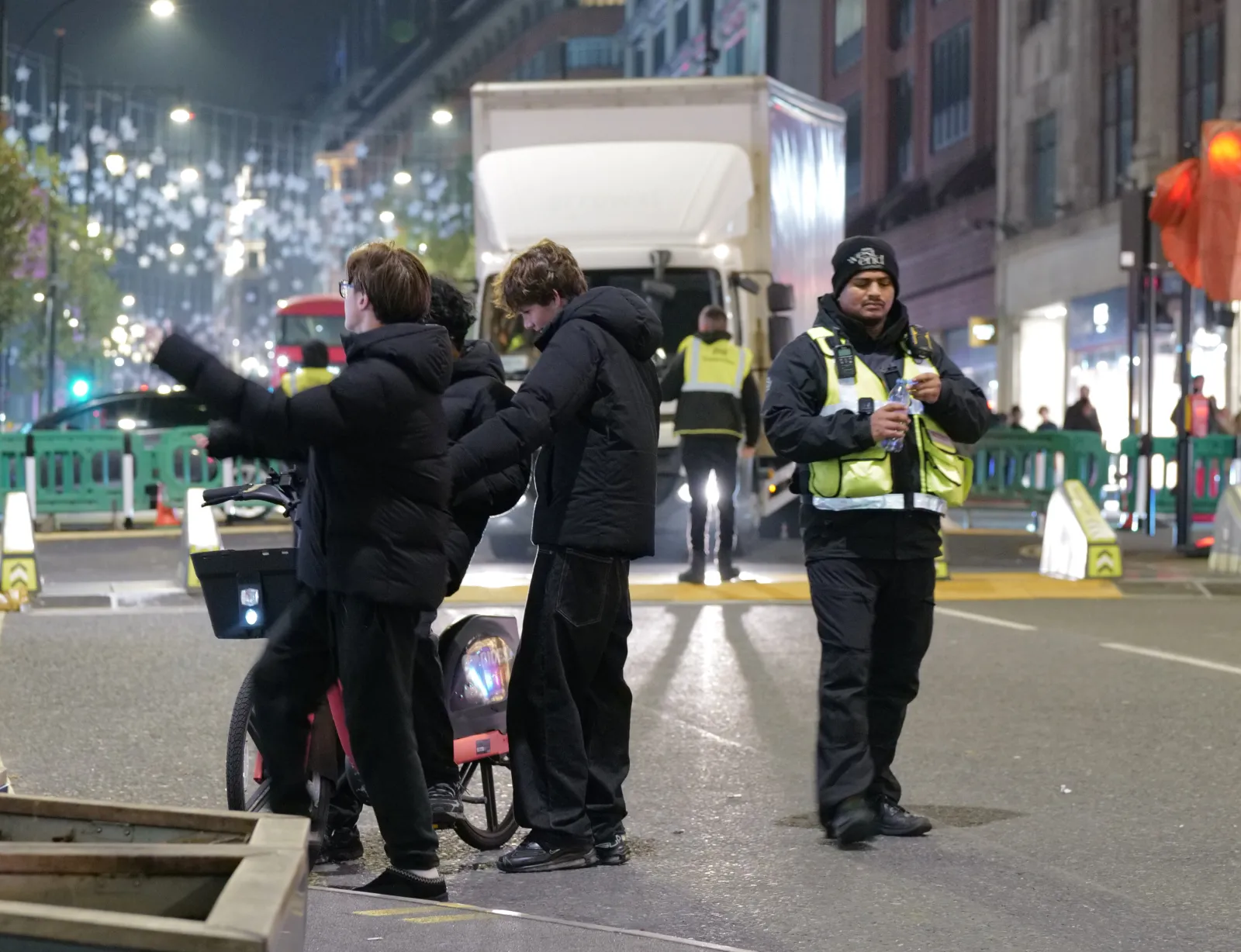
A half-mile stretch of Oxford Street in London plunged into chaos as groups on bikes and e-scooters terrorised shoppers with fireworks following the introduction of a new pedestrianised zone. The major retail hub, which welcomes half-a-million visitors each day, saw cars banned by London mayor Sadiq Khan on October 26.
The blanket ban on transport in the pedestrianised area extends to black cabs, private hire cars, cycles, e-scooters, and pedicabs, all of which are now barred from entering the main central stretch. However, just hours after the ban came into force, cyclists were seen brazenly ignoring the rules.
Shocking video footage has now emerged of yobs on bikes and e-scooters racing around the pedestrian only zone and terrorising pedestrians with fireworks. Meanwhile, motorists have been left furious as they contend with standstill traffic, lengthy queues, and severe congestion, with the festive period just around the corner.
In one clip, cyclists on Lime bikes can be seen flagrantly entering pedestrian zones and swerving between crowds of shoppers. Meanwhile, security teams there to enforce the new changes on Oxford Street simply watched on as they sailed by.
Other cyclists were spotted simply bypassing and wizzing past the green bollards designed to stop traffic as they mounted the pavement and sped off down the street. Elsewhere, rule-breakers donning face coverings and riding e-scooters weaved dangerously between motors stuck in traffic.
Those same youths are then seen nearby as fireworks are launched into the sky, terrorising shoppers as they exploded overhead with officers nowhere to be seen. Previously, many Londoners have bemoaned the fact that the surrounding area would be gridlocked due to the changes.
And drivers could be spotted stuck bumper-to-bumper with convoys of vehicles stuck in grid-locked traffic over the weekend. Wigmore Street, Henrietta Place, and Cavendish Place are among those suffering from the diversion of traffic, which are also now accommodating diverted bus services.
Some have feared the new pedestrianised zone may usher in a Wild West End with fears it could encourage anti-social behaviour, pickpockets, and phone-snatchers. As the busy festive period gets underway, others have voiced their concerns over how shoppers will carry their hauls in the lead up to Christmas.
One local councillor described the plan as a disaster for local people and accused London Mayor Sadiq Khan of pushing it through to meet an arbitrary deadline. Cllr Tim Barnes, Westminster City Council Deputy Leader, said previously: London deserves a world class shopping district but I am worried we are heading for an unmanaged mess.
He added: It is going to be very difficult for people with accessibility issues to get to the street. There is no step free access from Oxford Circus Tube.
Lord Khan called the Oxford Street overhaul a truly momentous occasion that will reclaim it from traffic and fumes, turning it into a greener public space for visitors and workers. The project aims to improve air quality and create a safer, greener shopping hub in time for the Christmas period.
Further improvements planned for 2027 include planting more than 50 new trees, installing over 100 seats, and creating two new public squares. The pedestrianised zone runs between Orchard Street, near Selfridges, and Great Portland Street, just east of Oxford Circus.
Buses are completely banned from travelling along the newly pedestrianised stretch of the road with routes amended to terminate early or divert onto surrounding streets. The pedestrianisation of Oxford Street has repeatedly been described as the first phase.
The closure is part of a £150m phased plan to revive the area with mini parks and more than 50 trees, benches, lighting, and public art.
Background on Oxford Street and Retail Traffic Plans
Oxford Street has served as a central artery for commerce in the British capital for generations, drawing international tourists and domestic shoppers alike to its dense concentration of department stores and flagship fashion outlets. Proposals to restrict vehicles along the famous thoroughfare have been debated by local authorities, transport planners, and mayoral offices for years. Previous administrations and retail associations debated various models to balance pedestrian safety with public transit access, particularly given the heavy reliance on buses to move shoppers through the central zone. The latest initiative forms part of a wider effort by the current mayoral administration to reduce urban carbon emissions, promote active travel where permitted, and modernise London shopping districts to compete with online retail and modern suburban shopping centres.
Traffic Diversions and Impact on Surrounding Streets
The sudden removal of through traffic from the central retail corridor has inevitably forced commercial vehicles, black cabs, and private transport onto parallel routes. Roads including Wigmore Street, Henrietta Place, and Cavendish Place now absorb substantial volumes of displaced vehicles and redirected bus routes. Local business owners and municipal representatives have repeatedly highlighted the logistical challenges posed by these narrow Victorian street layouts handling increased traffic density. Emergency vehicle access, freight deliveries for major stores, and passenger drop-off points for individuals with mobility impairments remain central concerns for local authorities tasked with managing the ongoing implementation of the traffic restriction scheme across the district.