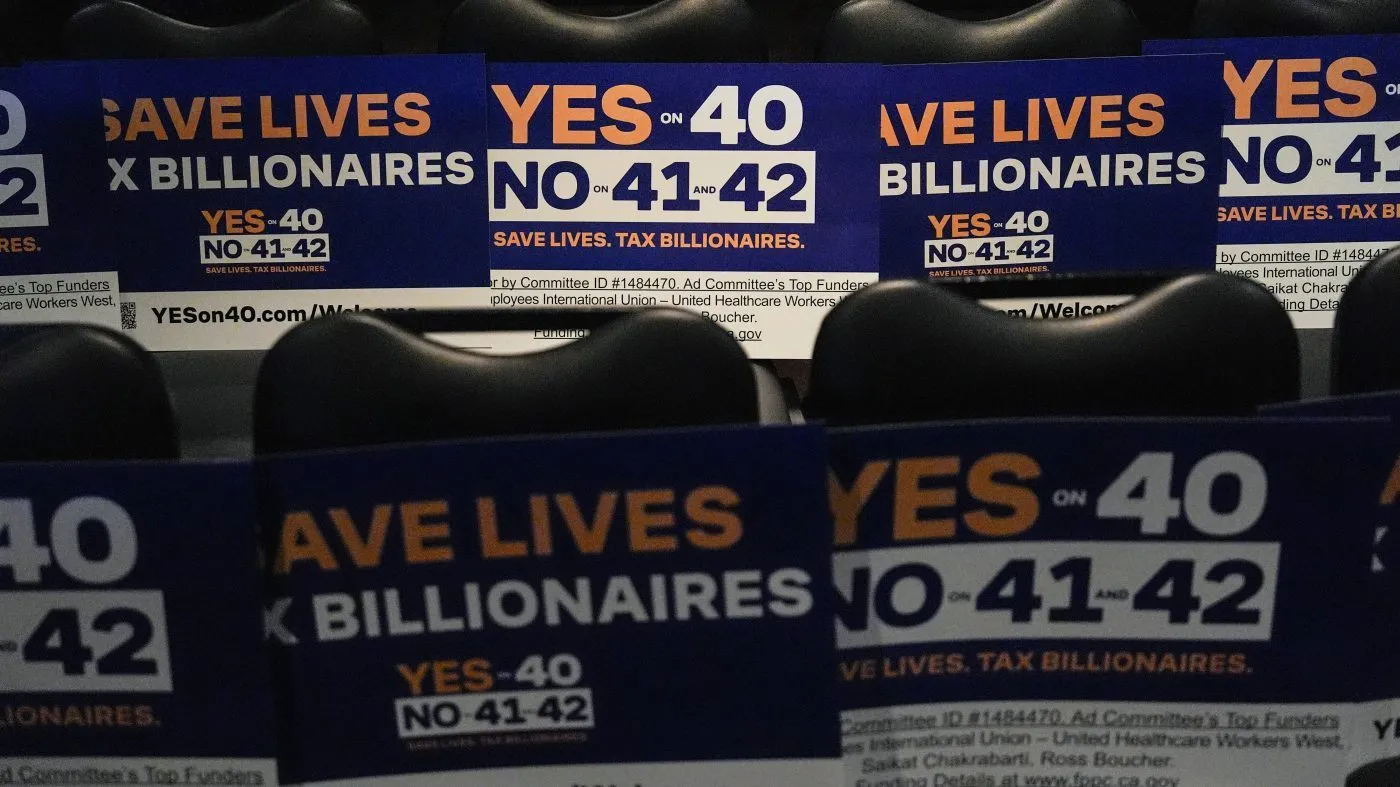
California voters this midterm cycle will decide whether the state will impose a wealth tax on billionaire residents, as wealthy Californians organize against the measure and experts say its potential broader impact on the state's economy is nuanced. By voting "yes" on Proposition 40, Californians would support a one-time 5 percent tax on billionaires' wealth.
The government revenue from the wealth tax, which no state to date has imposed, would primarily go toward state healthcare programs, with the remainder earmarked for food assistance and education initiatives. The Golden State would collect "tens of billions of dollars" from the wealth tax on the roughly 200 billionaires in the state, per an analysis from the nonpartisan state Legislative Analyst's Office (LAO), which noted the increase in revenue would be "spread across several years."
Polling indicates it is unclear the measure will receive the simple majority support needed to pass. Even if it does, questions remain about next steps for the state and downstream effects.
"When you see eye-popping numbers like that, I can see how that looks ... very appealing," Tracy Gordon, the director of the Urban-Brookings Tax Policy Center, told The Hill. "But I think the concern is ... what would the response be, both legally and economically, in terms of people leaving the state?"
The revenue from the tax, the group argues, could offset cuts to California's federal funding under the One Big Beautiful Bill Act, which President Trump signed into law in July 2025. The law could result in the state losing $30 billion in federal funding annually through 2028, per an analysis from the California State Assembly's Committee on Health.
The measure, however, has not quite unified Democrats in the state. While the state Democratic Party along with the AFL-CIO and Teamsters unions support Proposition 40, California Gov. Gavin Newsom (D) is against it. Newsom, a potential 2028 presidential contender, wrote in a June Substack post that he supports a federal billionaire tax. But the outgoing California governor noted the state ballot measure "dedicates almost all of the revenue" from the tax to healthcare. Max Rego reported the story for The Hill.
Background on State Taxation and Wealth Levies
State taxation policies in the United States traditionally rely on income, property, and sales taxes rather than direct levies on accumulated personal wealth. No state government has successfully implemented a wealth tax due to significant constitutional challenges regarding interstate commerce, valuation difficulties, and the potential for capital flight. Wealthy individuals possess high mobility, allowing them to relocate their legal residency to jurisdictions with more favorable tax structures when faced with aggressive state-level assessments.
The Legislative Analyst's Office serves as a nonpartisan fiscal and policy advisor to the California Legislature, providing independent analysis of the state budget and ballot measures. Independent economists frequently debate whether taxing ultra-high-net-worth individuals generates sustained public revenue or ultimately shrinks the overall tax base as taxpayers move taxable assets and primary residences across state lines.
Federal Funding and California Healthcare Programs
California operates extensive public healthcare initiatives, including Medi-Cal, which provides medical coverage to millions of low-income residents across the state. Federal grants and matching funds constitute a substantial portion of the state health budget, leaving programs vulnerable to federal policy changes and congressional spending reductions. State lawmakers frequently evaluate alternative revenue streams to maintain public services when federal appropriations fluctuate or face legislative cuts.
Labor organizations such as the California Labor Federation, AFL-CIO, and the International Brotherhood of Teamsters frequently engage in state ballot measures to protect public funding for social safety net programs. Conversely, business associations and wealthy taxpayers organize opposition campaigns, arguing that new tax burdens discourage investment and job creation within the regional economy.