For the last two years, President Trump has made the colossal mistake of misinterpreting his impressive re-election comeback in 2024 as a public mandate to do whatever he wanted to advance the national interest as he saw it, even as a form of self-aggrandizement. Without input from Congress or the judgement of some of his own national security advisers, he heeded only the advice that already matched his own instincts.
The success of his operation to seize dictator Nicolás Maduro from Venezuela in an efficient and casualty-free strike seemed to have convinced him that it could be replicated on a somewhat larger scale in Iran. The fact that the Iranian military and the Islamic Revolutionary Guard Corps were far more formidable than the Venezuelan army and police did not dissuade him from his quest.
How the Iran Conflict Escalated Under Trump
The existence of a highly motivated and active civilian opposition in Iran was perhaps seen as a guarantee of victory, as he needed only to call upon them to rise up, as they had during the Obama administration. Unlike Obama, he implied, he would respond with U.S military power. "Help is on its way," he promised.
Unfortunately, there was no actual coordination or integration between the citizen uprising, the U.S. bombing campaign, and related military and information operations. As a monumentally tragic result, tens of thousands of defenseless protesters were killed by the regime as America stood by. The U.S.-caused debacle has severely damaged America's credibility and made future cooperation with the Iranian people more difficult.
The Impact of the Iran War on Midterm Elections
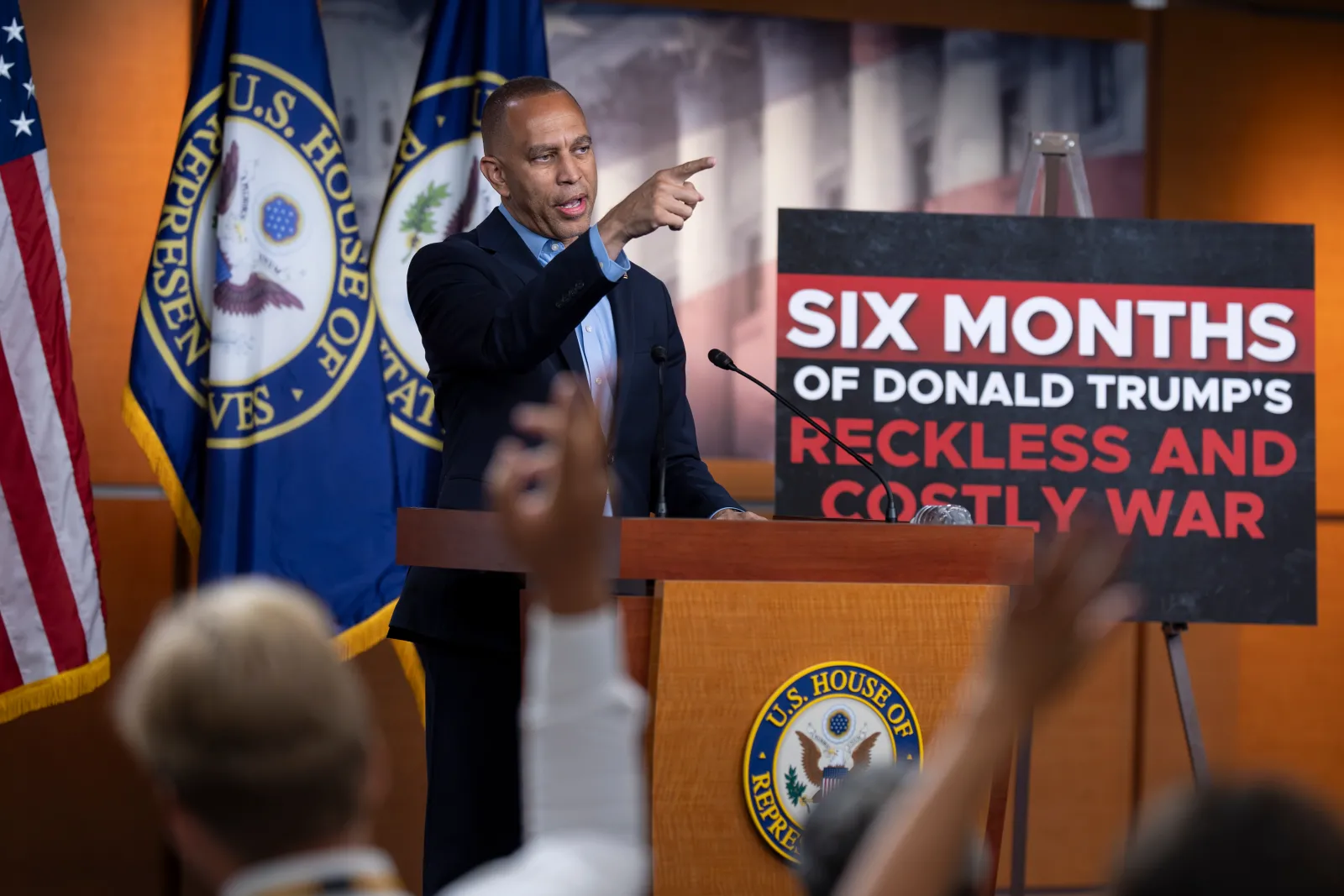
A major factor in the Democrats' ascendancy in last week's midterm elections was midterm losses could accelerate trump foreign policy goals due to Trump's erratic conduct in the Iran war and its negative impact on domestic energy prices and U.S. inflation. The growing opposition to Trump's "war of choice" stems in large part from its dramatic contrast to his longstanding and vociferous opposition to "endless wars," especially in the Mideast, and his pledge of "no new wars" across the board.
The knee-jerk reaction among most Democrats and some Republicans is to bring the war to an immediate end. But those who heed that call for humiliating retreat, which is how America's enemies will see it, risk compounding Trump's careless warmaking by their own rash actions, and how the Iran hostilities are ended matters greatly.
Why Walking Away from Iran Remains Dangerous
If the U.S. walks away from the situation, leaving the aggressive Islamist regime in power, free to advance its nuclear ambitions, criminally oppress its population, and move aggressively against its neighbors and the U.S.-led international order, Trump or his successor will soon need to confront Iran's threat all over again.
Instead, Democrats should take advantage of the political interregnum and approach Trump now, proposing a cooperative, bipartisan plan to end the conflict with Iran by ending the regime that is its perennial cause. This plan will require reassuring and coordinating with the Iranian opposition and with America's European and Mideast allies. With a minimum of kinetic action, the plan should rely on heavily increased economic pressure and on integrated special operations to conduct information warfare, support a mass civilian uprising and selectively arm elements within the population.
Building a Bipartisan Strategy for Regime Change
A U.S. president and a Congress newly unified and invigorated in the objective of peaceful regime change would greatly enhance the prospect of mass Iranian defections and the regime's splintering and collapse.
Such bipartisan cooperation on regime change in Iran would remove all Iranian and U.S. constraints on the free flow of energy supplies through the Strait of Hormuz and eliminate a major cause of inflation and unaffordability. It would also augur well for presidential-congressional partnership on a range of issues, both foreign and domestic, over the next two years and redound to the lasting credit of all parties.
Restoring Democratic Resilience and Global Leadership
Finally, a Trump-Congress breakthrough would demonstrate the inherent self-correcting nature of democracy when the voices and votes of the people demand cooperation from their chosen leaders, out of the ashes of partisan division, bitterness and anger.
Rekindling the World War II spirit of bipartisan unity and democratic resilience would erase the virtual smirking of the authoritarian leaders in Iran, Communist China, North Korea and Russia, who prematurely celebrated the demise of America's democratic model. And the Free World will surely welcome the return of unified American leadership.
Joseph Bosco served as China country director for the secretary of Defense from 2005 to 2006 and as Asia-Pacific director of humanitarian assistance and disaster relief from 2009 to 2010. He is a nonresident fellow at the Institute for Corean-American Studies, a member of the advisory board of the Global Taiwan Institute and member of the advisory board of the Vandenberg Coalition.
Background on United States Foreign Policy in the Middle East
The geopolitical relationship between the United States and Iran has remained severely strained for decades, marked by economic sanctions, proxy conflicts, and diplomatic standoffs. Successive American administrations have used various tools ranging from diplomatic isolation to economic embargoes to curb Iranian nuclear ambitions and regional influence. The Strait of Hormuz serves as a critical maritime chokepoint for global crude oil transit, making regional stability vital for international economic markets and domestic energy costs in the United States.
Congressional oversight plays a constitutionally mandated role in authorizing military engagements and declaring war, providing a vital check on executive branch foreign policy initiatives. Bipartisan consensus on major foreign policy shifts has historically strengthened American resolve during international crises, whereas deep partisan divisions often complicate long-term strategic planning. Midterm elections frequently alter the balance of power in Washington, reshaping legislative priorities and forcing executive branches to negotiate domestic and foreign agendas with newly empowered congressional leaders.
What Happens Next in Washington and Tehran
Lawmakers in the newly elected Congress will face immediate pressure to address both domestic economic concerns and ongoing foreign military engagements as the legislative session begins. Debates over defense appropriations, energy market stability, and diplomatic strategies regarding Middle Eastern adversaries are expected to dominate committee hearings and floor votes in the coming months. Administration officials will need to consult closely with congressional leaders to establish a cohesive framework for managing international security challenges while mitigating inflationary pressures at home.