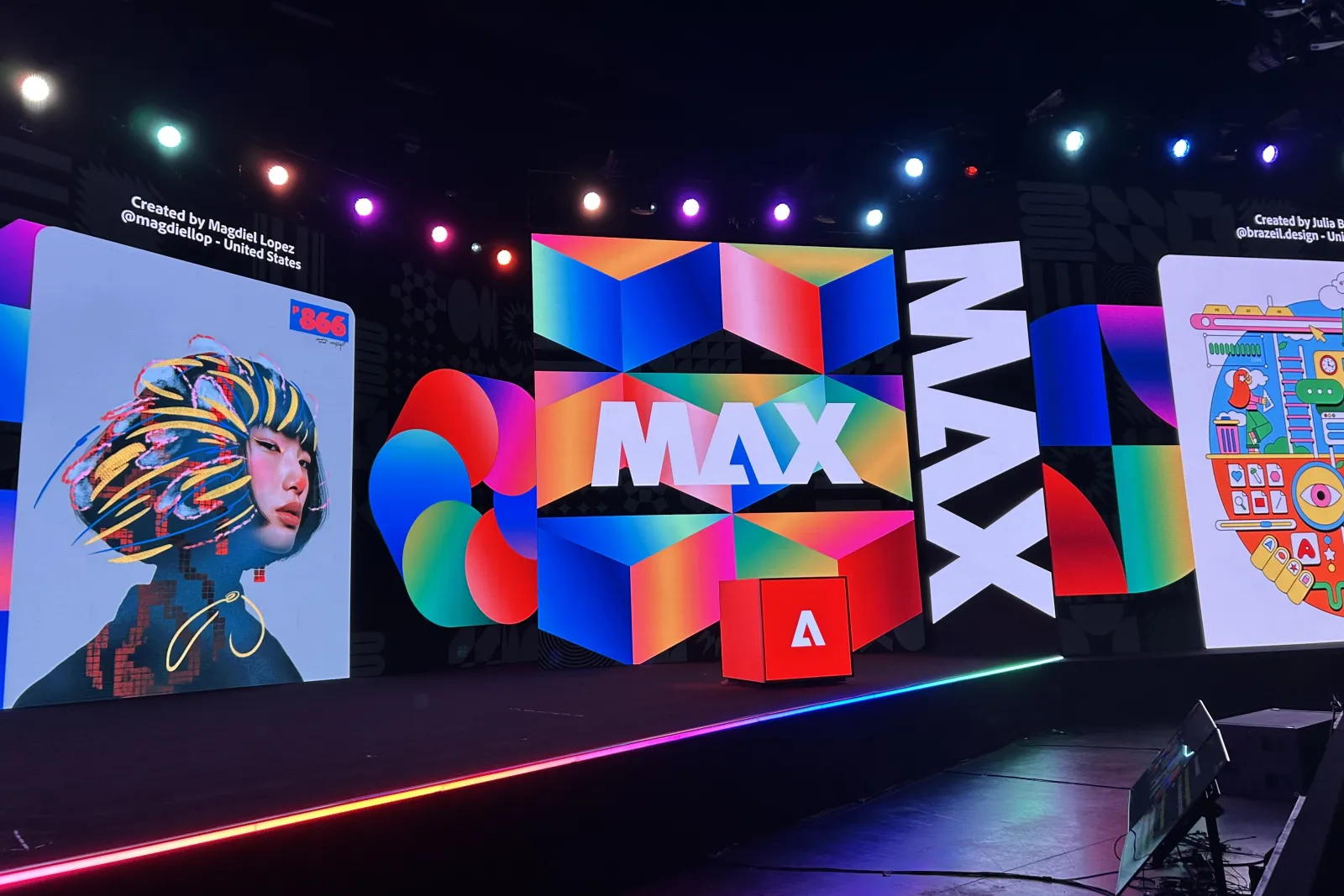
Adobe is embracing artificial intelligence in an effort to make its suite of creative tools more powerful and efficient than ever, but the company also recognizes that not all of its customers want to use artificial intelligence in their work. During the kickoff keynote session for the Adobe MAX 2026 creativity conference, incoming chief executive officer Anil Chakravarthy announced that the company is expanding the Adobe Creative Agent across Creative Cloud and Adobe Firefly so users can hand off complex, multistep tasks to an assistant.
The challenge for creative professionals, Chakravarthy said in his keynote remarks, is handling a flood of creative output and figuring out how to stand out. Some Adobe users do not want anything to do with artificial intelligence, but the organization has heard from many others who are interested and even excited about it.
Adobe is in the midst of a leadership transition as Chakravarthy, who previously served as president of the customer experience orchestration business and worldwide field operations, is set to become the next president and chief executive officer effective Dec. 1. Shantanu Narayen, after nearly 20 years as chief executive officer, will move into a role as executive chair.
The company goal is to deliver tools that fuel creativity without compromising craft, control, or rights, Narayen told attendees. With artificial intelligence, a key part of the approach is giving users the option to use automated features or not, he added.
Previewing New Integrations at Adobe MAX 2026
At the convention, Adobe is previewing local Model Context Protocol integrations for Creative Cloud tools that will let users direct third-party agents they already use to make changes in native project files in Photoshop, Illustrator, Premiere, and After Effects. The enterprise has expanded partnerships with Google and Microsoft while building on collaborations with Anthropic and OpenAI. With Google, the software maker is putting its creative and productivity tools in more Google products and experiences, adding Google latest frontier models to Adobe tools, and exploring new editing capabilities for Photoshop with Google DeepMind. With Microsoft, the technology firm is delivering optimized versions of Photoshop, Premiere, After Effects, and Substance 3D Painter beta for high performance Arm-based Windows personal computers, along with access to Adobe Express quick creation tools in Microsoft Photos on Windows.
Expanding Capabilities Within Adobe Firefly
The enterprise announced that Adobe Firefly, its artificial intelligence creative studio, is bringing a choice of top industry models, including partners like ByteDance, Google, Kling, OpenAI, and ElevenLabs, together with the Adobe Creative Agent in one place. For Firefly, the company plans to add always-on agents for creative workflows that can take on recurring tasks, such as organizing incoming assets, checking quality, and preparing content for different channels, while continuing to work in the background even when creators step away.
Adobe announced Firefly Video, a single workflow for assembling videos ranging from social content to short films, and Firefly Design beta, a new design editing space that brings together tools for illustration, image editing, animation, three-dimensional design, and print on a single canvas. In addition, there is Firefly Image, a set of new editing tools giving creators the control to change just one part of an image and keep everything else as it was with Edit Object, along with Relight and Retouch that pair prompt-based edits with manual precision. The firm also announced Firefly Builder, available in private beta, which is a new tool helping creators transform ideas into interactive prototypes like a website, presentation, or app using natural language commands.
Marketing Tools and Strategic Partnerships
In Adobe GenStudio, a toolset for marketers, a new conversational artificial intelligence interface allows users to direct campaign planning, creation, and activation while Coworker coordinates agents and workflows. The company stated that Adobe Brand Intelligence, an agent designed to enforce brand standards, is expanding capabilities with Intelligent Reflow, letting teams automatically adapt designs to new sizes and layouts, which is a feature also coming to Photoshop, Illustrator, and InDesign.
The theme of Adobe MAX 2026, being held Nov. 10-12 in Miami Beach, is Dream Big, Create Bigger. The corporation recently announced it has more than 1 billion active monthly users worldwide for its products. On Monday, the software developer announced a multiyear strategic partnership with The Walt Disney Company, becoming an official artificial intelligence innovation partner. Under that agreement, Adobe technology will support concept exploration in Disney innovation labs as well as parks and cruise development pipelines using custom models and tools.
Background on Adobe and the Evolution of Creative Software
Adobe Inc., originally founded in December 1982 by John Warnock and Charles Geschke, pioneered desktop publishing with the introduction of PostScript. Over the decades, the software giant expanded from publishing software into digital media, graphic design, web development software, and digital marketing enterprise solutions. The acquisition of Macromedia in 2005 brought applications like Flash and Dreamweaver into the portfolio, while later shifts transitioned the entire desktop application lineup into the subscription-based Creative Cloud model launched in 2013.
The introduction of cloud-based subscriptions transformed the software industry, creating predictable recurring revenue and allowing the developer to deploy frequent feature updates across desktop and mobile operating systems. Creators across graphic design, photography, video editing, and web production adopted applications such as Photoshop, Illustrator, Premiere Pro, InDesign, and Acrobat as industry standards. This massive user base generated petabytes of digital assets and project files, establishing the foundation for modern machine learning and generative artificial intelligence training initiatives.
The Rise of Generative Artificial Intelligence in Creative Industries
The launch of Firefly marked a major turning point for the company in addressing copyright and intellectual property concerns raised by commercial artists. Unlike competitors that trained models on unvetted internet data, Adobe trained Firefly on licensed content, public domain works, and stock imagery where copyright had expired, providing commercial indemnity for business customers. This approach aimed to alleviate fears among professional designers and photographers who worried about automation replacing human labor or violating copyright laws.
The integration of machine learning into creative applications dates back years, starting with automated selection tools, content-aware fill, and neural filters that simplified tedious retouching tasks. The transition from simple automated filters to conversational agents and generative models represents a shift toward collaborative human and machine workflows. Companies across the technology sector are racing to embed generative assistants into productivity and creative applications, transforming how users interact with complex digital canvases through natural language prompts and automated multi-step task execution.
What Happens Next for Adobe and Creative Professionals
Following the announcements at the annual creativity conference in Miami Beach, the leadership transition will take effect on Dec. 1 as Shantanu Narayen assumes the role of executive chair and Anil Chakravarthy takes over as president and chief executive officer. The newly previewed integrations, including Model Context Protocol support and always-on agents within Firefly, will roll out across Creative Cloud applications. Creators will test the new video, design, and image editing workspaces while evaluating how third-party models and agent workflows integrate into daily production pipelines across major studios and independent agencies.