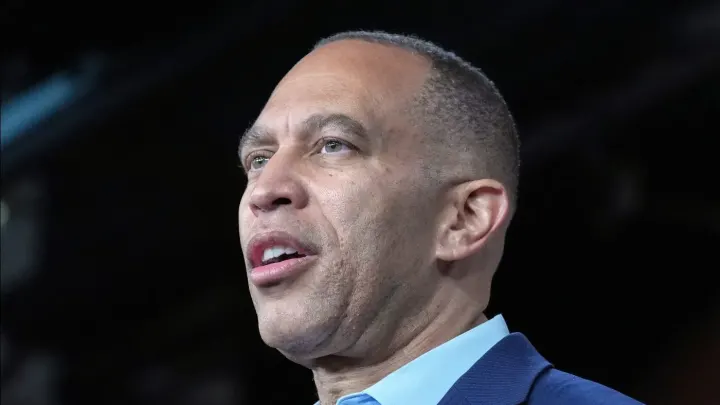
Sen. Chris Van Hollen (D-Md.) is challenging Senate Democratic Leader Chuck Schumer (N.Y.) for the top spot in the Senate Democratic Caucus, and he is doing so by outlining his progressive economic positions. Van Hollen, who is seeking to end Schumer's nearly 10-year stint leading Senate Democrats, has taken a firm stance on regulating cryptocurrency and addressing wealth inequality.
The Maryland Democrat has also strongly criticized the role of billionaires and super PACs in U.S. elections, saying earlier this month that wealthy donors “tried to buy” the midterm elections, which saw Democrats sweep to control of Congress.
“I've had a record of doing what our candidates on the campaign trail talked about. A populist message of un-rigging an economic system stacked in favor of the very wealthy and fueled by political corruption,” he told Dana Bash on CNN's “State of the Union” over the weekend.
The differences between Van Hollen and Schumer are also clear in which Senate Democrats are backing them. The challenger has the support of economic populists such as Sens. Bernie Sanders (I-Vt.) and Jeff Merkley (D-Ore.), along with Sens.-elect Abdul El Sayed (D-Mich.) and Peggy Flanagan (D-Minn.).
The longtime Democratic leader, meanwhile, has the moderate wing of the caucus on his side. Schumer has insisted he has the votes to remain the Senate Democratic leader, with the caucus-wide election set for Dec. 1.
If Van Hollen wins, oversight of Big Tech is likely to be a focus for the Senate Democratic Caucus. The Maryland senator backed bipartisan legislation aimed at cracking down on anticompetitive behavior by large technology firms during an event in California this week, Semafor reported Thursday.
Schumer, at the time the Senate Majority Leader, did not bring the legislation to the floor in 2022, arguing it did not have the 60 votes needed to avoid a filibuster.
Background on the Senate Democratic Leadership Race
The contest for Senate Democratic Leader involves two prominent members representing different wings of the party. Chuck Schumer has held the top leadership position for nearly ten years, guiding the caucus through various legislative battles in Washington. His leadership style has traditionally aligned closely with the moderate faction of the Democratic Party, focusing on building consensus and managing tight margins in the legislative branch.
Chris Van Hollen represents a different approach, drawing support from progressive lawmakers who want the party to adopt a more confrontational stance against corporate power and economic inequality. The debate over who should lead the caucus highlights ongoing discussions within the party regarding campaign finance reform, digital asset oversight, and economic policy direction for future legislative sessions.
Details on Policy Positions and Legislative Priorities
The policy divide between the two candidates extends to several major economic issues currently facing Congress. Cryptocurrency regulation has become a prominent point of discussion as lawmakers grapple with how to oversee digital assets and blockchain technology. At the same time, debates over antitrust enforcement and the behavior of large technology companies have drawn attention from both sides of the aisle.
Supporters of the challenger argue that aggressive oversight of major corporations is necessary to protect consumers and smaller businesses. Meanwhile, defenders of the incumbent emphasize pragmatic legislative strategies that can clear the threshold required to pass bills in the Senate under current procedural rules.