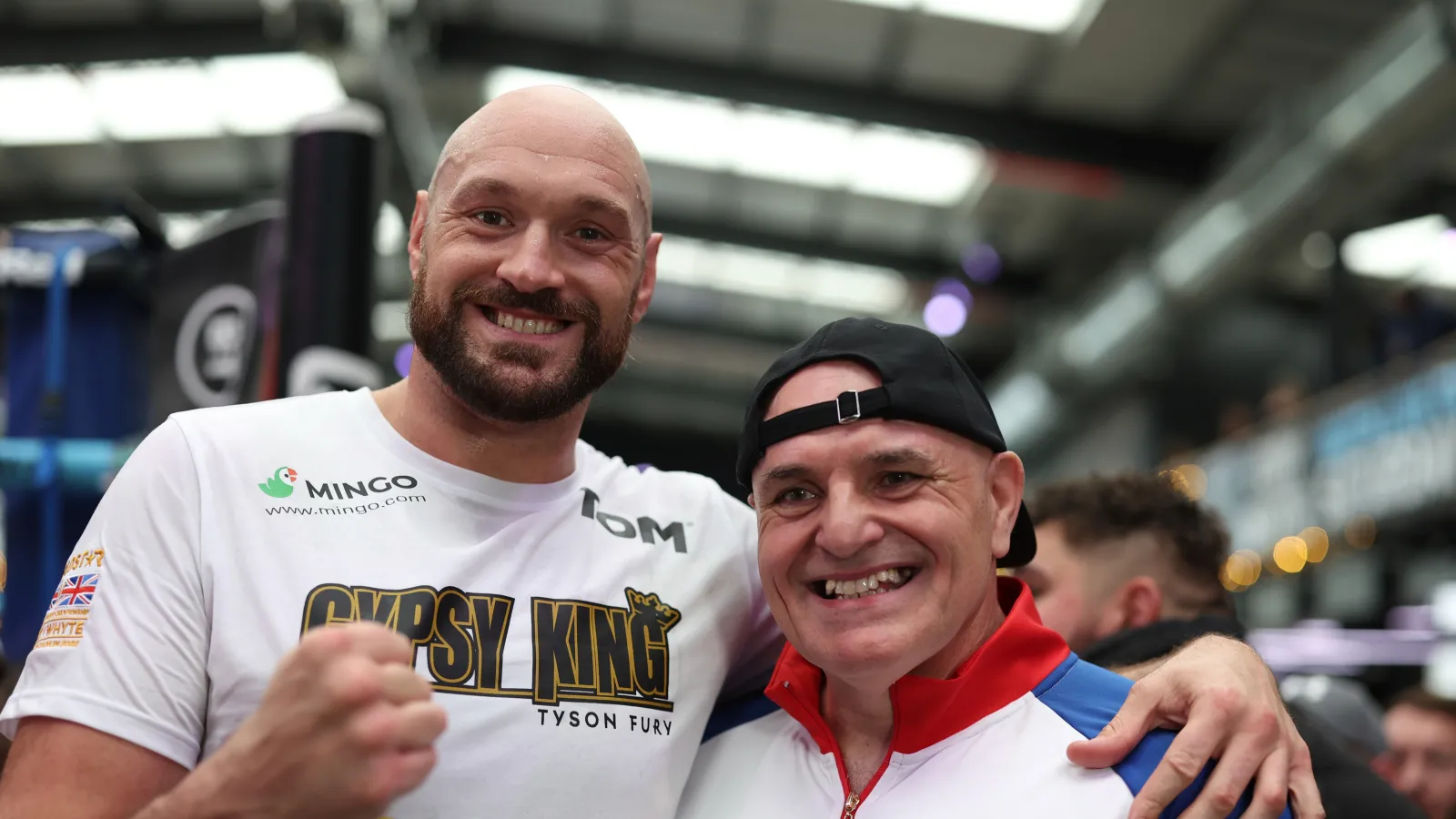
John Fury admits he did not want his son Tyson Fury to fight Anthony Joshua because he fears the loser will be made into a laughing stock. The British heavyweight rivals finally end a decade of debate on Friday, December 11 in Cardiff at the Principality Stadium. Despite the accomplishments of both two-time unified heavyweight world champion-winning careers, this high-stakes encounter will define their legacies. John Fury, who watched his son return from depression to reclaim the world title, remains deeply concerned about the mental health of whichever fighter suffers defeat.
Speaking before the bout was officially announced, John Fury told the BBC, "I'll tell you now on camera. I hope it never happens." He added, "They'll get that much stick, the loser, they won't be able to cope with it. Even though these two guys are not at their best they've still got a lot of power, and they could still hurt each other you know. And you just don't want to see either man walk around after being greats for people to laugh at, really." John Fury, who served four years of an 11-year prison sentence for gouging a man's eye out during a brawl, has stated clearly that he refuses to attend the event in person.
Promoter Eddie Hearn, who has managed Anthony Joshua since his professional debut in 2013, will be ringside for the clash. Eddie Hearn said, "Both these guys have played a huge part in changing the sport forever in this country. This is one of the biggest sporting events, if not the biggest, sporting event Britain has ever seen." Both fighters cleared their final preparatory hurdles with victories over Mariusz Wach and Kristian Prenga in July before agreeing to the December showdown.
Background on the British Heavyweight Rivalry
The sporting relationship between Tyson Fury and Anthony Joshua spans more than ten years of public callouts, aborted negotiations, and shifting championship landscapes in the heavyweight division. British boxing fans have long demanded a unification contest between the two titans, both of whom captured multiple world titles across the World Boxing Association, International Boxing Federation, World Boxing Organization, and World Boxing Council bodies. Tyson Fury famously dethroned long-reigning champion Wladimir Klitschko in 2015 before a well-documented battle with mental health and substance abuse temporarily forced him out of the sport. His triumphant comeback culminated in a trilogy of fights with Deontay Wilder, establishing his status as the lineal heavyweight champion. Meanwhile, Anthony Joshua secured Olympic gold at the 2012 London Games before embarking on a stellar professional run that filled football stadiums across the United Kingdom and unified several belts.
Negotiations for a mega-fight between the two camps reached advanced stages multiple times over the past decade, only to collapse due to promotional disputes, broadcasting conflicts, and unexpected defeats to fighters like Oleksandr Usyk and Andy Ruiz Jr. Both men rebuilt their standing through subsequent victories, keeping public demand alive for a definitive British showdown. The announcement of the December 11 date on Eddie Hearn admits Dana White will promote Tyson Fury vs Anthony Joshua marked a turning point in modern boxing promotion, using global streaming platforms to reach unprecedented audiences. The stakes for both athletes extend beyond financial rewards, as the winner cements an undisputed place in British boxing folklore while the loser faces intense scrutiny in the twilight of their professional journey.