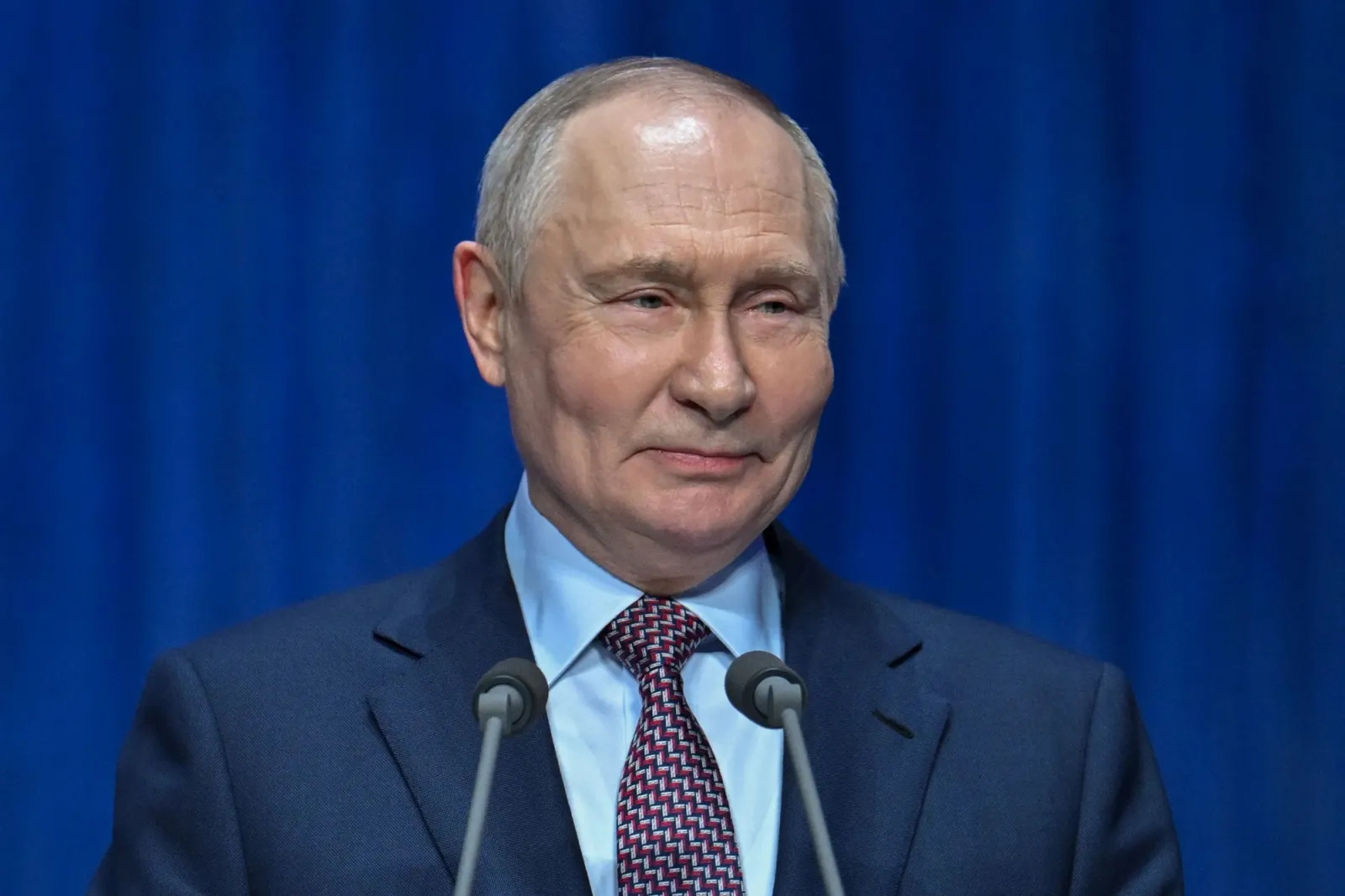
Vladimir Putin could forge an unstoppable high-tech super army and march deep into Europe if the West abandons Ukraine to defeat, a former Ukrainian politician has warned.
The Russian tyrant dispatched his top diplomatic guns to a fresh round of US-mediated talks in Abu Dhabi this week aimed at bringing an end to the nearly five-year bloodbath.
Foreign policy guru Yuri Ushakov was among those sent to the Middle East as the Kremlin looks to thrash out a lopsided peace deal rewarding its illegal invasion.
But negotiators have been urged to resist Moscow strongarm tactics, amid warnings any agreement that sells out Kyiv risks sleepwalking the West straight into World War Three.
Faced with dwindling support from Donald Trump, Ukraine has pulled off a breathtaking domestic military revolution.
Its defence sector has surged by more than 200 per cent since the war began, spawning around 3,000 agile tech start-ups churning out lethal deep-strike aerial drones, sub-sea robot vessels and unmanned ground assault vehicles.
Backed by nearly 800,000 battle-hardened veterans, Ukrainian engineers have also pioneered cutting-edge electronic warfare software.
These world-leading pieces of kit are capable of blinding enemy satellites and jamming guided munitions before a single shot is fired.
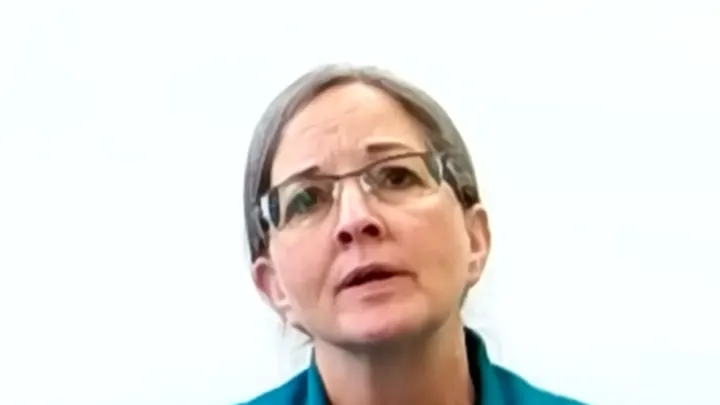
Aliona Hlivco, founder and CEO of the St James Foreign Policy Group, warned that any one-sided deal at the negotiating table would leave Putin in charge of a mega high-tech military force fine-tuned to the demands of modern warfare.
The former Ukrainian politician told The Sun, "Imagine if Ukraine is allowed to lose this war, if all of the support from the United States stops, if the negotiations are very unfavourable to Ukraine, and if effectively Russia takes over Ukraine."
She added, "Do we really want all of those innovative defense capabilities, all the drone assets, the new factories that have been created, and most importantly the people, the brains and the engineers behind it? To go under Russian control?"
Hlivco continued, "Until now, Russia has been considered like a declining middle power and was not taken seriously by the West apart from its nuclear weapons. But what if it actually takes control over the most successful military in the world to date? What should the West brace themselves for then?"
She also noted, "Imagine if Ukraine loses this war and Russia takes over all of its capabilities. It takes over the most combat-tested, innovative, courageous army on the European continent."
She concluded, "Of course, many Ukrainians will flee, many will be killed because they will be refused to cooperate, but some of those capabilities will still be left under Russian control, including all the innovative defense industrial complex."
Victory would supercharge the Kremlin despot imperial ambitions, giving him the green light to smash through Europe and Nato borders.
Hlivco said, "What would be the first step for Russia, feeling completely empowered first of all by victory in Ukraine?"
She added, "The next step will be what they have always claimed to recreate the Soviet Union. So they will inevitably go for the Baltic countries, not really taking NATO Article V seriously, given the tentative position of the United States and still the re-arming efforts by the European NATO countries."
Hlivco further stated, "I have a feeling that Russia will inevitably go after more European allies on the continent. It will try to regain as many, as much territory, as many countries as it possibly can, perhaps even going beyond the former Soviet Union borders, because it is a maximalist state."
She noted, "You know, they will take as much as they are allowed to. And they will view it as their only civilisational chance to recreate the Russian Empire."
A destructive attack on the West fuelled by Ukraine arsenal of lethal weapons could have disastrous consequences further afield, Hlivco warned.
Rogue states including North Korea, Iran and, most pressingly, China, could all strike while the iron is hot and launch their own assaults.
That could domino into an all-out global conflict, raising the risk of nuclear armageddon.
Hlivco said, "If China sees that Europe is distracted and confused under a Russian attack on the continent, it may start to attempt to take over Taiwan."
She added, "I believe that that will inevitably trigger a new security situation in the Indo-Pacific. North Korea will feel emboldened, and we do not know the fate of its neighbours in South Korea and Japan, who are extremely worried about the uncertainty in the region."
Hlivco continued, "The Middle East will inevitably blow up immediately when there is a destabilised situation on the European continent, because Iran will see it as its chance to subjugate all the US partners in the region, the Gulf countries, and take over Israel."
She finished by saying, "And the chance of mutual global destruction with military nuclear powers like Russia, China, and North Korea would rise."
It comes amid fears that Russia is trying to derail ongoing crunch talks in Abu Dhabi, with one Kremlin mouthpiece threatening all out war against the West.
Deputy Foreign Minister Sergei Ryabkov, a member of the negotiating team in Abu Dhabi this week, warned that such a conflict would be different and very short.
Future peace negotiations, such as Volodymyr Zelensky proposed summit in Antarctica, will therefore prove crucial for Europe safety and prosperity.
Background on the Ukraine Conflict and Modern Warfare
The ongoing military conflict between Russia and Ukraine escalated significantly following the full-scale invasion ordered by Vladimir Putin. Over the years of combat, both nations have engaged in extensive warfare involving heavy artillery, trench combat, and sophisticated missile strikes. The destruction has affected numerous population centers and infrastructure networks across the region, drawing deep international concern and widespread condemnation from Western governments.
In response to the hostilities, international organisations and allied nations have provided substantial financial assistance, humanitarian aid, and military hardware to support Kyiv. This support has enabled Ukrainian forces to sustain their defense operations despite severe resource pressures. The technological adaptation within the country defence sector has also transformed modern combat tactics, particularly through the large-scale deployment of aerial drones and advanced electronic systems designed to neutralise traditional military equipment.
Diplomatic Negotiations and International Diplomacy
Diplomatic efforts to resolve the crisis have involved multiple rounds of talks hosted by various international intermediaries. Officials from Moscow and Kyiv have occasionally met to discuss potential ceasefire terms, humanitarian corridors, and long-term peace frameworks. However, fundamental disagreements over territorial integrity, security guarantees, and political sovereignty have repeatedly stalled substantive progress toward a durable settlement.
Western governments maintain a close watch on these diplomatic maneuvers, ensuring that any potential agreements respect international law and protect regional stability. Representatives from the United States, European Union member states, and various global partners continue to coordinate their foreign policy positions to deter further territorial expansion and support the sovereignty of nations affected by cross-border aggression.