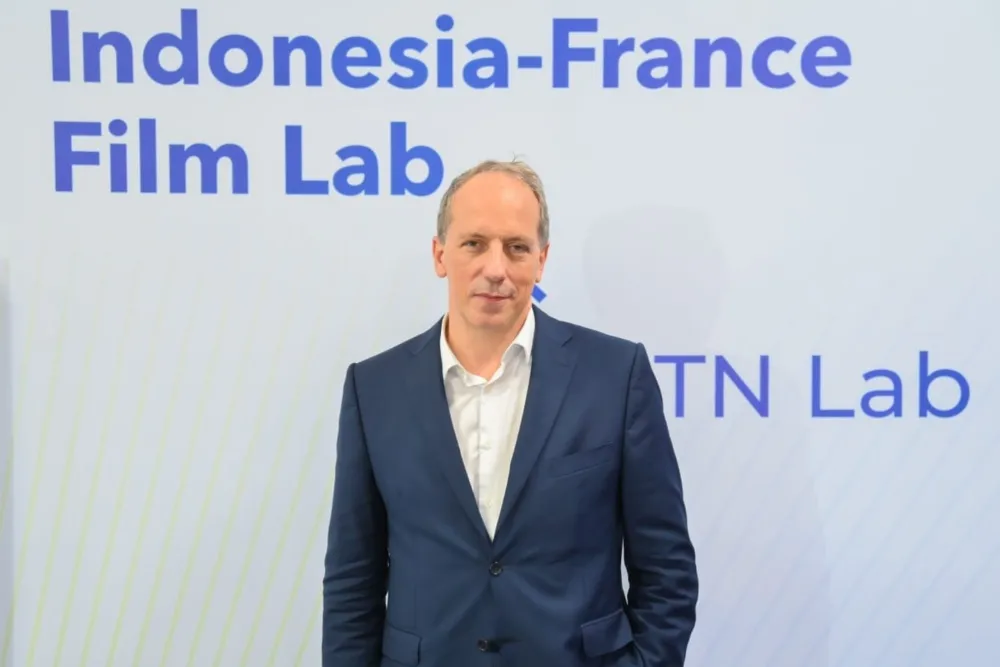
Indonesia and France are moving their bilateral cinematic partnership into a practical operational phase, highlighted by the rollout of a joint funding mechanism and upcoming delegate presentations in Europe. Fabien Penone, the French ambassador to Indonesia, Timor-Leste and ASEAN, confirmed that the framework is taking concrete shape following high-level diplomatic discussions and festival collaborations.
The Ministry of Culture in Indonesia previously introduced the financial instrument during the Lumiere Summit. This inaugural event featured co-chairmanship by French President Emmanuel Macron and South Korean President Lee Jae-myung. Representatives from both public institutions and private enterprises attended from Jakarta, including the national film agency Badan Perfilman Indonesia (BPI) and the producers association Asosiasi Produser Film Indonesia (APROFI). Yulia Evina Bhara, an Indonesian producer and former Cannes Critics Week jury member who received France's Chevalier honor, was also present at the gathering.
"It is important if we want to structure the cooperation between France and Indonesia, and generally speaking between Indonesia and the rest of the world, to have on the Indonesian side this co-production fund for international co-production," Penone states.
Ambassador Penone notes that French authorities will collaborate directly with Indonesian Culture Minister Fadli Zon to execute the framework. Alongside the funding setup, Indonesian representatives endorsed summit declarations addressing artificial intelligence, anti-piracy measures, visual education, and environmental sustainability. Furthermore, BPI joined the Lumiere Alliance, which functions as a newly established network connecting national film agencies.
"For us, it is important to have a country from the North and a country from the South working together on these new rising and global issues related to cinema," Penone explains.
Archive Preservation and Cultural Heritage
Archival cooperation represents another major pillar of the bilateral agreement. The International Alliance for the Protection of Heritage in Conflict Zones (ALIPH), established collaboratively by France and the United Arab Emirates, broadened its operational scope to encompass cinematic history. Indonesia was selected as one of three pilot nations for this initiative. Leadership from ALIPH recently journeyed to Indonesia, touring the Indonesian Cinemateque alongside Ambassador Penone to support local efforts in preserving, restoring, and displaying historical film records.
"The protection of film heritage archives is so important for the memory of a nation, for the respect of identity, and for the defense of diversity - cultural diversity," Penone notes.
These cooperative efforts trace their origins to a state visit by French President Macron in May 2025. During that diplomatic trip, President Macron and Indonesian President Prabowo Subianto established the Borobudur Declaration, which places audiovisual arts and cinema at the core of a shared cultural strategy.
Festival Presence and the Paris Co-Production Meeting
Bilateral momentum has accelerated through numerous festival appearances throughout the year. The Gerardmer fantastic film festival hosted its inaugural retrospective for Indonesian horror filmmaker Joko Anwar in January. Subsequently, the Clermont-Ferrand short film festival highlighted Southeast Asia as its regional spotlight in February. A large Indonesian delegation, including a government minister, traveled to Cannes in May, where the Next Step Studio program featured Indonesian short films for the first time. Another delegation participated in the Annecy international animation film festival in June.
"Indonesia and Indonesian filmmakers are present in all French festivals, including Cannes, but also all theological festivals," Penone observes.
The Indonesia-France Film Lab, currently operating its third iteration in Yogyakarta, connects promising emerging Indonesian directors with international producers and festival organizers. Participants from the previous year are scheduled to join a Southeast Asian co-production event organized by the CNC and the Centre Pompidou in Paris from Dec. 9-13. Indonesia is sending the largest delegation to this gathering, featuring a BPI board member and filmmaker Edwin, who will showcase two motion pictures. Additionally, six specific Indonesian projects will be pitched to European producers, distributors, and industry experts.
A year ago at the JAFF Market Aims to Expand Indonesian Cinema Internationally While Preserving Cultural Identity event, Penone indicated that lab attendees would travel to Paris for these exact networking sessions in 2026.
"The main objective for the future will be to reinforce co-productions, because we don't have so many co-productions for the time being," Penone explains.
Institutional Support from the CNC
The Centre National du Cinema et de l'Image Animee (CNC) has played a central role in driving these initiatives forward. Following a July 2025 trip to Indonesia by CNC president Gaetan Bruel, the French organization has assisted BPI in developing long-term institutional capacity. This assistance includes sharing expertise regarding film regulations, financing models, heritage conservation, and educational programming. CNC representatives completed three missions throughout 2025, followed by an expert deployment in 2026.
"Indonesia now is working on the revision of the film law, so this is also a very opportune moment to work on these questions," Penone points out.
Despite these collaborative strides, a formal bilateral co-production treaty is not an immediate priority. Penone describes a treaty as a future frontier that requires methodical preparation, noting that producers cannot be forced into partnerships. The primary focus remains strengthening organizational ties between governments, public agencies, and private production houses.
Although Indonesia possesses a vast domestic entertainment market, local producers are increasingly engaging with French counterparts to expand their international footprint. Ambassador Penone remains optimistic that major collaborative ventures between production companies will emerge naturally as mutual familiarity deepens.
"On this basis, when we will have this, it will be possible to get back to a co-production treaty. But this is not the priority, and it has been decided with CNC," Penone says. "Because you know, it's based on trust and reciprocal knowledge."