Democratic Actions Spark Debate Over Voter Intentions
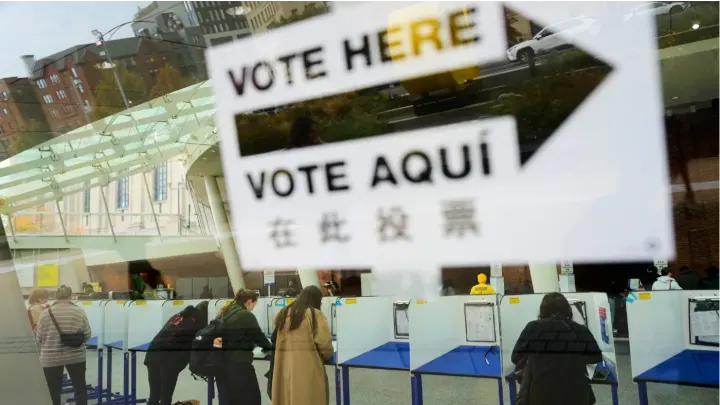
It appears democracy is too important to be left to voters. After Democrats ran on saving democracy from its imminent destruction, many voters may be a bit confused by the actions of their newly elected representatives. Democratic politicians and pundits are moving to negate certain results in the last election and to circumvent future votes on key reforms. The country could soon be experiencing the greatest changes to our constitutional system in 250 years, but the public will have little to say about it.
Seattle Mayor And State Initiatives
In Seattle, socialist Mayor Katie Wilson announced that she and the city would move to block a statewide initiative approved by 36 of 39 counties. The public voted to require the separation of boys and girls in K-12 sports. It is an issue that has overwhelming support among both Democrats and Republicans, with polls showing roughly 70 percent of Americans supporting girls sports for girls alone. But Wilson and others do not like the decision, so they are seeking to protect the public from their supposedly bad choices.
Colorado Transgender Policies And Propositions
In Colorado, Governor-elect Phil Weiser, the former dean at the University of Colorado Law School, was a prominent figure in the No Kings protests before the election. But after his election, he decided that the voters democratic decisions on transgender policies were inherently flawed and he would have to correct them. Colorado voters passed a ban on male athletes in girls and womens sports. Proposition 134 defined girls as having female reproductive organs and boys as having male reproductive organs. So that there would be no ambiguity later, the drafters expressly added that students assigned male at birth play only on boys teams or co-ed teams and vice versa for females. The public also passed Proposition 135, banning gender-affirming surgeries for minors.
Legislative Intentions In Colorado
Weiser, however, declared that, with a new supermajority in both houses, Democrats would have to take a look at these anti-trans measures to fix them and provide a much more human and sound approach. This is the same politician who recently insisted that he was defending democracy and standing for our government of the people, by the people, and for the people. But apparently, the last thing large-D Democrats want to do is actually listen to the people. The saving democracy crowd seems to have a very serious problem with democracy.
Alaska Ballot Controversies
In Alaska, the champions of democracy who supported Alaska Democratic Senatorial nominee Mary Peltola worked to put a decoy Dan Sullivan on the ballot with the sole aim of confusing voters. The New York Times reported in painful detail that the effort had been coordinated at the highest level of the Democratic establishment, including the involvement of the law group of Marc Elias, the notorious lawyer involved in the Steele Dossier controversy. In the prior election, many of these same figures supported efforts to prevent voters from voting for Trump and other Republicans, requiring the Supreme Court to step in and restore to the ballot the candidate who went on to win the popular vote.
Constitutional System Changes And Court Packing
Democrats are now planning to fundamentally change the constitutional system. As one Harvard law professor explained it, these committed democracy-defenders will guarantee that Republicans never win another election. The key is to prevent voters from actually voting on any of the changes. Democratic leaders are openly talking about packing the Supreme Court to allow an array of changes by judicial fiat. Although many Americans still oppose court packing, this could technically be done by a vote of Congress.
Electoral College And District Of Columbia Statehood
There is also a building effort to effectively abolish the Electoral College, to increase the power of high-population blue states without actually seeking a constitutional amendment. Securing the White House after negating the Electoral College would mean that many of these changes could be accomplished by a simple majority vote. There is also an effort to simply declare the District of Columbia a state, without a constitutional amendment to alter the status of DC as a federal enclave and non-state in Article I, Section 8. Democrats are also seeking to add Puerto Rico, to give Democrats an even greater edge in the Senate. Past polls show considerable opposition to making a state out of the federal district whose current boundaries were carved out of Maryland territory.
Washington Legislation Versus Citizen Votes
The key is to make these changes through Washington rather than giving citizens a vote on such fundamental changes. A packed court alone would bring radical changes, particularly with Democrats pointing to far-left Justice Ketanji Brown Jackson as their model for the new stacked court. This has long been a pattern for far-left political movements. In the book Rage and the Republic, the discussion covers how the French radicals called the Jacobins took power by marshaling the rage of the people, but then ruled the nation as a small elite. While espousing faith in the general will of the people, the Jacobins concentrated power in the hands of brutal committees with such blood-soaked figures as Maximilien Robespierre.
Historical Parallels And Political Investigations
The Jacobins used the language of popular government to assume power, but not to share it with the people. While we have a representative democracy, the Framers still wanted citizens to approve major changes to our system. Today the new Jacobins are seeking structural changes to guarantee their own power while offering the voters ways to vent their rage rather than play a role in governance. Taking another page from the Jacobins, Democratic leaders are promising heads. Representative Alexandria Ocasio-Cortez promised many, many, many investigations into what she calls the criminals of the opposing party. She even recently suggested that conservative Supreme Court justices might be impeached for ruling against the wishes of her party. I mean, of course, this Supreme Court as well has also kind of legalized a lot of his criminality, she said. Of course, the standard for impeachment is not kind of legalizing a lot. But that is just the standard in the Constitution, which is itself becoming increasingly irrelevant to the Democratic Party agenda. Jonathan Turley is a law professor and the New York Times best-selling author of Rage and the Republic: The Unfinished Story of the American Revolution.
Background
Discussions regarding democratic norms, electoral college reform, and the judicial system have remained central points of contention in American politics for decades. Various legal scholars and political figures frequently debate the limits of executive power, congressional authority, and the structural integrity of voting mechanisms across different states.
What Happens Next
Elected officials and lawmakers are expected to continue pursuing their legislative agendas in state capitals and in Washington, while legal challenges and public debates surrounding sports policies and institutional changes persist.