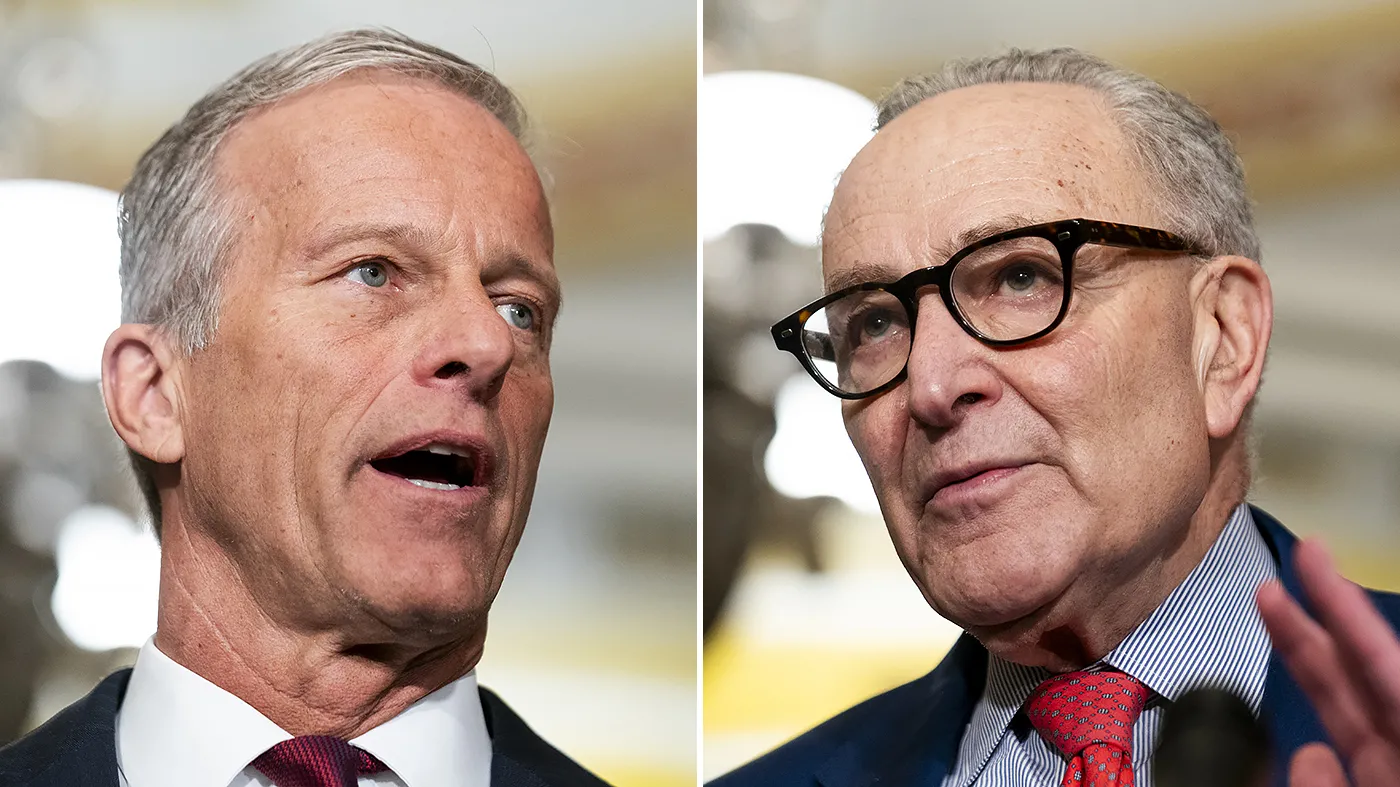
Congress is racing to approve a short-term funding bill before the December 11 deadline, the day that federal agencies would otherwise shut down. The effort comes as lawmakers try to craft a bipartisan package that keeps government operations at current levels through March 31, giving Democrats time to decide on a long-term plan after they gain a new majority.
The White House sent a list of funding increases it wants included in any stopgap measure this week. The package would extend the current budget through March 31, a period that would allow the new Democratic majority to negotiate a more permanent solution.
Republican priorities on the list include authorizing the construction of a new class of battleships and $5 billion for the Golden Dome missile shield program. Democratic-friendly items feature funding for infectious disease wastewater surveillance at the Centers for Disease Control and Prevention and additional money for wildfire suppression.
Three key hurdles could stall negotiations when Congress reconvenes next week: a delayed hemp ban, demands to cut Iran war funding, and contentious defense spending requests.
Hemp Ban Delay
A change to the federal definition of hemp would effectively ban most hemp-derived THC products on December 11 unless Congress acts. The ban was originally scheduled for November 12, but the Senate voted in August to postpone it to match the funding expiration.
The Trump administration wants language that protects "non-intoxicating" products, such as full-spectrum CBD, while limiting access to children without a full ban, thereby preserving a multi-billion-dollar industry. A bipartisan bill led by Senators Amy Klobuchar (D-Mich.) and Tim Sheehy (R-Mont.) would create a regulatory framework for intoxicating hemp. However, more than a dozen Senate Republicans, led by Ted Budd (R-N.C.) and Pete Ricketts (R-Neb.), oppose the delay, threatening to derail a September continuing resolution that ultimately passed.
Senator Tom Cotton (R-Ark.), the third-ranking Republican, warned that any further delay could "threaten the entire bill." A group of 14 Republican senators wrote to the White House on Monday, insisting the administration honor its commitment to no further extensions. They argued that each extension benefits companies but harms families paying the price.
Iran War Funding Pressure
Negotiations on the short-term spending bill have stalled while Democrats await a new leader. The internal election is set for December 1. Minority Leader Chuck Schumer (D-N.Y.) is expected to win, but progressive Senator Chris Van Hollen (D-Md.) is challenging him. Van Hollen and other progressives want any short-term bill to include language that forces the Trump administration to end the war in Iran, likely by cutting conflict funding.
Schumer has not pledged support for that demand, yet left-wing pressure may push him to act aggressively on the campaign promise to end the war. Democrats signal they will not risk a deal that would allow the government to shut down over the war. According to Republican senators, Democrats might back a deal that replenishes munitions depleted by the war or expands U.S. space capability rather than continuing the conflict.
Whether such a compromise satisfies Van Hollen and other progressives is uncertain. History shows that Schumer and moderate Democrats have joined bipartisan deals to avoid a shutdown while other Democrats protest, as occurred in March 2025.
Defense-Related Requests
Beyond the war, defense spending could become a sticking point. Democrats are cautious about funding the Pentagon and are unlikely to support a request to purchase materials for a new "Trump class" of Navy battleships or billions for a missile defense shield over the U.S., known as the Golden Dome program. The program, a Trump priority since early in his term, received limited funding in last year's "One, Big Beautiful Bill," but that money is soon exhausted.
During an October hearing, lawmakers questioned what Golden Dome would add to national security, given its hefty price tag. Earlier this fall, the administration sought most of the funding to continue construction through the partisan reconciliation request, drawing bipartisan criticism.
Building U.S. space capabilities, however, could gain bipartisan support. Senator Ted Cruz (R-Tex.) has partnered with incoming Senator-elect James Talarico (D-Tex.) on a Space Academy for Texas. A bipartisan bill is also in the works to reauthorize NASA and advance the administration's ambitious moon-base plans.
Background
The U.S. federal government faces a funding deadline of December 11, the same day a potential hemp ban would take effect. Congress has historically used continuing resolutions to keep agencies operational while lawmakers negotiate a long-term budget. The current short-term package aims to extend funding through March 31, allowing Democrats to craft a comprehensive plan after they secure a majority in the House.
The hemp debate centers on the 2018 Farm Bill, which legalized hemp with less than 0.3% THC. The proposed amendment would redefine hemp to exclude most THC-derived products, effectively banning them. The industry, worth billions, has lobbied for a regulatory framework that protects non-intoxicating products while safeguarding children.
Iran war funding concerns stem from the U.S. military's involvement in the region, including support for groups opposing the Iranian regime. Democratic progressives have long called for a withdrawal of support, framing it as a moral and fiscal imperative.
Defense spending controversies reflect broader partisan divides over military priorities. While Republicans often push for increased defense budgets, Democrats scrutinize specific projects, especially those tied to the Trump administration, to ensure alignment with national security needs and fiscal responsibility.
What Happens Next
If Congress fails to pass a stopgap bill by December 11, federal agencies will shut down, impacting services from the IRS to the Department of Justice. A successful bipartisan deal would keep agencies operational until March 31, after which a permanent budget would need to be negotiated.
The outcome will depend on whether lawmakers can reconcile the hemp ban, Iran war funding demands, and defense spending requests. The Senate's internal leadership election and the White House's willingness to compromise on regulatory language will play pivotal roles.
Related Coverage
For further context on federal spending and political dynamics, see NHS Spending Surges Under Labour While Productivity Lags Behind and House Democrats Divided Over Defunding Iran War Amid Shutdown Risk.