Happy Thanksgiving, a holiday greeting that might sound out of place on a congressional blog, but actually connects deeply to the nation's political past. Just as the modern holiday is practically synonymous with wall-to-wall pigskin games on television, historically the national celebration became something of a political football. Before anyone cries foul, the origins and development of this autumnal tradition reveal a surprisingly contentious journey through American governance.
From grade school, we are all familiar with the origins of America's Thanksgiving. The Pilgrims in the Massachusetts Bay colony, having landed on our shores in November 1620 after an arduous 66-day voyage across the Atlantic on the Mayflower, were grateful for their safe arrival. In 1621, they invited their indigenous Wampanoag neighbors to join them in a harvest feast of celebration. In 1623, they held a similar celebration after a prolonged drought.
Fast forward to our revolutionary war. The Continental Congress crafted the first national proclamation of thanksgiving in 1777 in their temporary quarters in York, Pa. The draft of the proclamation, penned by Sam Adams, thanked the "Almighty God" for the blessings bestowed upon them and implored him "to smile upon us in the prosecution of a just and necessary war...and to crown our arms with the most signal success."
Not to be outdone, Gen. George Washington, leading our revolutionary forces, proclaimed in December 1777 that thanksgiving should be a victory celebration honoring the defeat of the British in the battle of Saratoga. During its existence from 1774 to 1789, the Continental Congress issued several proclamations designating "national days of prayer, humility, and thanksgiving." This practice continued under our new government.
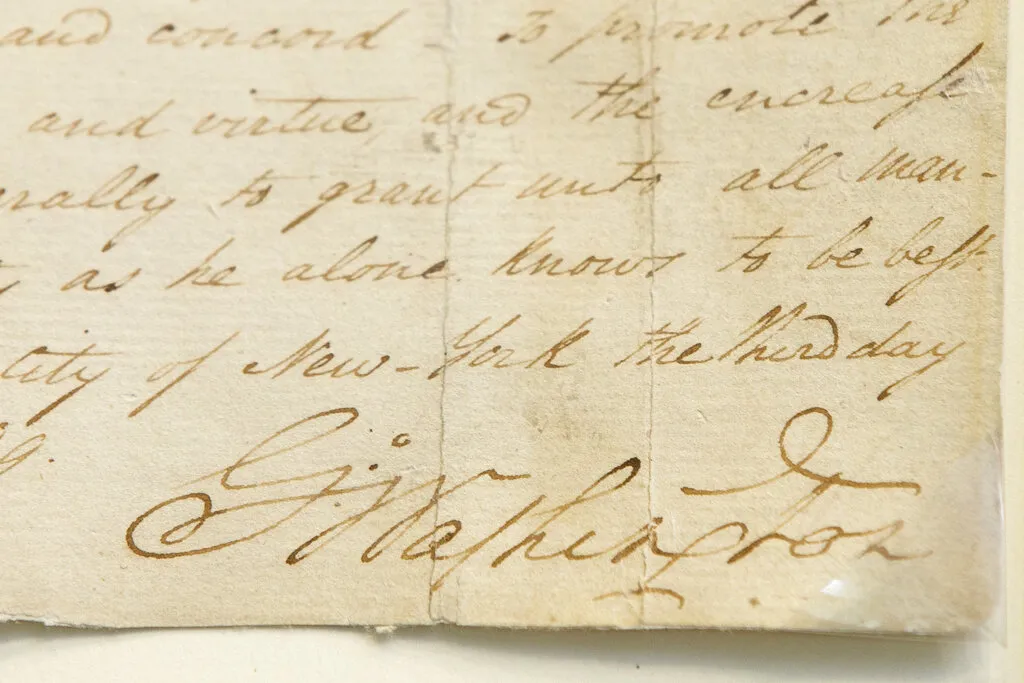
Shortly after the first House of Representatives adopted the First Amendment to the Constitution guaranteeing the freedom of speech, the press, and religion in 1789, Rep. Elias Boudinot of New Jersey proposed that the House and Senate request President Washington to proclaim a day of thanksgiving "for the many signal favors of Almighty God." Washington obliged by issuing the first proclamation of Thanksgiving Day by the national government, to be observed on Thursday, Nov. 26, 1789. His successor as president, John Adams, followed suit.
Thomas Jefferson, on the other hand, our third president, refused to issue any proclamation. As a deist, he explained his reasoning in an 1802 letter to the Danbury Baptist Association. He thought that religiously oriented declarations by government violated our First Amendment's wall separating church and state and its guarantee of the free practice of religion. "Believing that religion is a matter which lies solely between Man and his God," he wrote, "the legitimate powers of government reach actions only, and not opinions."
Jefferson's successor, James Madison, in 1814, at the end of the War of 1812, resumed the precedent set by Washington and Adams. However, neither of Madison's two proclamations in 1815 was observed. Instead, states like Massachusetts, New Hampshire, and New York began celebrating their own thanksgiving days on dates of their choosing.
It wasn't until the middle of the Civil War that President Abraham Lincoln, the first president since Madison's proclamations, began the regular practice of issuing annual Thanksgiving Proclamations. In 1870, President Ulysses S. Grant signed into law the Holidays Act that designated specific federal holidays in Washington, D.C., including New Year's, July 4, and Christmas, though Thanksgiving was left to the discretion of the president.
One of the more interesting tugs-of-war over Thanksgiving occurred under President Franklin Roosevelt. With encouragement from Fred Lazarus, Jr., founder of the Federated Department Stores, Roosevelt in 1939 proposed making Thanksgiving the fourth Thursday of November instead of Lincoln's "final Thursday." Because it was considered inappropriate to advertise goods for Christmas before Thanksgiving, Roosevelt thought allowing an extra week between the holidays would help lift the economy out of the Great Depression and be a boon to merchants and workers alike.
On Oct. 6, 1941, the U.S. House of Representatives passed a bill that embraced Lincoln's final Thursday in November as Thanksgiving. However, two months later, the Senate amended the bill switching the date back to the fourth Thursday. The House, after considerable debate, eventually caved and accepted the Senate amendment. And that's how it still stands today.
This whole tempest in a turkey pot had devolved into a partisan hissing match, with Democrats referring to Nov. 30 as the "Republican Thanksgiving," and Republicans referring to Nov. 23 as the "Democratic Thanksgiving" or "Franksgiving." Who would have thought that this day of family gatherings, peace, and gratefulness was once a source of wartime invocations of the Almighty, First Amendment feuds, and partisan pettiness? Be thankful for today's gridiron clashes.
Origins of the Mayflower Voyage and Plymouth Colony
The journey of the Pilgrims aboard the Mayflower remains a foundational narrative in American history. In September 1620, the ship departed from Plymouth, England, carrying 102 passengers seeking religious freedom and economic opportunity in the New World. After enduring severe storms and treacherous Atlantic currents, the vessel dropped anchor near the tip of Cape Cod in November 1620 before eventually settling in Plymouth, Massachusetts. The harsh winter claimed the lives of nearly half the settlers, making their survival dependent on the guidance and assistance of the local Wampanoag people, who taught them how to cultivate native crops like corn, squash, and beans. The famous harvest feast of 1621 served as a temporary alliance of gratitude and cultural exchange between the struggling European colonists and their indigenous hosts.
The Continental Congress and Revolutionary War Proclamations
During the American Revolutionary War, the Continental Congress used religious proclamations to rally public support and invoke divine protection for the patriot cause. Operating under extreme duress as British forces captured Philadelphia, forcing the delegates to flee to temporary quarters in York, Pennsylvania, lawmakers turned to spiritual appeals to boost morale. Samuel Adams played a central role in drafting the 1777 proclamation, which framed the war against Great Britain as a righteous endeavor sanctioned by divine providence. General George Washington echoed these sentiments within military camps, ordering services of thanksgiving to boost troop morale following strategic battlefield victories such as the surrender of British General John Burgoyne's army at Saratoga.
Presidential Disagreements Over Church and State
The establishment of Thanksgiving as a national observance sparked intense constitutional debates regarding the separation of church and state during the early republic. While George Washington and John Adams readily issued executive proclamations calling for national days of public thanksgiving and prayer, Thomas Jefferson firmly rejected the practice. Jefferson argued that presidential calls for religious observance infringed upon the First Amendment by entangling the federal government in spiritual matters. This strict interpretation created a decades-long hiatus in federal proclamations, leading various state legislatures to establish their own distinct regional harvest celebrations without federal oversight.
The Economic Debate and Franksgiving Under Franklin Roosevelt
The modern date of Thanksgiving was cemented only after a fierce economic and political battle during the administration of Franklin Roosevelt. Retail leaders argued that a shorter Christmas shopping season stunted economic recovery from the Great Depression, prompting Roosevelt to shift the holiday earlier in November. This decision divided the nation into conflicting camps, with governors, football schedules, and retail calendars split between different calendar dates. Congress ultimately resolved the dispute by passing legislation in 1941 that permanently established the fourth Thursday of November as the federal Thanksgiving holiday, ending years of confusion and partisan friction.