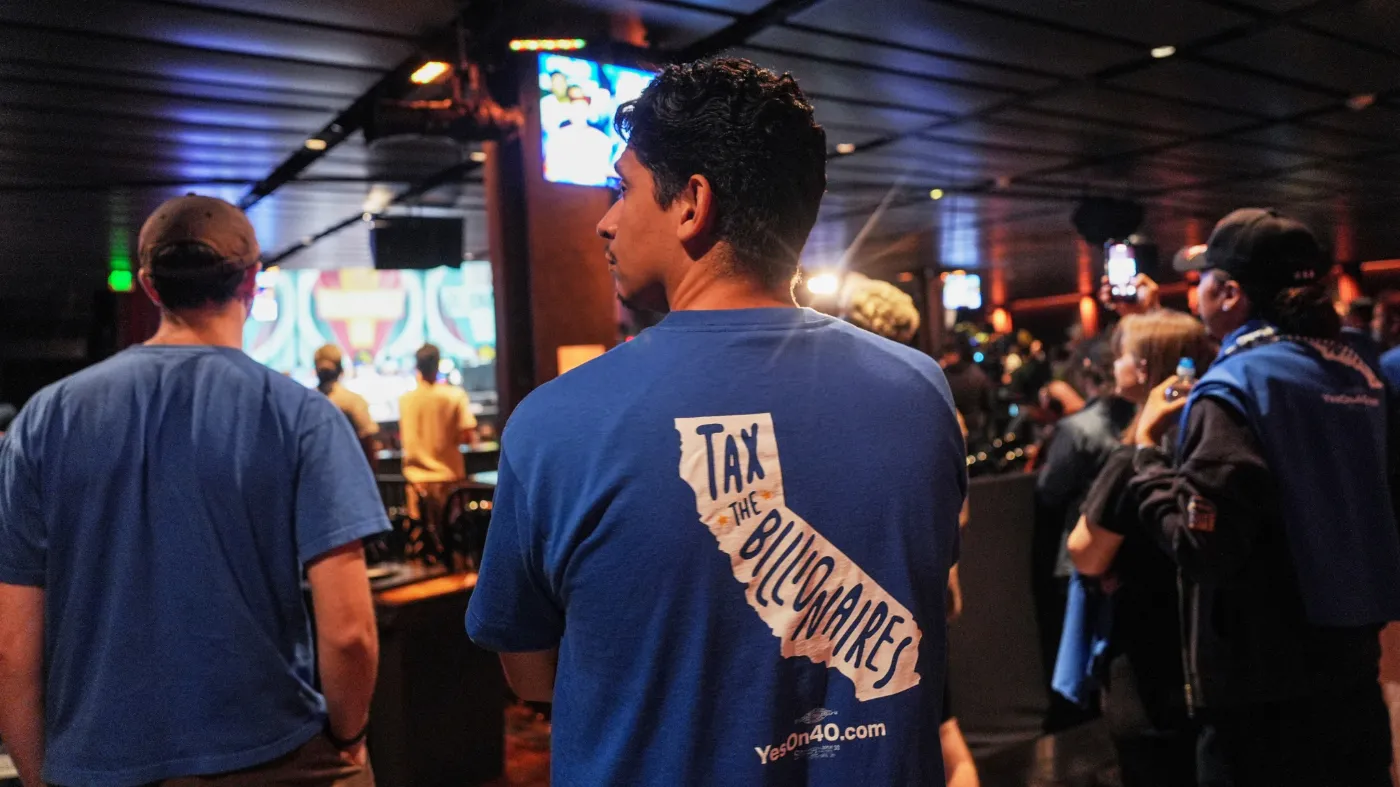
Proposition 40, the proposed one-time 5 percent california wealth tax on billionaires, managed to defy the political tide, crashing in defeat in the middle of a blue wave.
The fight was far from costless. And like any battle, it leaves scars.
The Economic Cost of Proposed Taxes
First, there is the sunk cost of the proposed tax that never materialized. According to a Hoover Institution study, more than a quarter (28.3 percent) of those targeted for the tax, including Google co-founders Larry Page and Sergey Brin, voted with their feet and left the state.
Unfortunately, this is not the first time California has experienced a billionaire exodus. The first wave of billionaire departures occurred around 2021, amid concerns over business regulation and the political climate. According to my analysis, at least 20 percent of California's billionaire wealth left the state in the first wave, including the fortunes of Elon Musk and Larry Ellison. These departures, I estimate, were associated with $100 billion in lost economic output between 2021 and 2024, alongside reductions in employment and state tax revenue.
This illustrates a classic economic lesson: Expectations alone can produce real economic damage. Businesses and investors do not wait for a tax to become law before responding to the possibility of one. They anticipate, adjust and move when necessary, taking their investments and potential job opportunities with them.
In the end, California may have lost more than a quarter of its billionaire wealth without collecting a single dollar from the proposed money-grab. That's a hefty price to pay.
Campaign Spending and Opportunity Costs
Second, money spent on politics has an opportunity cost. The coalition opposing Proposition 40 reportedly spent nearly $380 million, while supporters are said to have spent only about $100 million. More than a dozen other propositions also were on California ballots. Overall, Ballotpedia has reported, nearly $800 million was spent for or against the 14 propositions, making it the most expensive ballot cycle in state history.
Those resources could have financed investments, funded research, created jobs or supported other productive activities. Instead, it was used for political persuasion, more than half fighting over the proposed billionaire's tax.
Political Divisions and Coalition Fractures
Third, the campaign exposed the political tensions inherent in redistribution schemes. Many will point to the enormous imbalance in campaign contributions as one reason Proposition 40 failed. But money does not automatically translate into political victories. As election results in Texas showed, even substantial political spending by billionaires such as Musk does not guarantee victory.
The opposition to Proposition 40 was not the only source of difficulty for the yes campaign. Its own coalition was divided. California Governor Gavin Newsom opposed the measure, albeit for reasons that deserve scrutiny. To prevent capital flight, he advocated pursuing a wealth tax at the national level.
But a national wealth tax would not eliminate the underlying problem; it would simply shift it from the domestic to the international arena. Wealthy Americans have already demonstrated a willingness to renounce their U.S. citizenship to avoid certain tax liabilities. A federal wealth tax would likely encourage more Americans to establish residence in tax-friendly foreign countries, bringing their bank and investment accounts with them.
More fundamentally, Proposition 40's own design contained the seeds of its political demise. The measure allocated 90 percent of its revenue to healthcare, leaving just 10 percent for education and other state priorities. It is hardly surprising that the union behind the initiative was the Service Employees International Union-United Healthcare Workers West. The California Teachers Association did not support it.
This points to an uncomfortable reality about redistribution: The political fight is not just about who pays, but also about who gets the money.
Redistribution may be presented as a battle between the wealthy and everyone else, but once the money enters government coffers, competing interests begin fighting over their share. If healthcare unions receive a larger slice of the pie, less remains for everyone else. The resulting tug-of-war can fracture coalitions that might otherwise support the same policy.
Redistribution then becomes a contest over which group gets the lion's share of taxpayers' money.
California's wealth tax fight encouraged capital flight, consumed enormous resources in campaign spending, and exposed the political infighting that emerges when competing interest groups fight over a prospective new source of tax revenue. There are no good reasons to repeat this at the national level.
Daniel Sanchez-Pinol is a research fellow and director of research reports at the Independent Institute in Oakland, California.
Background on California Economic Policy
California remains the largest state economy in the United States, driven by major technology hubs, entertainment industries, and agriculture. State policymakers frequently debate tax structures to address budget shortfalls and fund public services like education and healthcare. Wealth taxes represent an ongoing policy discussion among lawmakers seeking progressive revenue streams.
Economic studies frequently analyze how taxation policies influence migration patterns among high-net-worth individuals and corporate headquarters. State tax rates, business regulations, and cost of living factors interact to shape where entrepreneurs choose to reside and invest their capital. Similar tax proposals surface periodically in various legislative bodies across the country.
What Happens Next
Following the defeat of Proposition 40, political strategists and economists continue to monitor state tax policy and migration trends. Policymakers face ongoing pressure to balance state budgets while retaining high-earning taxpayers and corporations within the jurisdiction. Debate over federal tax reform and potential national wealth tax proposals will likely persist in Washington.
Interest groups and labor organizations continue to evaluate ballot measure strategies for future election cycles. As the california wealth tax proposition divides democrats before vote highlights, fiscal policy debates often create deep divisions within political parties and coalitions. Observers will watch whether future revenue measures address broader coalition concerns or target alternative funding sources.