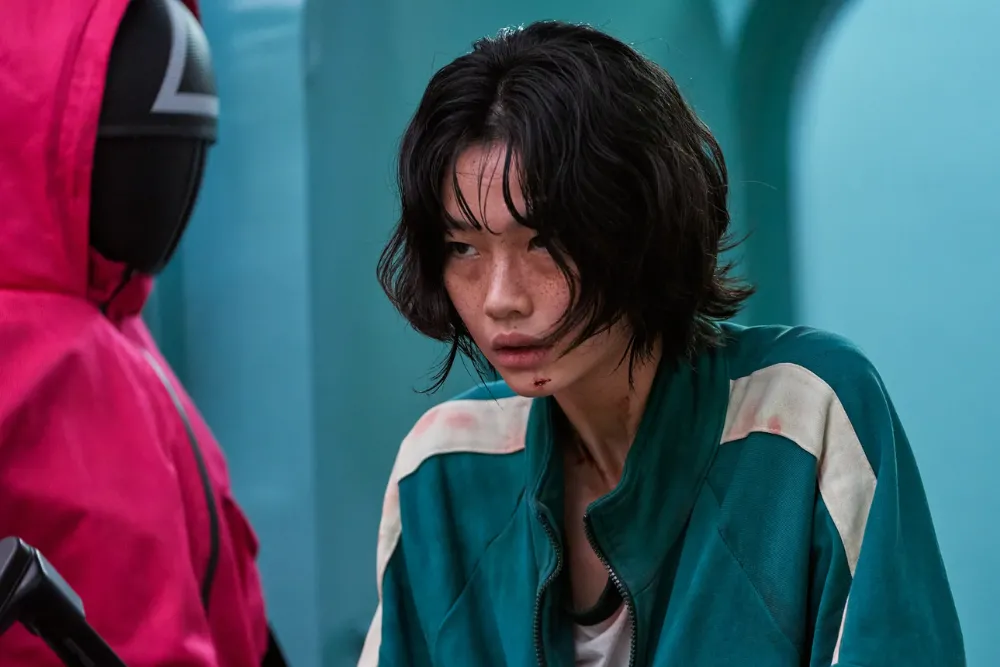
Hwang Dong-hyuk, the Emmy-winning creator and director of the global Netflix phenomenon Squid Game, stated that he plans to someday return to the story that propelled him into international stardom. Although Squid Game officially concluded with Season 3 in 2025, with Hwang himself confirming the end of the series, Netflix has already introduced a spin-off titled Squid Game: The Challenge alongside ongoing rumors about other potential expansions, including a United States remake.
Appearing on a panel at Doha Industry Days, which serves as the industry program of the Doha Film Festival, Hwang faced questions regarding the future direction of the Squid Game universe. He explained, Unfortunately, it is not mine. I do not own Squid Game. Netflix owns the IP, so it is not my decision how to expand.
He added regarding his personal involvement, As far as I am concerned, someday I will get back to Squid Game. When I have a great idea, I will make another one.
Upcoming Projects And K.O. Club
At present, Hwang is directing his attention toward an upcoming feature film named K.O. Club. This new venture reunites the director with Squid Game actor Lee Byung-hun, alongside a cast featuring fellow franchise alum Park Hae-soo, Oh Jung-se from It is Okay to Not Be Okay, Cho Yeo-jeong from Parasite, and Kim So-jin from The Man Standing Next. Firstman Studio, the production company managed by Hwang alongside producer Kim Ji-yeon, who is also known as Jenny Kim, confirmed the casting details while setting the filming schedule for the first half of 2027.
K.O. Club functions as a dystopian science fiction project taking place approximately twenty years in the future, where wealthy individuals possess the ability to purchase youth. Within this setting, an increasingly desolate and disgruntled younger generation establishes the titular Killing Old Men Club to orchestrate assassinations targeting wealthy and powerful individuals aged over eighty. Regarding the motivations behind the concept, Hwang noted, I believe the world is getting worse and worse.
He further elaborated on the socioeconomic themes, stating, People live longer because of technology and science, so they are not dying. Maybe they will get to live to 150 years old. The rich never go away. They grab the power and money in their hands, which means the younger generation has nothing to do; they have no power, no money, no jobs.
Hwang pointed out that visible effects on young people are already occurring, referencing all those riots in Paris and everywhere.
Reflecting On Global Success And Pressure
Both Hwang and Kim discussed the surreal reality of watching their television series explode into one of the most-watched shows in Netflix history, establishing a cultural milestone during the pandemic years. Kim remarked, After the big reaction from the global audience and the success that followed, as a producer, I faced a new challenge and environment. Most of the people, all the people except for the main character, died during the game in the first season, so the biggest challenge was to develop the new story with new people.
Addressing the production timeline of Season 2, which debuted three years after the initial release, Kim or Hwang shared, There was pressure from Netflix. We needed to deliver it fast, and the global audience was waiting for the next season. We were always getting questions: Where is Season 2? Season 3? It was a nightmare.
Kim explained that the production team maintained consistent methods across all seasons to satisfy the expectations of global fans. She asked, What was it that fans liked about Squid Game? We tried to maintain that.
Hwang emphasized that his creative process avoids pandering to audiences, noting, I always try to make what I like to make while at the same time hoping and praying people like what I like to make. If I lose that mindset, I will go crazy.
Origins Of The Hit Series
Recalling the conception of the original script, Hwang described his financial struggles during that period. He stated, When I first wrote the script, the beginning point of my creative process was when I was poor. I did not have much money and imagined: What if it was me? Would I enter this kind of competition and try to win the prize? I was so broke in 2009. I was so broke. I only had like $5 in my account.
Hwang found inspiration in Japanese comics and manga centered around survival games featuring mentally, intellectually, and physically difficult challenges. He reflected, A guy like me could not survive. I started thinking like that. What if there was something where a normal guy like me could not only compete but become a winner? That is how I developed the idea of Squid Game.
Because the first season achieved massive popularity worldwide, Hwang felt confident that Seasons 2 and 3 would receive similar affection. He mentioned, I tried to brainwash myself throughout the creative process.
He felt liberated to execute his creative vision independently, explaining, I felt more free to do things my own way. I believe that the success of the first series, whatever the previous success was, was leverage, an asset, to be able to take bigger risks. When you have big success, everybody believes you. No matter what you say, they say I love it. That is when you take a big risk in your life. That is the only chance.
Regarding the future trajectory of Firstman Studio, Kim noted that company credibility increased following the show, though it remains a compact operation. She concluded, We are not making a lot of projects. The reason we want to do this is that, as an independent producer, rather than focusing on profitability, we want to focus on taking the right creative risks to create what we believe in.