T-Mobile Taps Bryan Cranston for New Campaign
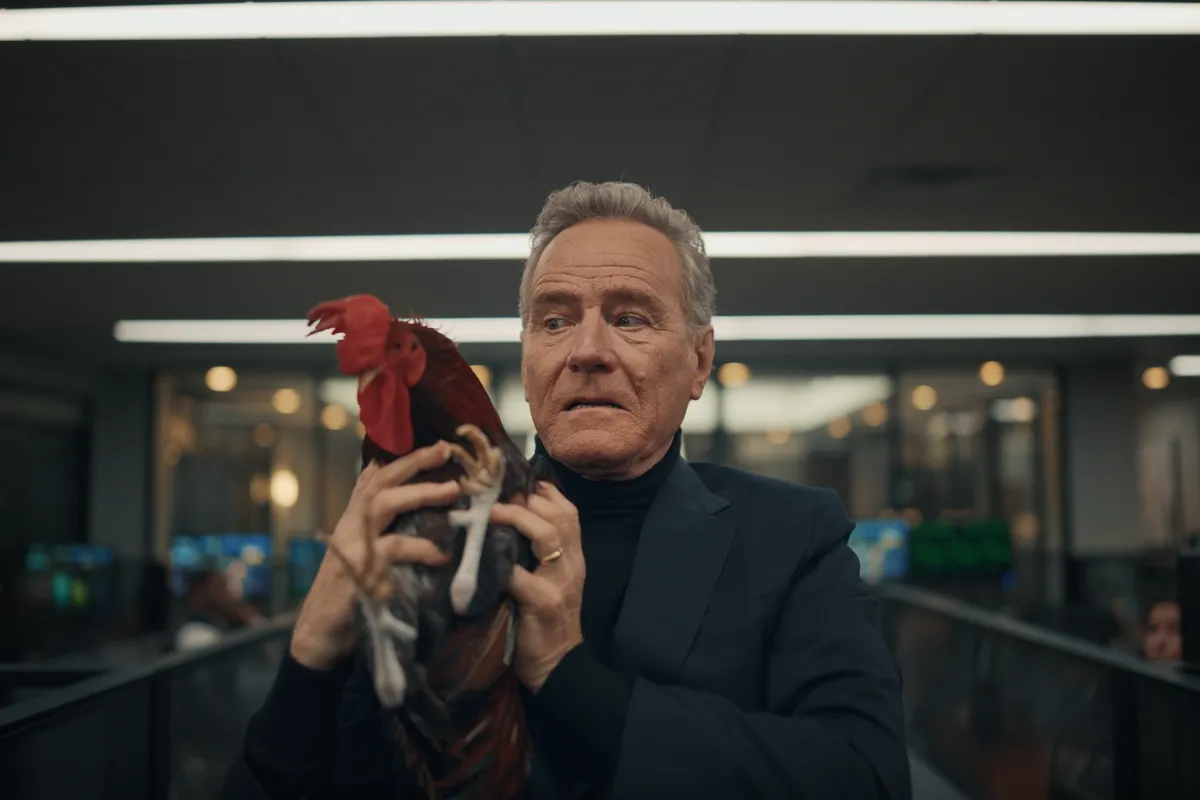
Telecommunications provider T-Mobile has dispatched actor Bryan Cranston in a new campaign that may surprise those who have grown familiar with its playful spots featuring celebrities such as Billy Bob Thornton, John Travolta, Zach Braff and Donald Faison. In the new spot, Cranston and a rooster named George aim to serve as an alarm clock of sorts, alerting consumers to T-Mix, a new wireless plan that lets consumers pick only the features they want and comes with perks.
Come on sleepyheads, it is up and at em, Cranston crows in the ad, because there has been a change in plan. Meanwhile, he sets about rousing people from hotel rooms, airplane seats and bedrooms.
In the commercial, I represent all the people who need to hear this information, says Cranston in a recent interview, because I was one of them until moments ago.
Launch Details and Agency Information
The 60-second ad debuts during Amazon Prime Video Thursday Night Football and will roll out across national broadcast, streaming, cinema, digital, social media platforms, as well as on radio and out-of-home, says Lucy McLellan, executive vice president and chief brand and communications officer at T-Mobile. And while T-Mobile is known for launching big campaigns, the company will also use digital to launch some bespoke creative that targets specific consumer niches.
The new work, created with a new agency of record, Highdive, will attempt to reach new audiences who have tuned out the category completely, says McLellan, and make an effort to appeal to audiences beyond the millennials that T-Mobile has traditionally appeared to.
Competitor Campaigns and T-Mix Features
Other telecommunications giants are also trying to reach out to bigger crowds. Verizon in June tapped actor Michael Meyers to reprise his Austin Powers character, and reconvene that films cast to tout a new Simplicity Plan that offered new promotions including a return on dollars spent as well as prizes and rewards.
The new t-mobile t-mix plan offer lets subscribers change elements of their plan every 90 days instead of being locked into a particular option for longer periods of time. Members can also choose to get benefits including Apple Music, Apple TV, DashPass by DoorDash, Delta miles, ESPN Unlimited, Google Gemini, Hulu, Netflix, Pandora, Paramount+, SiriusXM, XBOX Game Pass and YouTube Premium, alongside options like T-Satellite, Optimized Video Calls and device promotions. A family of four, says McLellan, might save up to $7000 depending on the options they choose.
Behind the Scenes of the Commercial
Creating the high-energy pitchman wasnt done in seconds. Cranston says the entire shoot took two days and that we did each of those scenes several times from several different vantage points. Telling a story via commercial is much more difficult than doing so in a TV series or movie, the actor says. Every second is critical, whereas in a two-hour movie, well, you could let things linger, he adds, but this has to be cut to a millisecond in order to make the time requirements.
Known best for roles like Walter White in Breaking Bad, Hal in Malcom in the Middle and Tim Whatley in Seinfeld, Cranston says he has long done commercials, which were my life source when he first started his acting career. Cranston has tackled ad assignments for CoffeeMate, for example, and is heard frequently as the voice of commercials for Ford Motor Co.
The character he plays for T-Mobile is almost a Pied Piper, he says. I think my character was just another person who happened to have this epiphany that, wow, this is amazing. I can create my own plan. I dont have to adhere to what was done, you know, decade after decade. And I can do this on my own, he explains. I think that allowed me to be able to present it in an effusive way, in an energized way, without it being silly.
George, the rooster who accompanies the actor throughout much of the ad, also maintained his demeanor. Relationships with animals, and, often, people too, says Cranston, are often governed by food, and the same was true of his fowl actor. There was a little bowl of food on a stick that I can rattle, and here is the rattle, and he would turn close to me. I was holding it, and I would hold it close, and then as soon as he turns toward me, I drop it out of frame. So the camera wouldnt see it, and I tried to get closer and closer and closer to him, you know, just put my face right into his beak, you know, and have a stare down. And, you know, all you need is a couple seconds of that.
And in a commercial, every second counts.
Background on T-Mobile and Wireless Industry Marketing
T-Mobile US is one of the largest wireless carriers operating in the United States, headquartered in Bellevue, Washington. Over the past decade, the telecommunications company has grown substantially through mergers and acquisitions, most notably its combination with Sprint Corporation, which positioned it as a dominant force in the domestic 5G market. The corporation relies heavily on distinctive marketing strategies, often featuring prominent cultural figures and humor to distinguish its brand from competitors like AT&T and Verizon Wireless. Marketing campaigns traditionally focus on value propositions, network coverage expansion, and customer-centric contract flexibility.
Background on Actor Bryan Cranston and Commercial Production
Bryan Cranston is an acclaimed American actor, director, and producer whose career spans television, film, and theater. He achieved widespread international recognition for portraying Walter White in the critically acclaimed AMC drama series Breaking Bad, earning multiple Primetime Emmy Awards. Before achieving major television success, the performer worked extensively in television commercials and voiceover work to sustain his career in Los Angeles. Commercial production demands precise timing, where directors must convey complex narratives within strict broadcast windows ranging from fifteen to sixty seconds, requiring distinct acting techniques compared to feature films.
Background on Modern Telecommunications Plan Customization
Wireless carriers face intense competition in the United States telecommunications sector, prompting firms to introduce flexible billing and service bundles. Traditional carrier contracts historically locked consumers into rigid multi-year agreements with fixed service features and limited hardware upgrade paths. Modern consumer demand has shifted toward modular subscriptions where users select individual streaming services, travel perks, and communication features according to personal preferences. Industry analysts note that customizable plans help carriers reduce customer churn by offering perceived value through bundled third-party entertainment subscriptions and cloud services.