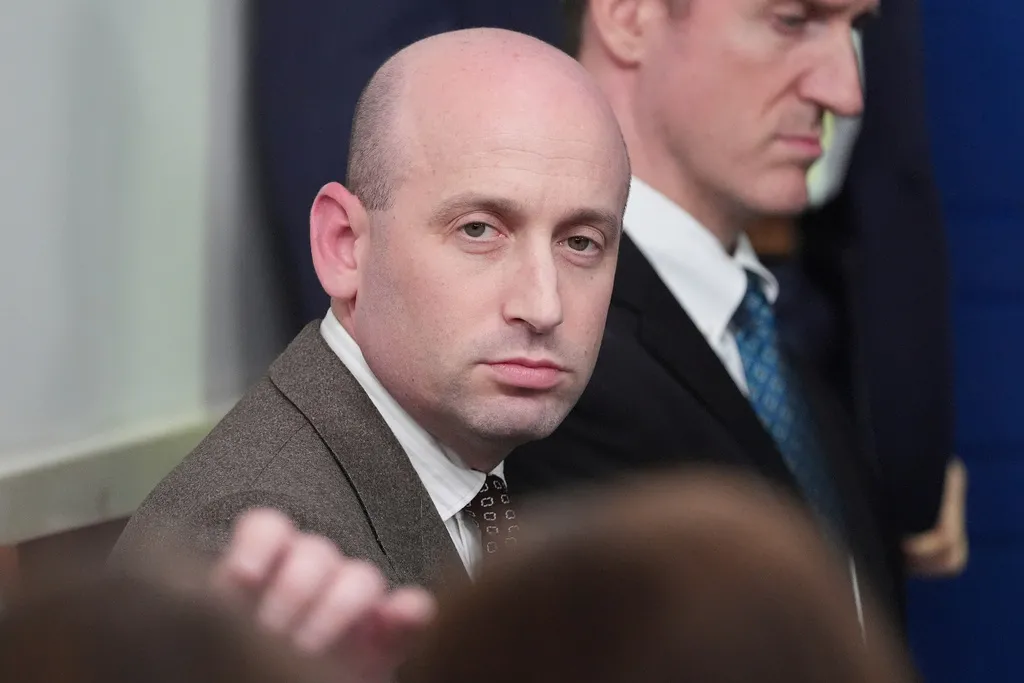
President Donald Trump has appointed Stephen Miller as White House chief of staff, a move that signals chaos and aggressive political battles will define the final two years in office. The new White House chief of staff is expected to champion severe immigration restrictions and intense culture war fights as top administration priorities.
This decision follows a difficult midterm election cycle where the Republican Party lost at least eight seats in the Senate and 46 in the House of Representatives. Republican strategist Karl Rove wrote in The Wall Street Journal that Stephen Miller offered extreme flattery or genuinely believed the party emerged stronger under Trump.
Other prominent Republicans have voiced alarms regarding the tone and public perception of the newly appointed official. Representative Marlin Stutzman told CNN that the top aide lacks popularity in the Midwest due to his divisive rhetoric and approach.
Meanwhile, Democratic leaders expressed strong opposition to the promotion. Incoming Speaker of the House Hakeem Jeffries called the senior adviser a stone-cold racist and stated he has zero interest in working with such an individual.
The consequences of this administration change extend well beyond the upcoming legislative cycles. Observers question how future candidates can claim to move past polarization while controversial figures continue shaping the party agenda.
Voters shifted away from the governing party during the midterms over concerns regarding high prices, foreign conflicts, and immigration enforcement tactics. NBC News exit polls showed that 60 percent of voters disapproved of Immigration and Customs Enforcement performance under current policies.
Among those disapproving voters, 87 percent cast their ballots for Democratic candidates. Furthermore, 67 percent of Hispanic voters disapproved of the agency, reflecting a significant swing away from the governing party.
These electoral shifts warn future candidates to distance themselves from such polarizing figures. Critics argue that the leadership team has little interest in helping down-ballot candidates defend or flip legislative seats.
Instead, observers suggest the administration intends to rely on executive actions and direct defiance of congressional oversight. Senator Jim Justice warned reporters that the leadership choice represents a colossal blow to the country and future electoral prospects.
Democratic lawmakers raised similar concerns years prior, with more than 100 House members and 20 senators calling for the official's removal back in 2019. Past reports highlighted the circulation of materials associated with extremist viewpoints among right-wing outlets.
Historical white house chiefs of staff like James Baker and Rahm Emanuel were known as tough political players who respected national institutions. Observers note that the current appointee takes a very different approach through aggressive policy advocacy and controversial public statements.
The appointee previously defended aggressive enforcement actions and detention center practices. Critics argue that these hardline stances alienated voters who initially supported border security measures.
Public officials now face urgent questions regarding the direction of the administration. Observers emphasize the need for serious dialogue as the government transitions into its final term.
Background on Presidential Chiefs of Staff
The role of White House chief of staff dates back formally to 1946, though earlier presidents relied on close confidants and private secretaries to manage their schedules and political affairs. John R. Steelman served as the first officially designated assistant to the president under Harry S. Truman. Over the decades, the position evolved into one of the most powerful unelected offices in the United States government, acting as the ultimate gatekeeper for executive branch operations.
Legendary chiefs like James Baker served under Ronald Reagan, managing legislative strategy and White House communications with immense skill. Other notable figures, such as Leon Panetta and Andrew Card, steered administrations through severe national crises. These historical examples demonstrate that effective chiefs typically balance fierce political loyalty with administrative discipline and institutional respect.
Immigration Enforcement and Public Opinion
Immigration and Customs Enforcement operates under the Department of Homeland Security, executing federal laws governing border control, customs, and trade. Established in 2003 following the Homeland Security Act of 2002, the agency quickly became a central flashpoint in American politics. Debates over detention facilities, deportation flights, and border security measures frequently divide voters and lawmakers alike.
Polling data consistently shows deep partisan divides regarding immigration enforcement methods. While base supporters often favor strict border security protocols, broader electorates frequently react negatively to harsh operational tactics. Exit polls from recent elections indicate that immigration policy execution directly influences voting patterns across key demographic groups, including Hispanic communities.