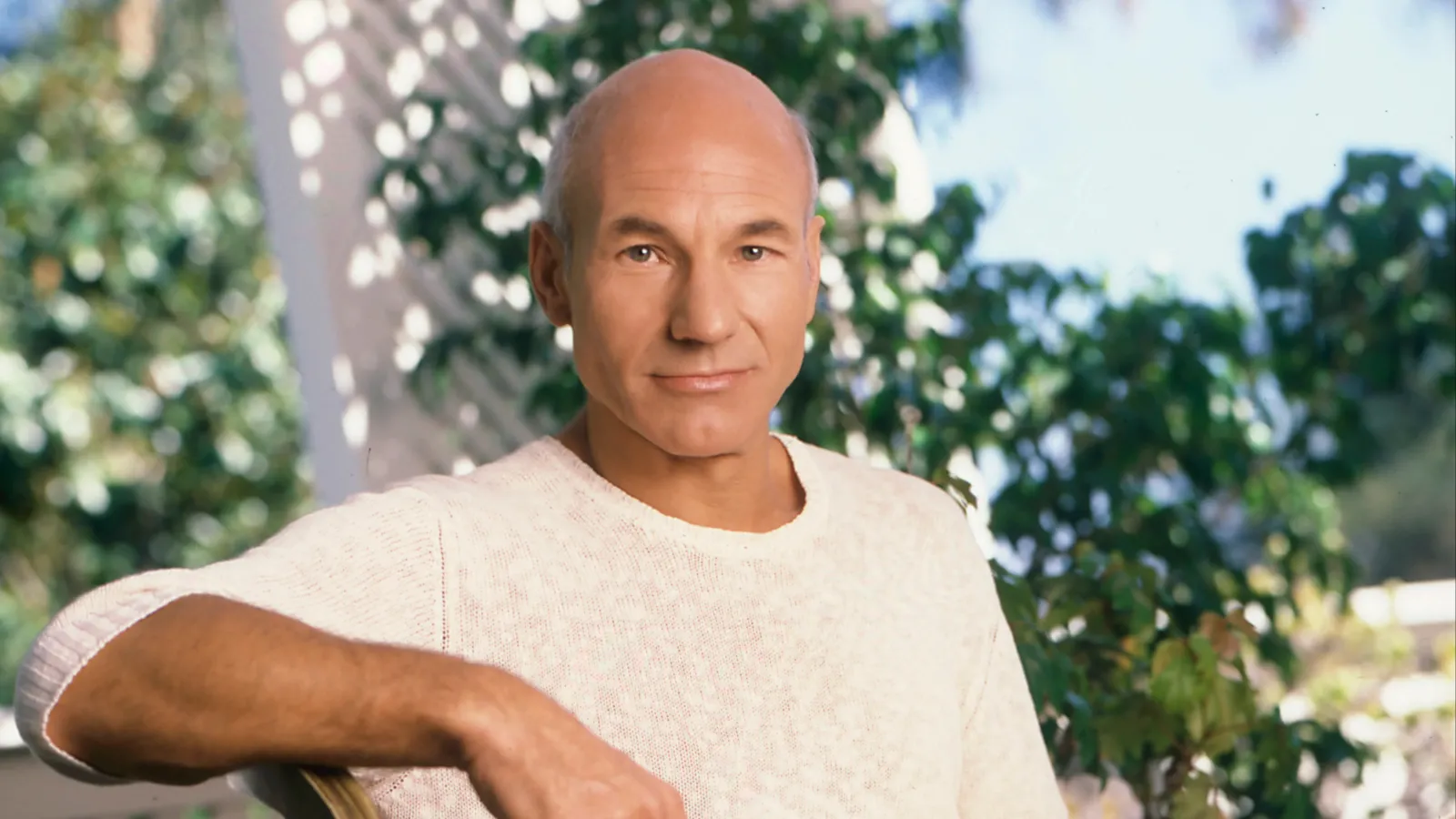
Sir Patrick Stewart, famed for playing Captain Jean-Luc Picard and Professor Charles Xavier, died at 86 after privately battling Alzheimer's, having spent his life confronting the trauma of an abusive childhood.
His father Alf, one of the last evacuees from Dunkirk who later parachuted into Italy for the Battle of Monte Cassino, returned home to Mirfield, Huddersfield and subjected Stewart's mother to severe beatings.
At seven, Stewart often placed himself between his father's fists and his mother, later recalling, "As a child I witnessed his repeated violence against my mother, and the terror and misery he caused was such that, if I felt I could have succeeded, I would have killed him. If my mother had attempted it, I would have held him down." He added that living with constant emotional unpredictability, danger and humiliation from age seven shaped his early years.
He found refuge on stage, saying, "I managed to find my own refuge in acting. The stage was a far safer place for me than anything I had to live through at home - it offered escape." Yet he feared unleashing anger when roles demanded it.
Born on July 13, 1940, in Mirfield near Huddersfield, his early life was peaceful until Alf returned with what would now be called post-traumatic stress disorder. Stewart described the family bedroom as a partitioned space where he and his brother Trevor slept without hot water, cooking facilities or a toilet, only an open fire and a gas ring.
At 14, a headmaster caned him, prompting Stewart to say, "I was beaten with a cane by my headmaster when I was 14... I wanted to attack him. I would have killed him. If I'd actually got my hands on him, I don't think he'd have made it out."
English teacher Cecil Dormand gave him a Shakespeare book and urged him to act, leading Stewart to join the Mirfield Secondary Modern School drama club, where he felt safest on the school stage.
After a second summons to the headmaster, Dormand and a West Riding County Council representative offered Stewart an eight-day residential drama course, where he met future colleague Brian Blessed.
Leaving school at 15, Stewart worked as a junior reporter for the Mirfield & District while pursuing acting, eventually quitting journalism when his editor demanded he abandon drama.
A scholarship took him to the Bristol Old Vic Theatre School; in 1966 he joined the Royal Shakespeare Company, staying for nearly three decades and earning Olivier Awards for supporting roles in "Antony and Cleopatra" (1979) and "Hamlet" (2009). He was knighted for services to drama in 2009 and received the accolade from the Queen in 2010.
Although he appeared once on "Coronation Street" (1966) and played Karla in "Tinker, Tailor, Soldier, Spy" and "Smiley's People," his breakthrough came in 1987 when he accepted a Hollywood role that turned into the global hit "Star Trek: The Next Generation" (seven seasons). He later starred in four "Star Trek" films between 1994 and 2002, describing his initial contempt for the franchise before embracing the role of Picard.
In 2000, Stewart was cast as Professor Charles Xavier in the "X-Men" film series, returning for several sequels up to 2024. He praised his on-screen friendship with Sir Ian McKellen's Magneto, noting that both he and his wife loved the character.
Stewart married three times: first to Sheila Falconer in 1966 (two children, Daniel, 59, and Sophie, 54; divorced after 24 years), then briefly to producer Wendy Neuss in 2000, and finally to singer-songwriter Sunny Ozell in 2013, despite a 38-year age gap.
Living in Los Angeles, he followed Huddersfield Town football and began weekly therapy after friends suggested it; a therapist helped him process his childhood trauma.
In 2006, a routine check-up revealed an 85 % heart blockage, leading to emergency stent surgery. Stewart recalled the cardiologist's abrupt warning and his swift transfer to a gurney.
His mother Gladys died in 1977, three years before his father Alfred. After turning 80 in 2020, the pandemic heightened his sense of vulnerability and thoughts of mortality.
Just before his death, Stewart posted an Instagram video reflecting on love and the emotions in Shakespeare's sonnets, saying, "I hope it has brought pleasure and curiosity but more than anything else I want it to have communicated all the multiple features that love might have."