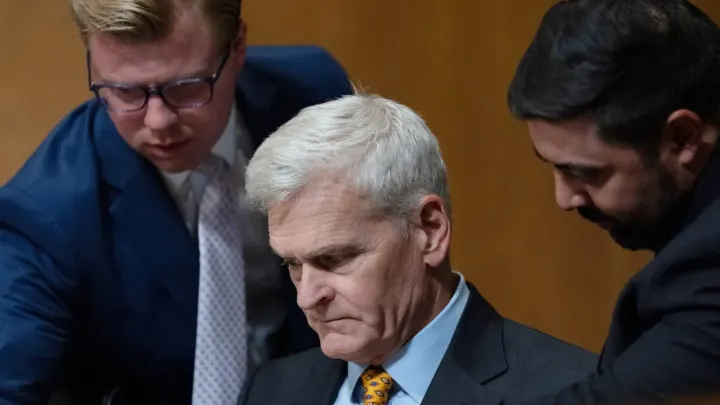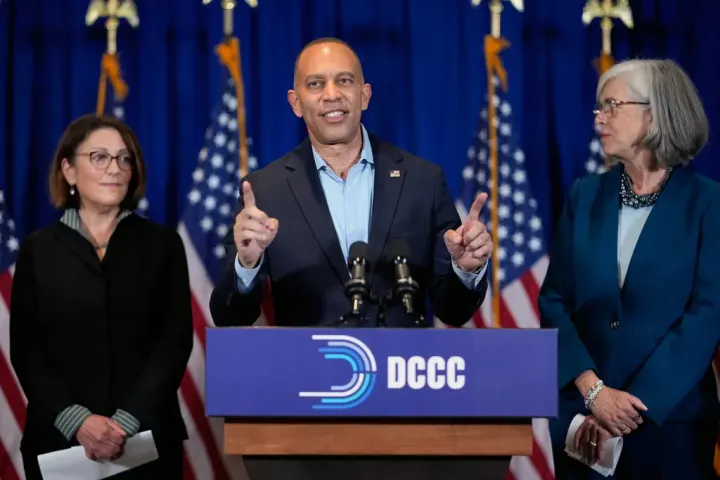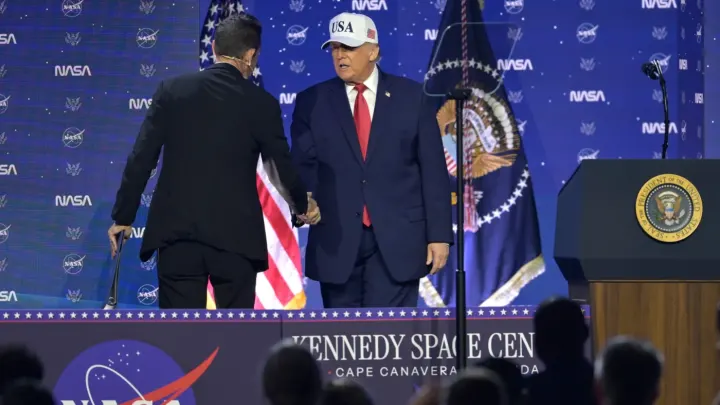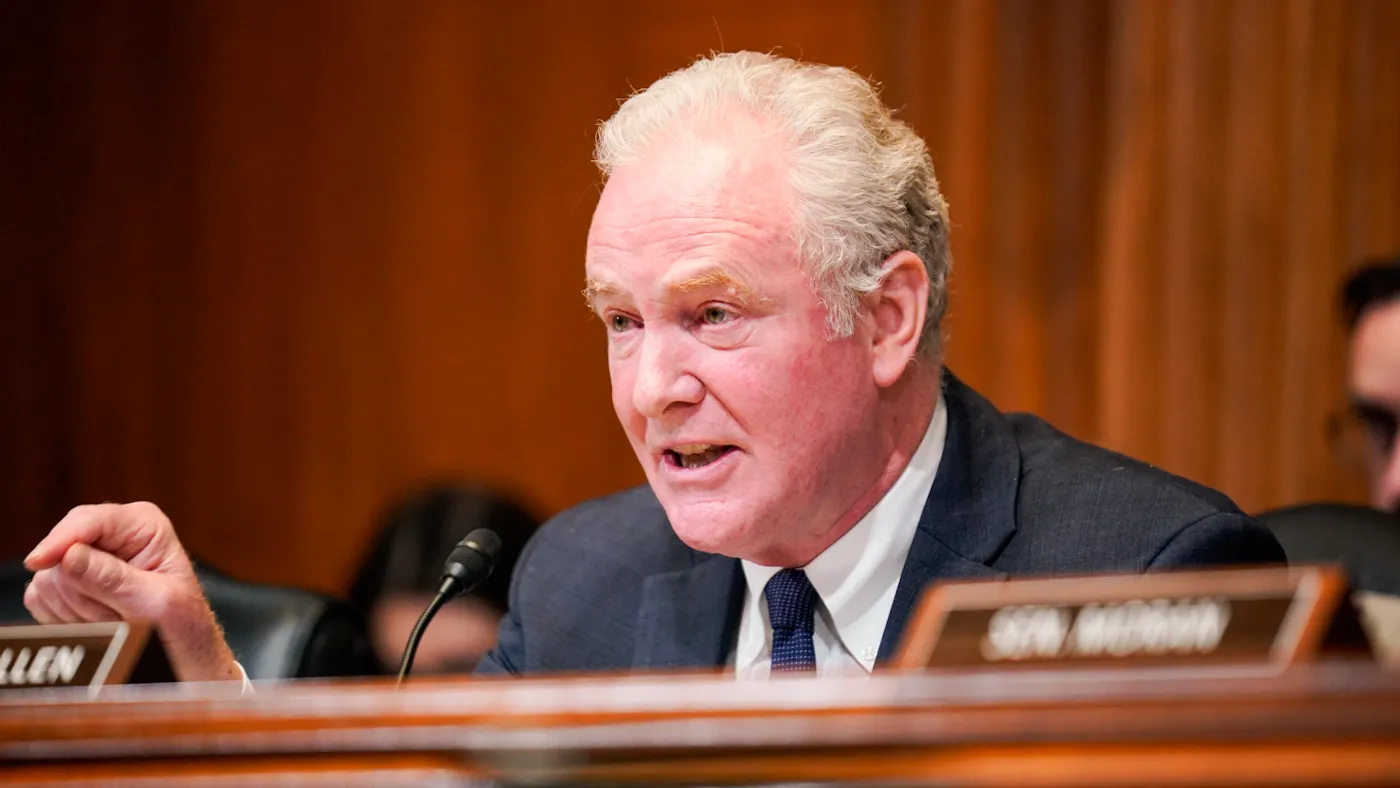
A coalition of Senate Democrats is preparing to use the looming government funding deadline of December 11 to compel the Trump administration to end its war in Iran. The group, comprising both progressives and moderates, has issued statements demanding that any short-term appropriations measure must include language that prevents the administration from allocating funds to the conflict in Iran.
Senate Democrats' Strategy
Senators Michael Bennet (D-Colo.), Bernie Sanders (I-Vt.), Chris Van Hollen (D-Md.) and Tammy Duckworth (D-Ill.) released a joint statement on Thursday stating that they will oppose any short-term spending patch that does not contain restrictions on funding the Iran war. "As we approach the December 11 funding deadline, we should not accept a short-term spending deal that continues to provide billions of additional dollars for President Trump's war of choice," the senators said.
Senator Tim Kaine (D-Va.) added that he would not support a continuing resolution (CR) unless it blocks money for the war. Kaine said he is drafting a provision to prohibit the administration from spending money on the Iran war that could be inserted into the next short-term spending bill, and that he is working on it "in tandem with others". He described the effort as his "main push" in the upcoming negotiations.
Senate Appropriations Dynamics
Senator Patty Murray (D-Wash.), the top Democrat on the Senate Appropriations Committee, acknowledged that Democrats are discussing whether to use the December 11 deadline as leverage. She said, "We're going to look at every tool we have available," and expressed a desire for a short CR that would keep the government open until next year, allowing Democrats to set long-term spending priorities once they assume control.
Other senators expressed uncertainty about holding up funding without an end to the war. Sen. Mazie Hirono (D-Hawaii) said she hopes the government will not shut down over a war-related stalemate, urging that the war be stopped to prevent further bleeding. Sen. Richard Blumenthal (D-Conn.) suggested a short-term CR should fund the government and that there needs to be action to end the war, but he did not commit to a specific vote. Sen. Tammy Baldwin (D-Wis.) stated she wants to achieve both goals, but did not clarify whether they must be combined.
House Perspectives
House Minority Leader Rep. Hakeem Jeffries (D-N.Y.) declined to say whether House Democrats would withhold short-term funding over Iran war demands, citing ongoing negotiations led by Rep. Rosa DeLauro (D-Conn.). Jeffries emphasized that House Democrats have uniformly opposed providing additional money to the Trump administration's war machine in the Middle East.
Potential Republican Actions
Republicans are considering using their remaining time in power to push through substantial defense spending, possibly as part of a party-line reconciliation package. President Trump urged Congress to act quickly, a move that could further inflame Democrats. Sen. Blumenthal warned that any such tactics could threaten potential agreements. Sen. Brian Schatz (D-Hawaii), the likely next Democratic Whip, dismissed speculation about risking a shutdown, calling it "punditry."
Background: The Iran Conflict and U.S. Involvement
The United States has been involved in the conflict in Iran since the 1979 revolution, which overthrew the Shah and established the Islamic Republic. Over the decades, U.S. policy has oscillated between sanctions, diplomatic engagement, and military support for opposition groups. The current administration has maintained a policy of supporting proxy forces in Iraq, Syria, and Lebanon, and has increased funding for these efforts, which many Democrats argue constitutes an active war against Iran.
In recent years, the Trump administration has escalated military aid to anti-Iranian groups, citing Iran's alleged support for terrorist organizations and regional destabilization. Critics argue that this aid amounts to direct involvement in a foreign conflict, violating congressional authority over war powers.
What Happens Next?
The Senate will need to pass a short-term appropriations bill before the December 11 deadline to avoid a government shutdown. The debate will likely center on whether to include language that restricts war funding. If the bill passes with such restrictions, it could set a precedent for limiting executive spending on foreign conflicts. If not, the administration may continue to allocate funds to the Iran war, potentially leading to a prolonged fiscal standoff.
Impact on the American Public
Voters across the country have expressed a desire for an end to the Iran war, with both parties acknowledging that the conflict is unpopular. The outcome of the funding negotiations will affect federal employees, defense contractors, and the broader economy, as well as the U.S. foreign policy stance in the Middle East.
Key Figures and Their Positions
- Sen. Michael Bennet (D-Colo.) - Opposes short-term funding without war restrictions.
- Sen. Bernie Sanders (I-Vt.) - Supports war-funding limits in the CR.
- Sen. Chris Van Hollen (D-Md.) - Advocates for inclusion of war restrictions.
- Sen. Tammy Duckworth (D-Ill.) - Calls for war-funding restrictions.
- Sen. Tim Kaine (D-Va.) - Drafting provision to block war funding.
- Sen. Patty Murray (D-Wash.) - Evaluating use of deadline as leverage.
- Sen. Mazie Hirono (D-Hawaii) - Prefers to avoid shutdown over war debate.
- Sen. Richard Blumenthal (D-Conn.) - Supports short-term CR and war action.
- Sen. Tammy Baldwin (D-Wis.) - Seeks both war end and government funding.
- Rep. Hakeem Jeffries (D-N.Y.) - Awaiting House negotiations.
- Rep. Rosa DeLauro (D-Conn.) - Leading House appropriations talks.
- President Trump - Calls for swift defense spending.
- Sen. Brian Schatz (D-Hawaii) - Declares speculation as punditry.
Related Stories
For more on how Democrats are shaping policy, see Tech Watchdog Hands Democrats First 100 Days Policy Blueprint and Democrats Secure Control Of Majority Of State Legislatures After Midterms.