Russian spies hatched a sick plot to slaughter their own civilians in a desperate bid to shatter NATO support for Ukraine, explosive claims suggest. Kremlin intelligence chiefs allegedly drew up plans for a murderous false-flag attack inside the Russian exclave of Kaliningrad, according to Polish newspaper Rzeczpospolita. Vladimir Putin's ruthless GRU military intelligence unit reportedly plotted sabotage strikes on a crossing near the border with Poland as well as a nearby Russian facility.
The goal was to drive a wedge between Kyiv and its key NATO allies by blaming Ukraine for a cross-border strike on Russian soil. It would have led to a large number of casualties on the Russian side as it appeared to have been plotted by Russia's GRU military intelligence unit, the sources said. A source told the local news outlet that they had information about specific targets where the attack was to take place, and the Russians were expecting a large number of casualties.
The sinister scheme was reportedly designed to echo a notorious Nazi stunt used to justify Hitler's invasion of Poland in 1939. Known as the Gleiwitz incident, German operatives staged an attack on their own radio station before blaming Polish forces. It became one of the pretexts for the Nazi invasion of Poland that sparked the Second World War. Now Putin's spies are accused of plotting a similarly deadly deception to turn the West against war-torn Ukraine.
One source said that those who crossed the border would most likely have been shot, or evidence would have been found on them indicating they were from Ukraine, with the goal to withhold aid to Ukraine. The chilling plot was allegedly being prepared for late October or early November before Polish security forces launched a major operation to counter the threat. Intelligence warnings reportedly revealed plans for operatives to breach the Polish-Russian border and carry out sabotage on Russian territory.
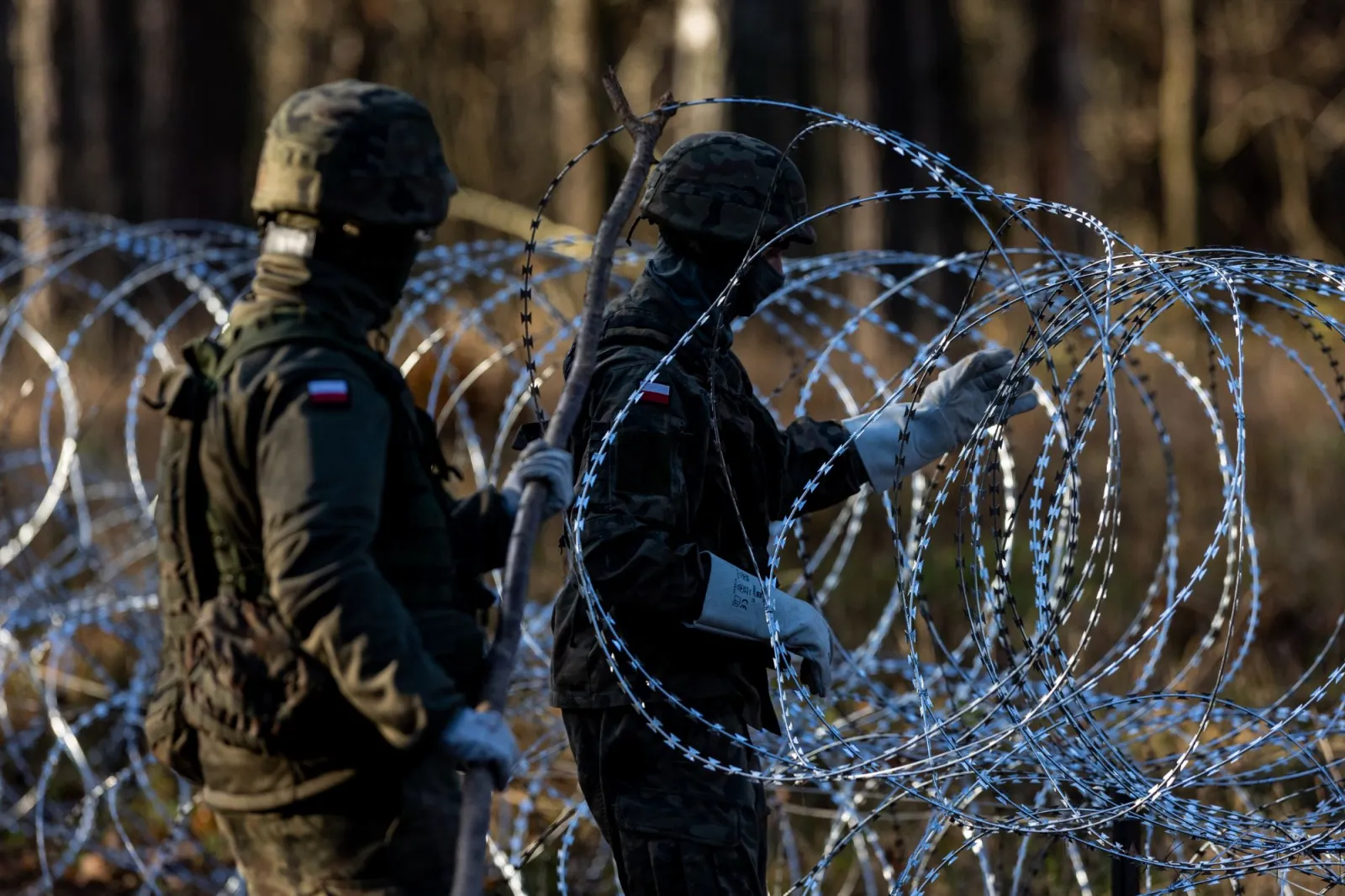
Polish officials were alerted by allied intelligence agencies, while their own analysts had also identified the threat of a possible border provocation. Similar warnings were reportedly passed to Lithuania, Latvia and Estonia as fears mounted over Moscow's shadow war against Europe. Poland scrambled around 180 riot police officers and counter-terrorism units to its northeastern frontier in response. Border posts and police stations were reinforced as additional intelligence officers flooded the region.
Elite Polish special forces units GROM, NIL and AGAT also carried out exercises in the Warmian-Masurian region bordering Kaliningrad. A special command centre was established at Poland's National Police Headquarters as security chiefs braced for possible sabotage. National police chief Marek Boron previously confirmed that counter-terrorism officers had been deployed near the Russian border following intelligence warnings. The units were working alongside soldiers, border guards and intelligence agents amid fears that armed groups could attempt to cross the frontier.
But Polish officials are yet to confirm the full extent of the alleged Kremlin plot. When approached by Rzeczpospolita, the Polish government did not deny the reported scheme but declined to disclose sensitive intelligence. Tomasz Siemoniak, Poland's minister for coordination of the special services, stated that even if they had such information, they do not share it, adding that if they took certain steps, it was because they recognised that there was a real threat.
The explosive allegations come as tensions between Russia and NATO threaten to boil over around Kaliningrad. Sandwiched between Poland and Lithuania, the heavily militarised Russian military has become a major flashpoint in Moscow's bitter standoff with the West. The Kremlin's Baltic outpost is packed with deadly weaponry, including nuclear-capable Iskander-M missiles and powerful S-400 air-defence systems. It also houses Russia's Baltic fleet, giving Putin a heavily armed foothold on NATO's doorstep.
Western military chiefs fear Moscow could use the territory to unleash long-range strikes deep into Europe if a full-scale war erupts. Kaliningrad also lies close to the strategically vital Suwalki Gap, a narrow stretch of NATO territory separating the Russian exclave from Moscow's ally Belarus. Earlier this month, Polish Prime Minister Donald Tusk warned of a suspected Russian provocation along the 143-mile border. Men carrying torches were reportedly spotted making disturbing movements near the frontier, raising fresh alarm among security officials.
Background on Kaliningrad and Regional Security
Kaliningrad functions as a heavily militarised Russian exclave completely separated from the rest of the Russian Federation. Bordering Poland to the south and Lithuania to the east and north, the territory was historically known as East Prussia before becoming part of the Soviet Union after World War II. Today, its geographical isolation makes it a unique strategic asset for Moscow and a persistent source of friction with the North Atlantic Treaty Organization. The concentration of advanced weaponry inside the region includes naval assets, air defense networks, and ground forces capable of projecting power into the Baltic Sea basin.
The security landscape in northeastern Europe has deteriorated significantly since the escalation of the conflict in Ukraine. Neighboring states including Poland and the Baltic nations have consistently increased defense spending and reinforced border infrastructure to deter potential incursions. The presence of international troops under NATO enhanced forward presence frameworks has also grown across the region. Intelligence sharing between Western allies has intensified to track covert operations, cyber espionage, and hybrid warfare tactics allegedly orchestrated by Russian security agencies across the European continent.
Historical Context of False Flag Operations
False-flag operations have a documented history in military strategy and espionage used to manufacture a pretext for military action or diplomatic hostility. The Gleiwitz incident cited in intelligence assessments involved German SS operatives posing as Polish insurgents to attack a German radio transmitter in 1939. Adolf Hitler used the fabricated event to justify the invasion of Poland the following morning, initiating the Second World War in Europe. Military historians note that fabricated border incidents are designed to exploit public sentiment and create artificial justifications for pre-planned military or political objectives.
Modern intelligence analysis focuses heavily on detecting similar premeditated provocations before they can be executed in volatile border zones. Agencies monitor electronic communications, troop movements, and unconventional actors to prevent incidents that could escalate into broader international conflicts. The involvement of military intelligence units like Russia's Main Directorate, commonly known as the GRU, in covert actions across Europe has been the subject of extensive investigations by journalism consortia and Western security services over the past decade.
Poland and Baltic States Defensive Measures
Poland maintains a robust defensive posture along its eastern and northeastern borders in response to ongoing regional instability. The deployment of specialized units such as the Grom, Nil, and Agat special forces demonstrates the readiness of Polish armed forces to address asymmetric threats. Border guard authorities work in close coordination with national police forces and intelligence directorates to monitor suspicious activities near the frontier. Infrastructure projects, including electronic surveillance systems and physical barriers, continue to expand along vulnerable sectors.
Lithuania, Latvia, and Estonia face similar security challenges due to their geographic proximity to Russia and Belarus. Lithuanian military leadership has repeatedly emphasized the need for permanent physical fortifications to reduce the logistical strain of continuous mobile patrols. Estonia recently announced measures regarding its border crossings following operations that disrupted alleged sabotage cells within its territory. These coordinated responses reflect a regional consensus among frontline states regarding the reality of hybrid threats emanating from Russian state structures.