Republicans suffered a major beating in the 2026 midterms, a result many attribute to the Trump White House's low approval ratings and a candidate slate that critics say was unqualified and unappealing. The party's losses followed a cycle in which several nominees were chosen by the president despite opposition from state leaders, and the administration's policy choices were widely unpopular among voters.
Trump White House's Approval Decline
The Trump administration's approval rating has hovered below 30% since the tariff "Liberation Day" in April 2025, according to polling data released by the Pew Research Center. The tariffs, which raised duties on imported steel and aluminum, sparked backlash from both consumers and industry groups and were cited as a key factor in the decline of the president's popularity.
Candidate Selection and Party Image
Many of the Republican nominees for 2026 were handpicked by President Trump, often against the wishes of local party officials. In Texas, Ken Paxton, the state attorney general, was nominated for the U.S. Senate seat, while in South Carolina, Lindsey Graham's sister, Darline Graham, ran for the U.S. House of Representatives. Both candidates faced criticism for their lack of experience and perceived alignment with Trump's controversial positions.
In Ohio, the president's endorsement of Vivek Ramaswamy for governor was met with resistance from state GOP leaders who had previously supported other candidates. Ramaswamy's campaign, which emphasized free-market policies and limited government, was seen by some as an attempt to appeal to a broader electorate, but critics argued it was a departure from the party's traditional base.
Heritage Foundation's Response
Kevin Roberts, President of the Heritage Foundation, publicly criticized Republican Senator John Thune's call for the party to engage independent voters. Thune had said, "We've got to start talking to independent voters. It's a third of the electorate, and they went against us in four of the top Senate races in the country. We lost them by over 30 points. You cannot make that up with just Republican votes. You've got to be able to talk to the people out there who in general elections are going to decide it. And largely, that's going to be an economic message. And so, we've got to get back to basics."
Roberts dismissed Thune's remarks as "Swamp talk" and argued that the party's approach should be "bold conservatism" rather than a centrist strategy. He added, "Running to the middle is not what got Trump popularly elected in 2024, but it is what got Republicans crushed in the midterms. Bold conservatism is what will attract independent voters and win elections."
Impact of Trump's Policies on the Election
Critics argue that the administration's policies, including high tariffs, controversial immigration enforcement, and a series of self-enrichment schemes involving former staffers, alienated voters. The administration's handling of the 2025 border crisis, marked by chaotic and lethal ICE raids, and the proposed $5,000 voter check program, further eroded public trust.
Additionally, the Trump administration's focus on cryptocurrency ventures and alleged corruption drew negative attention. The president's public statements about cutting taxpayers' checks were seen by many as a populist gimmick rather than a substantive policy.
Republican Losses in Key States
The midterms saw Democrats flip eight or nine Senate seats, and no incumbent Republican lost re-election. In Texas, the state's Senate seat was won by a Democrat, marking a significant shift in a traditionally Republican stronghold. Similarly, in North Carolina, a Republican incumbent was defeated by a Democratic challenger, reflecting broader national trends.
Historically, Republicans had strong performance in states such as Iowa, Kansas, and North Carolina. In Arizona and Georgia, the party had been competitive, and Texas had been a Republican bastion. The 2026 results indicated a dramatic shift, with many of these states leaning Democratic.
Conservative Wins on the Ballot
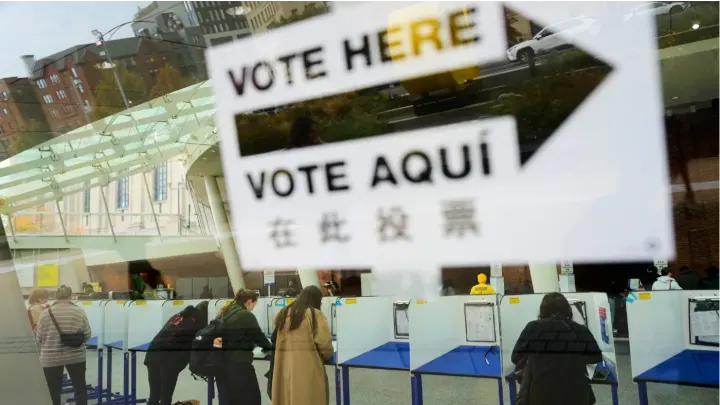
Despite the overall losses, the party secured victories on several statewide ballot measures. These included limits on government power, the implementation of voter ID laws, and the prohibition of males from participating in women's and girls' sports. These measures were endorsed by conservative voters and reflected a continued commitment to limiting government intervention.
Conclusion
The 2026 midterm outcomes suggest that voters were disenchanted with the Trump administration's policies and the candidates it endorsed. The party's strategy, perceived as too close to the president's controversial agenda, failed to resonate with independent voters, leading to significant losses in traditionally Republican states.
Becket Adams is a journalist and media critic in Washington.