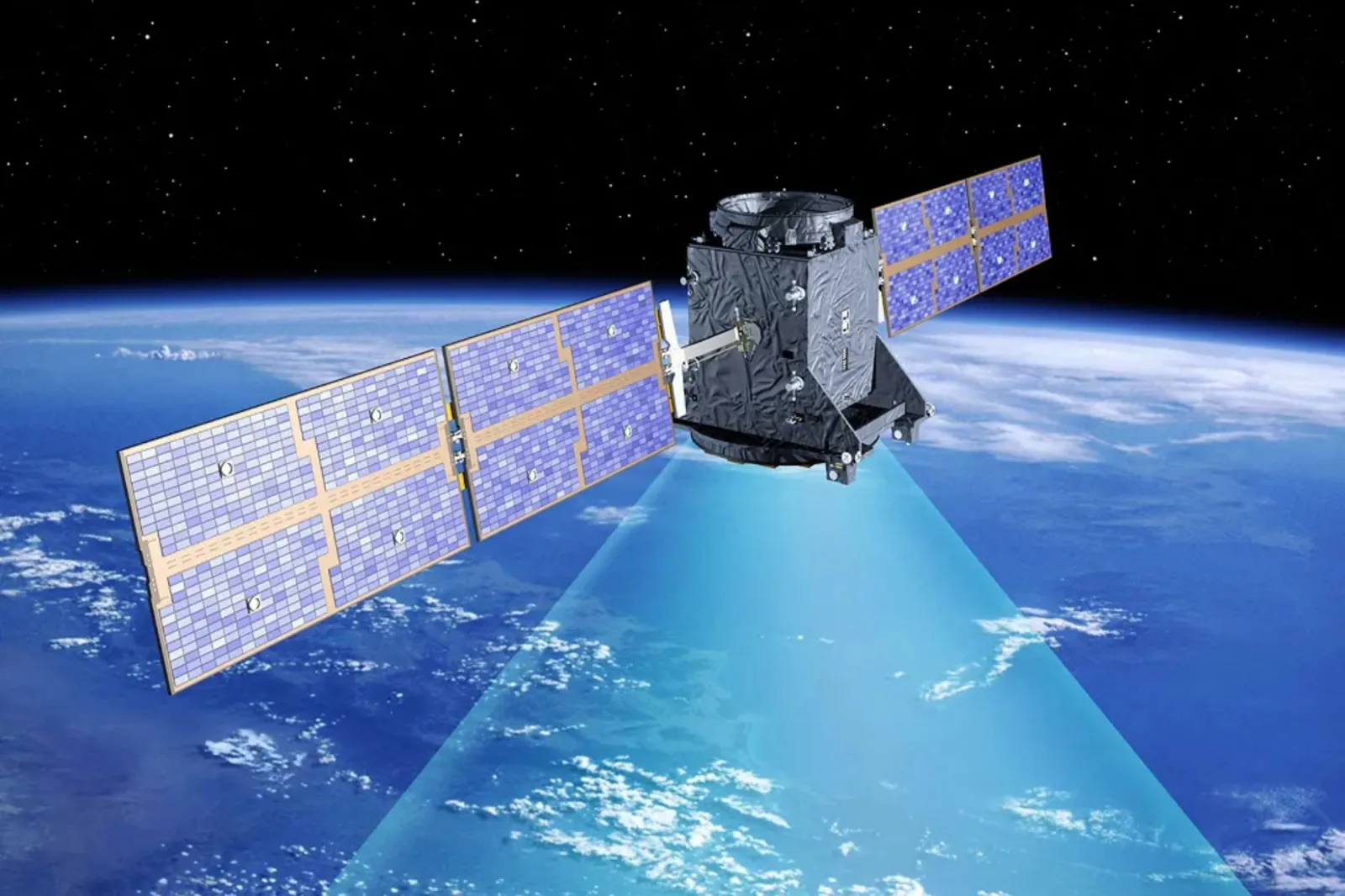
Russian President Vladimir Putin is conducting tests of new space weapons that could destroy satellite constellations, including Starlink, and blind NATO's surveillance systems.
Russia's latest tests involve deploying satellites that can release clouds of tiny shrapnel, or "impact clouds," designed to neutralise multiple low-Earth-orbit satellites at once. The technology could give Moscow a decisive advantage if a conflict escalates to a global level.
What the Tests Involve
The weapons tested by the Kremlin are believed to be "area effect" devices that disperse hundreds of thousands of millimetre-sized pellets into space. These fragments can drift along designated orbits and destroy or incapacitate entire constellations of satellites.
According to space warfare expert Robert Scheder, a former designer of US space-based missile defense systems, the system could target NATO satellites equipped with space guns or even nuclear payloads. "The first shots in a future war could be in space," Scheder told The Sun. "Russia can collide a satellite against a US intelligence satellite any time they want to destroy the capacity to detect troop and naval movements or spot a missile launch in areas the satellite covers."
Recent Incidents Involving Russian Cosmos Satellites
Last April, six Russian Cosmos 2612 military satellites were launched into space. They were quickly accused of stalking satellites that gather intelligence on Russian installations and monitor activity along Ukraine's front lines. Analysts described the maneuvers as "attack rehearsals."
In a separate incident, a Russian Cosmos satellite aggressively approached a low-orbit ICEYE-X36 satellite operated by Finnish company ICEYE, which provides radar images to Ukrainian and NATO intelligence agencies. The Russian satellite came within 1,600 ft of the spacecraft while two other Cosmos satellites chased an X-37. US Under Secretary of State Thomas Di Nanno described the behavior as "intentionally dangerous and consistent with operations of orbital weapons."
US Space Force General Stephen Whiting also expressed concern, stating that the Russian satellites could "quickly begin to stalk American national security assets."
China's Parallel Exercises
China has conducted similar "orbital dogfighting" exercises, including a series of close-proximity maneuvers involving Shijian-21 Hunter satellites last year. The Chinese also towed inactive satellites to different orbits and refueled them in space, demonstrating advanced orbital capabilities.
Impact on Starlink and NATO Surveillance
Experts believe the Russian space weapons are specifically designed to target Starlink, the satellite network operated by Elon Musk's SpaceX. Starlink's low-Earth orbit constellation is crucial for providing broadband connectivity to Ukraine and other NATO members. A recent disruption of Ukraine's Starlink connection, reported to have been ordered by Musk, blinded Kyiv's ability to detect incoming Russian ballistic missiles and hampered the launch of drones and cruise missiles that rely on satellite guidance.
Russian officials have repeatedly warned that commercial satellites supporting Ukraine are considered "legitimate military targets."
Potential Consequences of a Space Conflict
If a space war were to erupt, the effects could extend far beyond orbit. The destruction of satellite constellations would cripple global communications, GPS navigation, and military surveillance. An extensive blackout could leave major cities without electricity, disrupt supply chains, and expose capitals to nuclear missile attacks.
Canada's space commander, Brigadier General Christopher Horner, warned that "area effect" weapons would cause chaos in space and could blanket an entire orbital regime. The worst impact would be the breakdown of internet services worldwide, a move that could even damage Russia's own satellites.
What Happens if a World War 3 Breaks Out in Space?
While the notion of a full-scale space war remains speculative, the increasing sophistication of space weapons raises serious concerns. A conflict in orbit could trigger a cascade of failures in satellite-dependent systems, leading to widespread civil and military disruption on Earth.
Foreign News Reporter Harvey Geh notes that "satellites turned into missiles and worldwide blackouts sparking carnage on the streets" could become a reality if space weapons are employed. The resulting blackout would leave entire societies without military communications, exposing capital cities to nuclear missile attacks.
For more on the potential impact of space weapons, see Newport and Gwent face surging murders and crime wave across Wales.
Background
Russia's space program has long focused on developing capabilities that can counter Western satellite assets. The Cosmos series of satellites, launched by Roscosmos, has been used for both reconnaissance and communications. The 2612 series, launched in April, was the first to be publicly identified as having potential offensive capabilities.
Space warfare experts trace the evolution of Russian orbital tactics back to the Cold War, when the Soviet Union tested anti-satellite (ASAT) weapons in the 1970s and 1980s. The 2008 anti-satellite test, which destroyed a Russian weather satellite, created a cloud of debris that remains a hazard for space traffic.
In recent years, Russia has accelerated its efforts to develop "area effect" weapons that can target multiple satellites simultaneously. These weapons rely on kinetic impact rather than explosive warheads, allowing them to be deployed at a lower cost and with greater stealth.
Starlink, launched by SpaceX in 2015, has grown to over 3,000 satellites in low Earth orbit. Its global broadband coverage is especially valuable for military operations, emergency response, and remote connectivity. The network's low altitude makes it vulnerable to close-range attacks from Russian or Chinese satellites.
NATO's surveillance capabilities depend heavily on a mix of ground-based radars, airborne assets, and space-borne sensors. Satellites equipped with space guns or nuclear payloads would enable the alliance to detect and counter missile launches, troop movements, and other strategic threats. A successful attack on these assets could leave NATO blind to Russian missile activity.
What Happens Next
US officials are reportedly monitoring the situation closely. A US intelligence assessment on Russia's impact cloud project is said to be in active development. The US Space Force is exploring counter-measures, including satellite hardening and rapid replacement strategies.
Russia's continued testing of orbital weapons signals a shift toward a more aggressive stance in space. The international community is urged to consider diplomatic avenues to prevent an escalation that could bring the next major conflict into orbit.
Key Points
- Putin's tests involve "area effect" weapons that disperse thousands of tiny shrapnel fragments.
- Russian Cosmos 2612 satellites have been accused of stalking NATO reconnaissance satellites.
- Starlink's low-Earth orbit network is a primary target for Russia's new space weapons.
- US officials warn that such weapons could blind NATO's surveillance and trigger a global blackout.
- China has conducted similar orbital dogfighting exercises with Shijian-21 Hunter satellites.
Why It Matters
The development of space weapons threatens the security of satellite constellations that provide essential services to governments, businesses and civilians worldwide. A successful attack could cripple global communications, GPS navigation and military surveillance, exposing societies to new risks.
FAQ
- What are "area effect" weapons? They are space weapons that disperse a cloud of tiny shrapnel fragments designed to destroy multiple satellites along an orbit.
- Which satellites are at risk? Russian tests target NATO satellites and the Starlink constellation operated by SpaceX.
- What could happen if a space war erupts? A widespread blackout could occur, disrupting internet, GPS, and military communications worldwide.