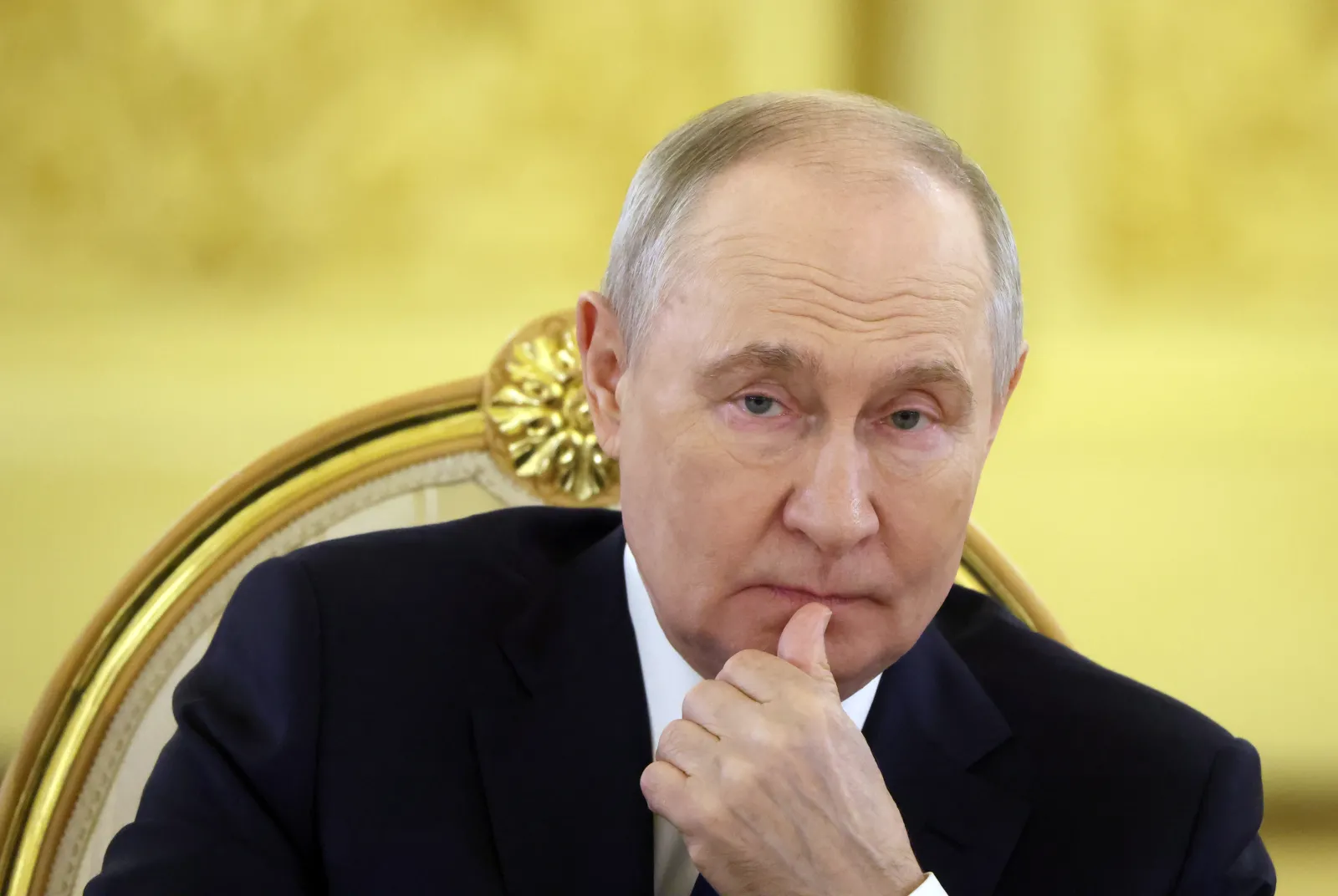
Vladimir Putin has demanded that the UK stop defending Europe with nuclear weapons if Britain wants to end the tyrant's invasion of Ukraine. The ultimatum is on a new list of brazen demands made by the Russian dictator which lay out his terms for ending the nearly five-year-old war. It has also been revealed that the US offered Russia the rest of the Donbas region in exchange for Ukrainian Nato membership as part of peace talks, according to Volodymyr Zelensky. Washington has not confirmed the Ukrainian president's comments, which come shortly after a week of unsuccessful negotiations between Kyiv and Moscow.
On Saturday it was reported that Russian officials had drawn up a maximalist checklist of terms for ending Putin's invasion. The shameless document demands that Nato remove all troops from Eastern Europe and the Baltic states. It also says Finland must leave the defence pact, having joined in the wake of the war. The policy paper goes on to say Nato must rule out sending troops to Ukraine, and only then will Putin allegedly weigh up a ceasefire. The document also seeks to put an end to the supply of any type of Western weapons and military equipment and products to Ukraine. Russia would keep any occupied territory it still controls after the fighting stops, the paper adds. In exchange, Moscow could approve Kyiv joining the EU, a minor concession for such megalomaniac demands.
The document, dated to November 10, was first reported by Bild. It is strikingly similar to the far-reaching demands made by Putin in late 2021, when he asked Nato to back down across the continent. He went on to invade Ukraine just months later. Putin is desperate to have Western troops pulled back to the alliance's borders as they were last century. More and more countries in Eastern Europe have asked to join Nato over recent decades out of fear of Russian aggression. The threat was most starkly highlighted when Moscow invaded Georgia in 2008. Putin's latest document serves as the foundation for any future talks between Ukraine and Russia. The discussions are currently being mediated by Donald Trump's envoys Steve Witkoff and Jared Kushner. His ridiculous proposals are likely to be thrown out by Nato and Ukraine.
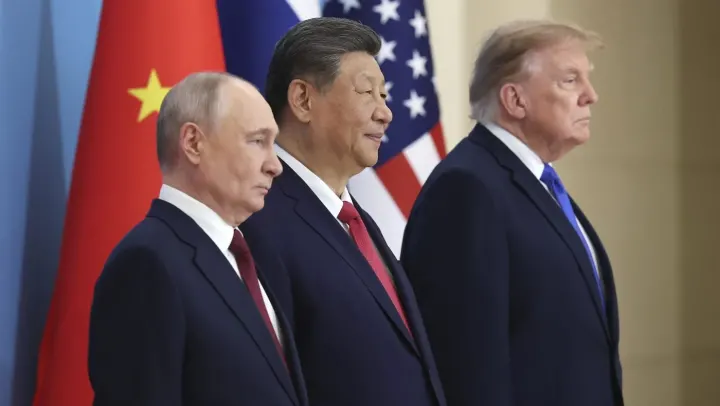
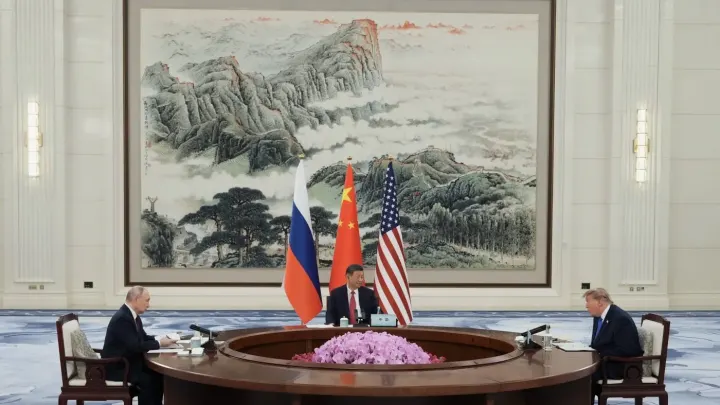
The UK is the only European country to commit its submarine-based nuclear deterrent to the wider defence of Nato. On Thursday, after meeting European leaders in Dublin, UK prime minister Andy Burnham said continental security was not to be compromised for Russia. He said: “There was a very strong feeling that Russian demands to put the question of European security architecture or European security arrangements into this negotiation. Well, no, that's not up for negotiation. It's for Europe to decide its own arrangements, Europe and Europe alone.” Finland has also ruled out leaving the defence alliance. It comes as Zelensky said on Saturday the US floated the idea of Kyiv ceding the remaining Donbas region in exchange for Nato membership. Ukraine has long sought to join the Western pact, but the move has historically been ruled out by the US and others like Germany. Moscow controls much of the Donbas region. Kyiv has said it is unwilling to give up sovereign territory. Zelensky said of the proposal: “The Americans raised a question: 'What if Ukraine joins Nato? Would Ukraine withdraw from Donbas?' This was the first time this had been raised.” The Ukrainian leader also said if he received a draft peace deal with security guarantees, no constraints on Ukraine's military and funds to rebuild the country, he would put it to a referendum. Trump, Putin and Chinese leader Xi Jinping are expected to meet on the side-lines of a Shenzhen summit next week. On Thursday, they are set to discuss AI, the Iran war, but not Russia's war in Ukraine, according to senior US officials.
Background on European Security and Nato Expansion
The security architecture of Europe has been a central point of contention between Moscow and Western governments for decades. The North Atlantic Treaty Organization operates as a collective security pact involving 32 member states across North America and Europe. Eastern European nations sought membership in the alliance following the dissolution of the Soviet Union to guarantee their territorial integrity. Russia has consistently opposed this eastward enlargement, viewing the presence of Western military infrastructure near its borders as a direct security threat. The 2008 conflict in Georgia marked an early escalation of these tensions, preceding the 2014 annexation of Crimea and the full-scale invasion of Ukraine in 2022.
The Role of Nuclear Deterrence in the UK and Europe
Nuclear deterrence forms a cornerstone of defence strategy for the alliance through capabilities maintained by the United States, France, and the United Kingdom. The British government maintains a continuous at-sea deterrent posture using Vanguard-class submarines equipped with Trident ballistic missiles. These assets are assigned to the defence of the alliance in coordination with other member states. Moscow has frequently raised the issue of strategic weapons stationed in Europe during diplomatic exchanges. Western leaders maintain that their defensive postures are designed to deter aggression rather than threaten any sovereign state.
Diplomatic Mediation and Future Peace Talks
Diplomatic efforts to resolve the conflict involve multiple international actors and special envoys. Representatives appointed by the United States government have engaged with regional capitals to explore potential frameworks for negotiations. Proposals discussed during these diplomatic channels often address territorial control, international security guarantees, and the future status of alliances. Ukrainian authorities have maintained that any formal agreement must respect national sovereignty and include robust safeguards against future military incursions. European partners continue to coordinate their positions through multilateral meetings and diplomatic consultations.