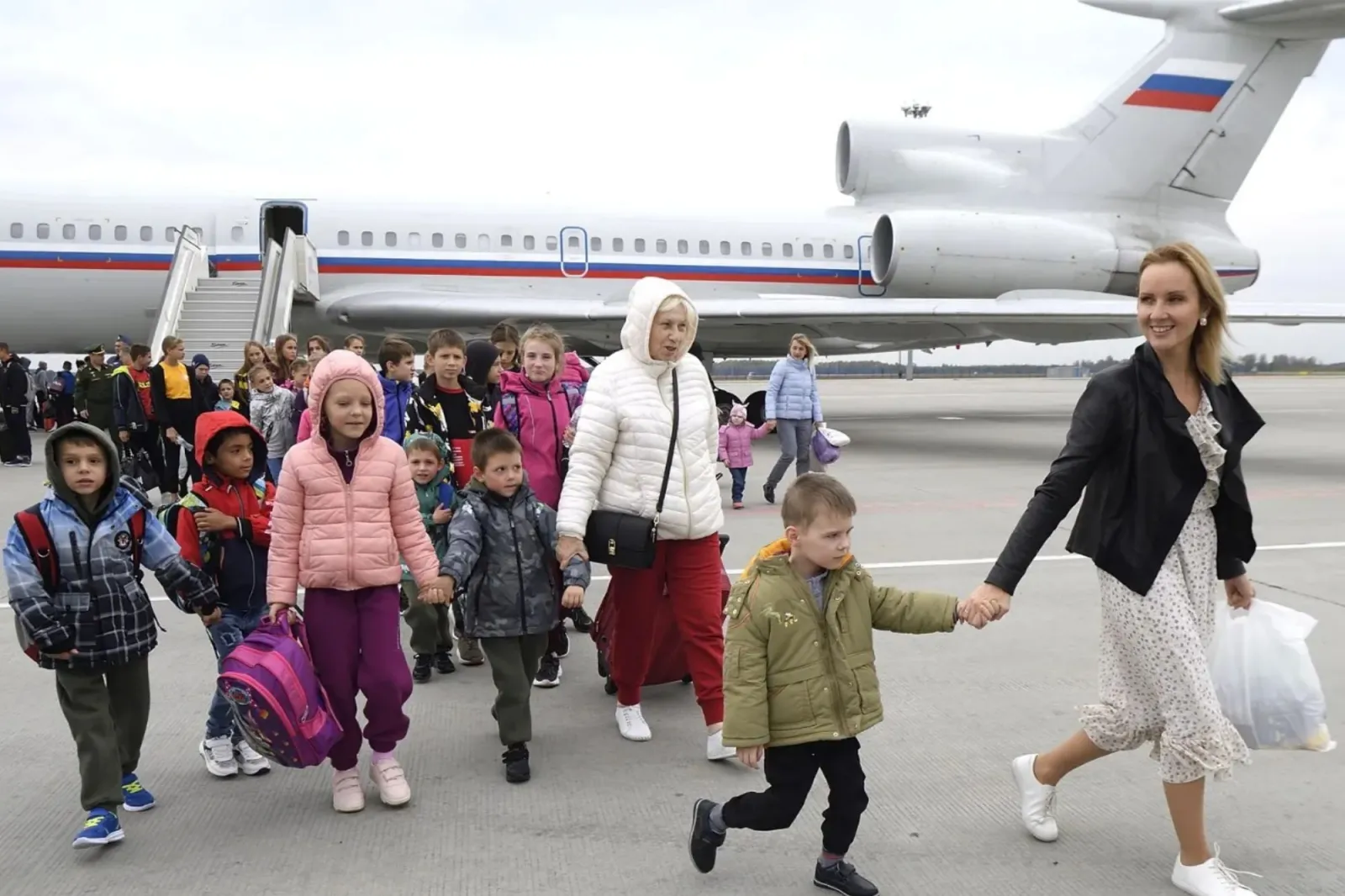
Vladimir Putin is brainwashing more than one million Ukrainian children to fight their own country, a Volodymyr Zelensky ally warned. Russia has systematically kidnapped more than 30,000 children since the tyrant ordered his illegal invasion almost five years ago.
The Kremlin claims it is saving the youngsters from war-torn regions, but is really putting them into sinister camps where they are brainwashed against their birth country. Speaking to The Sun's YouTube channel From the Newsroom, Maksym Maksymov, head of Zelensky's Bring Kids Back initiative, said Putin's ultimate aim is to convert young Ukrainians into adult Russians.
Maksymov warned that the forced deportations are just the tip of the iceberg with many more at risk of having their identity erased through Russian schools and propaganda. Maksymov said, What has been happening in the occupied territories is the systematic process of indoctrination, brainwashing and militarisation of all the children that remain under the Russian control.
Maksymov said, We are speaking about more than one million Ukrainian children under Russian control. All those elements taken together are designed so that an Ukrainian child would grow up not only a Russian adult, but a Russian adult who would be willing to fight against Ukraine.
Maksymov said, This is being done to eradicate the identity of youngest Ukrainians under Russian control and essentially convert young Ukrainians into adult Russians. Youngsters are forced to get Russian passports from the age of just 14 years old and enrolled in parliamentary youth programs.
Others are sent to what Putin's bloodhounds describe as rehabilitation centres, which are really terrifying re-education camps. Maksymov said some children are sent to cadet or naval schools, where they are taught to operate drones and have Russia's jingoistic ideology drilled into them.
Ukraine has continued to document the forced deportations of thousands of children even as the war rolls on to its five-year anniversary. Maksymov said, Ukraine has verified more than 20,000 cases of forcible transfers, but the actual number is likely much higher.
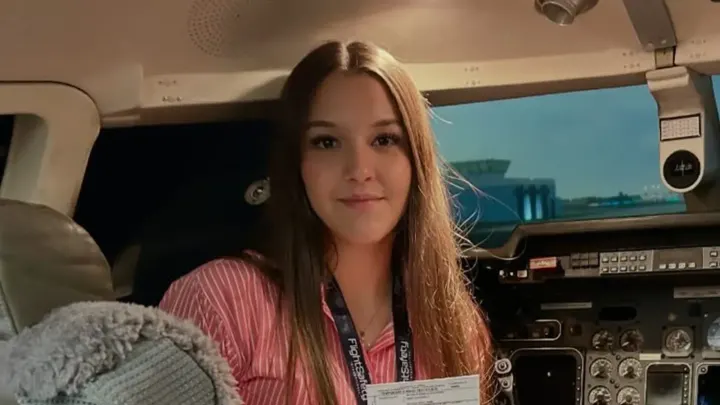
Russia has refused to cooperate with humanitarian organisations and concealed the true number of kidnapping victims. Among the thousands of cases is that of Sofiia, 11, whose family were killed by Russian forces while she was living in occupied Ukraine.
Before Putin's barbaric war erupted, Sofiia was happily living with her mother Valentyna and grandparents, Liubov and Petro Lazarenko, in Illinivka, Donetsk Oblast. But as tanks rolled across the border, Donetsk quickly became a bloody frontline, and by 2025 the family's peaceful village came under relentless shelling.
Endless bombardments cut Sofiia and her loved ones off from evacuation missions, and her older sister Kateryna Korsun, 27, in Kirovohrad Oblast lost contact with them at the start of this year. Tragically, Sofiia's mum Valentyna, 50, grandma Liubov, 77, and grandad Petro, 74, were killed in a Russian blitz.
Terrified Sofiia was temporarily taken in by a neighbour, until Russian troops entered the village on foot in June. Haunting video, released as Russian propaganda, showed two of Putin's thugs filming the youngster, then 10, forcing her to smile as she thanked them for rescuing her.
Maksymov said, They forced her to speak on camera, where she would say that she was happy to be rescued by the Russian authorities. Appearing to forget what she has been told to say by the Russian soldiers, she is then told to mimic the words, Victory will be ours.
Sofiia was then taken deeper into occupied Donetsk Oblast and was put in a children's home in the city of Shakhtarsk. There, she endured hours with psychologists and was made to speak on propaganda videos.
Maksymov warned that the longer children remained under Russian control, the harder it became to reverse the psychological damage caused by years of indoctrination. He said, The children come back in a difficult state. They have seen a lot. They have gone through a lot.
Maksymov said, What they have gone through is leaving deep scars. So it takes a while to bring them back on their feet. Russia has only returned slightly more than 100 children since the beginning of the war, and Maksymov urged allies to keep supporting Ukraine's efforts to bring the stolen children back.
Background on the Conflict and Child Transfers
The conflict between Russia and Ukraine escalated significantly with the full-scale invasion ordered by Russian leadership. International bodies and human rights organisations have documented numerous violations of international humanitarian law since the hostilities began. The administrative regions of Donetsk and Luhansk have experienced severe devastation, displacement, and population loss. Local infrastructure has suffered extensive damage due to ongoing artillery bombardments and ground engagements.
Humanitarian agencies have repeatedly expressed deep concern over the welfare of civilians trapped in contested zones. Evacuation corridors have frequently broken down amid renewed fighting, leaving vulnerable populations without access to essential supplies. Families living near active frontlines face extreme hazards from continuous military operations. International monitors continue to track missing persons and displaced individuals across various affected territories.
Re-education and Ideological Control in Occupied Territories
Occupied regions in eastern and southern Ukraine have seen sweeping changes to administrative and educational systems. Local schools have been integrated into standard Russian educational frameworks, replacing existing curricula with state-approved materials. Youth organisations operating within Russia have established local branches aimed at engaging teenagers and younger children. Mandatory documentation procedures require residents above specific age thresholds to acquire official identification papers issued by external authorities.
Psychological assessments and institutional rehabilitation programs implemented in these areas have faced sharp criticism from international observers. Specialized facilities often focus on civic loyalty training and historical narratives aligned with official foreign policies. Children separated from their legal guardians are frequently placed into state-run institutions or foster networks across distant regions. Civil society groups emphasize that establishing contact with relatives outside controlled zones remains exceptionally difficult for affected minors.