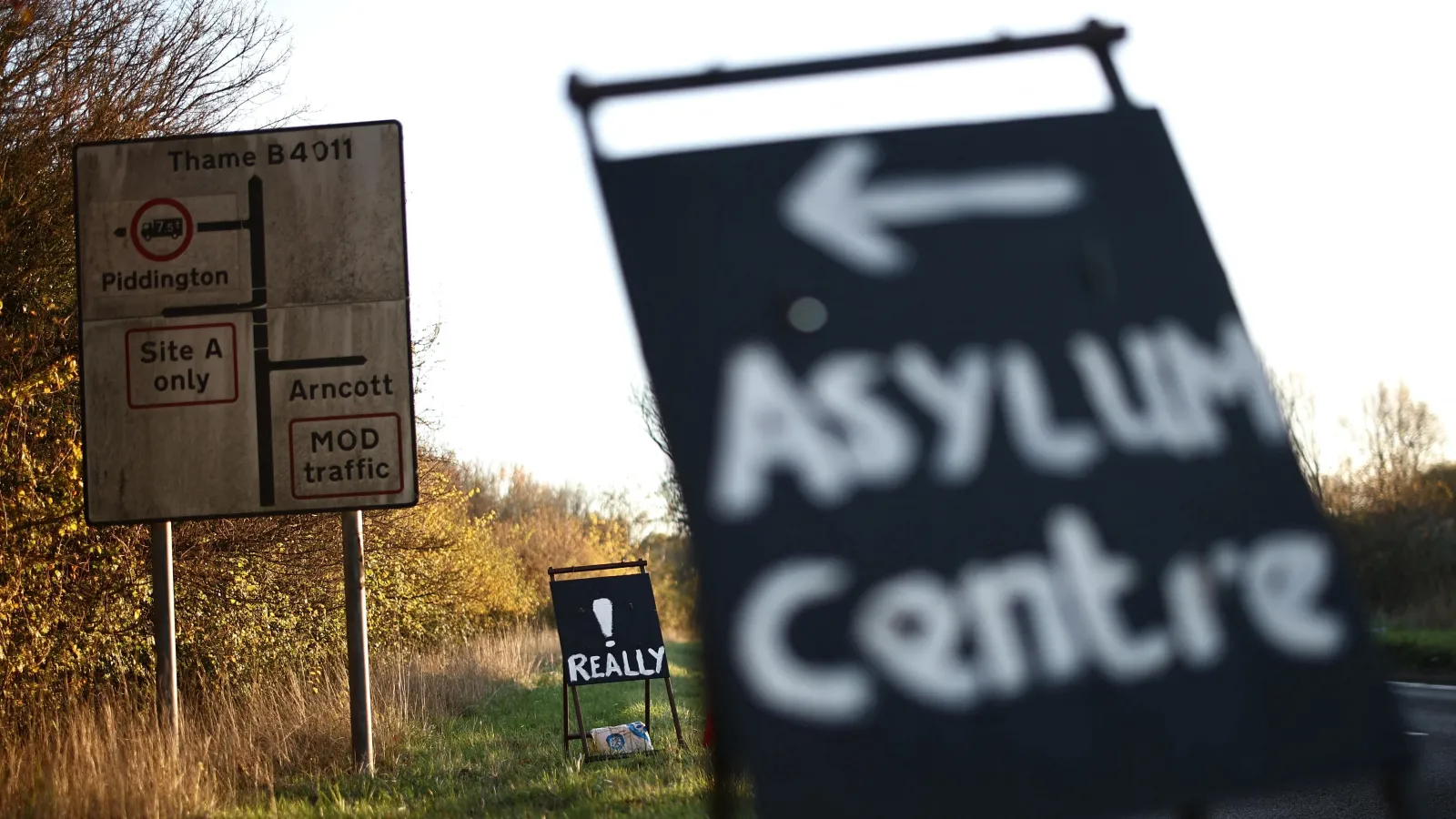
Alarmed locals say they no longer feel safe at home after plans to house over 1,200 migrants in their village were given the green light. It comes as Angela Rayner approved the conversion of MoD Bicester in Piddington, Oxfordshire, into an asylum centre.
Fearful women have reportedly taken up self-defence classes, as worried parents said there was no way they would let their kids out after dark. One resident, whose teenage daughters are aged 13 and 15, said: "Angela Rayner has as good as put my girls under arrest."
The parent continued: "Until now, I have been happy to let them walk around here at night, to go and see their friends, because it is such a peaceful, crime-free village. But as of now, no way are they leaving the house on their own, day or night." The local, whose name is Melissa, 43, added: "We know nothing about these men who will be living among us in a few weeks time."
Melissa stated: "In their cultures, they see Western women as fair game and I doubt they will care to ask their ages. I am not putting my girls at risk of harm. They could be grabbed in the street and sexually attacked by any of these men." Another woman, Joanne, 36, said: "How can we feel safe with these men living in our village. It is madness."
Joanne added: "It puts us in danger of being raped in our own homes. As a woman, Angela Rayner knows full well what the risks are and I think she has let all women down today. She has been totally irresponsible here. I bet she would not have given planning permission next to one of her many homes."
Reacting to the announcement, Piddington Parish Council chair Tim McNally who led the symbolic referendum campaign for independence, said: "There is going to be many actions. We will disclose that as we move forward." He added: "We have attempted at every point all along the way to try and engage and create some form of communication. It would have been much more pleasant and appropriate to convene some sort of connection and meeting and go through this process."
Piddington Parish councillor Joe Marshall said residents were extremely frustrated by the plans. He said that the Government had pushed through with the development despite receiving over 3,000 objections, overruling the NHS, the police and the crime commissioner. Asked whether democracy was still alive and well in the country, he replied: "No, not at all."
Marshall also noted: "It is not simply a nimby issue either. There is much more to it. There is the quadrupling of our population, there is the increased risk of road collisions, there is the exposure to emissions from generators. It is ludicrous that the government considers this to be a feasible option."
Shadow home secretary Chris Philp said: "Angela Rayner and the Labour government have betrayed the people of Piddington by abusing their emergency powers in this way." He continued: "Instead of accommodating illegal immigrants, the government should leave the ECHR so they can be rapidly deported."
The Liberal Democrat MP for Bicester said the proposal to house 1,256 men at the former military site was the wrong plan and wrong site for local communities, asylum seekers and taxpayers. He said he was deeply disappointed in Labour's decision. The approval could be appealed in the High Court within six weeks of the decision date.
Reform UK home affairs spokesman Zia Yusuf said: "Over 1,200 unvetted illegal migrant men are being dumped in Piddington. Tory and Labour governments have betrayed their own people. Reform will detain and deport all of these men." A Home Office spokesperson said: "A final decision to proceed is yet to be taken."
The government is working on a fairer distribution of asylum accommodation across the country, with over £1 billion saved in costs since the election. This includes closing all asylum hotels and moving to alternative accommodation, including former military sites.
Background on MoD Bicester and Piddington
Piddington is a small rural village located in the county of Oxfordshire, England, characterized by its quiet community structure and limited population. MoD Bicester is a former Ministry of Defence site situated near the village, historically used for military storage, logistics, and operational support purposes.
The use of former military installations for state accommodation projects has increasingly become a strategy for central government bodies seeking to phase out the reliance on commercial hotel chains. Local government structures in rural areas often find themselves managing significant demographic shifts when large-scale federal or national housing schemes are introduced into low-population settlements.
Planning controversies involving emergency powers and ministerial approvals frequently generate friction between local parish authorities and national departments. Parish councils operate at the most localized level of English local government, representing community interests in planning applications, infrastructure developments, and local service provisions such as healthcare and policing.
Legal Avenues and Potential Challenges
The formal approval process for developments using ministerial or emergency powers often subjects decisions to intense scrutiny from municipal leaders and legal representatives. Under English administrative law, local authorities and affected resident groups possess specific windows of time to pursue judicial reviews or legal challenges in the High Court.
Judicial review proceedings examine whether a public body has followed proper legal procedures, consulted adequately, and accounted for statutory objections before arriving at a final determination. Objections raised by local health authorities, regional police forces, and elected commissioners typically form part of the evidentiary framework when communities dispute central government planning overrides.
National Asylum Accommodation Strategy
The management of asylum seekers in the United Kingdom involves balancing central administrative costs against regional capacities and community integration efforts. Government policy has increasingly targeted the reduction of commercial hotel expenditures by transitioning individuals into alternative state-owned properties or former defense estates.
Stakeholders across the political spectrum engage in ongoing debates regarding the appropriate scale, location, and vetting procedures associated with asylum placement facilities. National authorities maintain that decentralized distribution models aim to alleviate regional pressures, while critics and local representatives continue to raise infrastructure and security concerns.