In the 2024 Dutch-produced drama Odessa, director Harald Swinkels tells the story of a refugee family fleeing the reach of Nazi war criminal Josef Mengele. The plot unfolds in a 1949 alpine meadow, where the family seeks refuge in a Catholic church and learns the acronym O.D.E.S.S.A., the clandestine organization that helped former SS officers escape Europe after the war.
Plot Overview
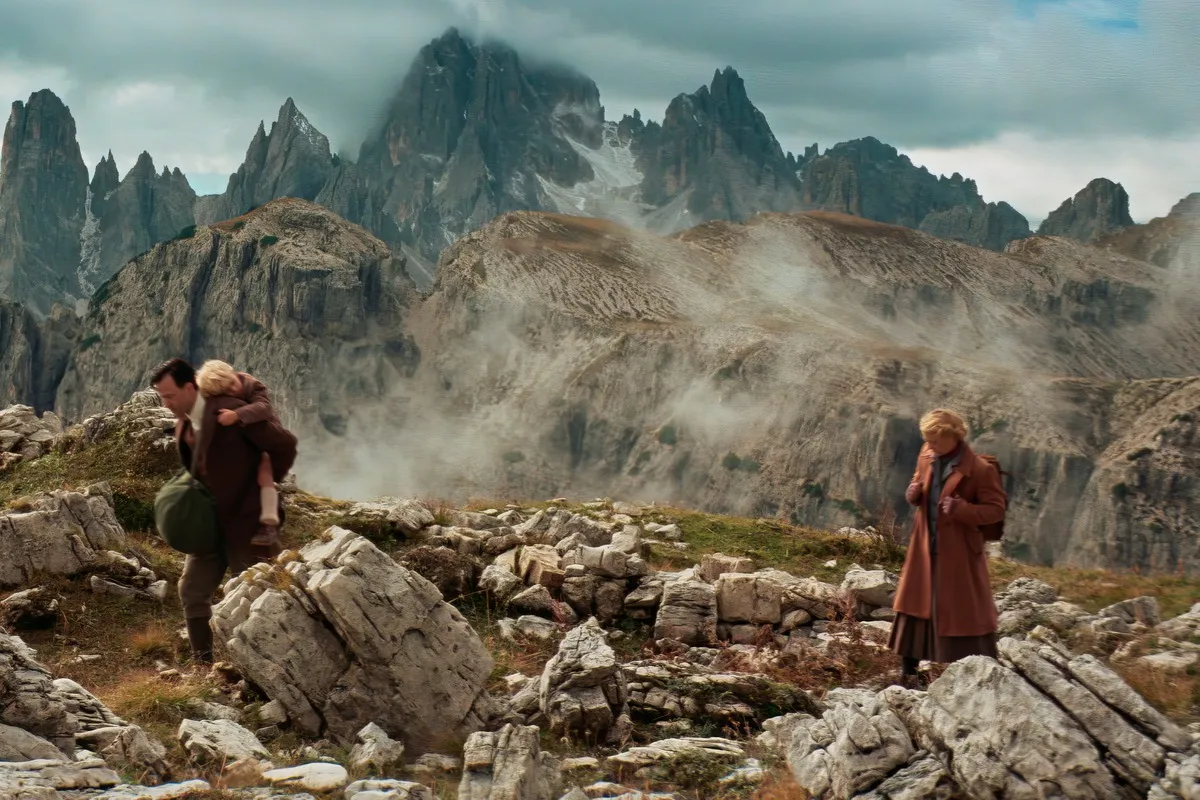
The opening scene places a couple and their young son in an alpine meadow, the setting evoking the iconic "Sound of Music" landscape. The family's jackets, hairstyles and the surrounding pine trees and snow-capped mountains create a nostalgic atmosphere that quickly turns tense as only the birds break the silence.
Harald Swinkels explains that the film's tension begins with a subtle hint: "If history has taught us one thing, it's that monsters don't come dressed as monsters." He notes that the second meadow the family walks through is called the "Sound of Music" meadow, and he purposely planted crumbs of unease at the start to signal something is off.
Inspiration Behind the Story
Swinkels says the film's premise came from two moments. The first was a dinner conversation during the height of the Syrian refugee crisis, where a conservative friend argued that refugees should stay in their home region. Swinkels wondered whether that friend would feel the same about people who looked like him and his wife. The second moment was the 2021 Dutch election, where a dangerous politician won a landslide. Swinkels observed that voters were attracted to charm rather than character.
These reflections led him to create a story about a fleeing family, hoping audiences would fall into their empathy trap and root for a monster within 20 minutes.
The O.D.E.S.S.A. Connection
The family finds shelter in a Catholic church after uttering the single word O.D.E.S.S.A. The acronym stands for Organization der ehemaligen SS-Angehörigen, a rumored secret SS network that helped former Nazi officers escape Europe after the war. The film references the spy thriller The Odessa File by Frederick Forsyth, but Swinkels stresses that he researched the historical accuracy of the network.
He confirms that Josef Mengele, the "Angel of Death" who conducted inhumane experiments at Auschwitz-Birkenau, pursued the family. Swinkels begins the film with a partial quote: "Mengele was able to be very kind to children, give them sugar and make them feel comfortable and to do things that someone would genuinely admire. The second part of the quote [revealed at the end] is that half an hour later, he would send these children to the gas chambers."
Research and Authenticity
Swinkels says he researched for almost a year, even traveling to Auschwitz to confirm that Mengele was indeed known for his paradoxical kindness toward children. He aimed to avoid imposing a positive characteristic on a war criminal, insisting the story remain historically accurate.
The costumes were sourced from the period, including the eerie uniform worn by Bastian Beyer in his portrayal of Mengele. Swinkels recounts a dress rehearsal in his Amsterdam home where he had to close the curtains because someone in the uniform was walking around his living room.
Filming Techniques and Locations
The film was shot on 35mm, 4-PERF, to achieve a vintage look. Swinkels notes that each film roll lasted only four minutes, keeping the crew and cast alert. The Dolomites served as the backdrop, with a six-day location shoot that experienced four seasons in six days: from sunscreen on the first day to a snowstorm two and a half days later.
Historical Context of Mengele's Escape
Set in 1949, Odessa accurately portrays Mengele's four-year hideout in Europe with his first wife, Irene (played by Magdalena Müller), and their child before the couple separated. The film recreates a farewell in a Bavarian meadow, based on an interview with Irene where she expressed a desire for a "normal, open life" instead of accompanying her husband to South America. The couple later divorced.
Mengele never faced justice, evading capture until his death by stroke while swimming in Brazil in 1979.
Director's Vision and Impact
Swinkels says the biggest reward is when the end credits roll and the audience remains silent, without an obligatory applause. He hopes viewers leave the theater with a sharper eye for those who charm them, whether in personal interactions or future elections, believing the film has fulfilled its purpose.
What Happens Next?
While the film concludes with Mengele's escape, the narrative invites audiences to question how easily history repeats itself when charm masks malice. The story's ending encourages viewers to scrutinize the next charismatic individual they encounter, echoing Swinkels' warning about empathy traps.
Background on Harald Swinkels
Harald Swinkels is a Dutch writer-director known for blending historical drama with psychological tension. Prior to Odessa, he directed films that explore moral ambiguity and the thin line between heroism and villainy. His work often reflects contemporary social issues, as seen in this film's focus on refugee crises and political manipulation.
About the O.D.E.S.S.A. Network
The Organization der ehemaligen SS-Angehörigen was an alleged clandestine group that facilitated the escape of former SS officers after World War II. While the existence of a formal network remains debated among historians, evidence suggests that many former Nazis fled Europe with the aid of sympathetic networks. The film dramatizes this by showing the family's interaction with a Catholic priest who uses the acronym as a key to safe passage.
Josef Mengele's Legacy
Josef Mengele (1911-1979) was a German SS officer and physician infamous for his cruel experiments at Auschwitz-Birkenau. He is often referred to as the "Angel of Death" because of his paradoxical behavior toward children, which is highlighted in the film. Mengele's escape to South America after the war has been the subject of numerous investigations and works of fiction, including Frederick Forsyth's spy thriller The Odessa File.
Related Stories
For more context on similar themes, readers may find these stories useful: AI Risk Warning Issued By Geoffrey Hinton Ahead Of European Leaders Summit, Putin Super Army Warnings Emphasised as West Risks Falling Into Global Conflict.