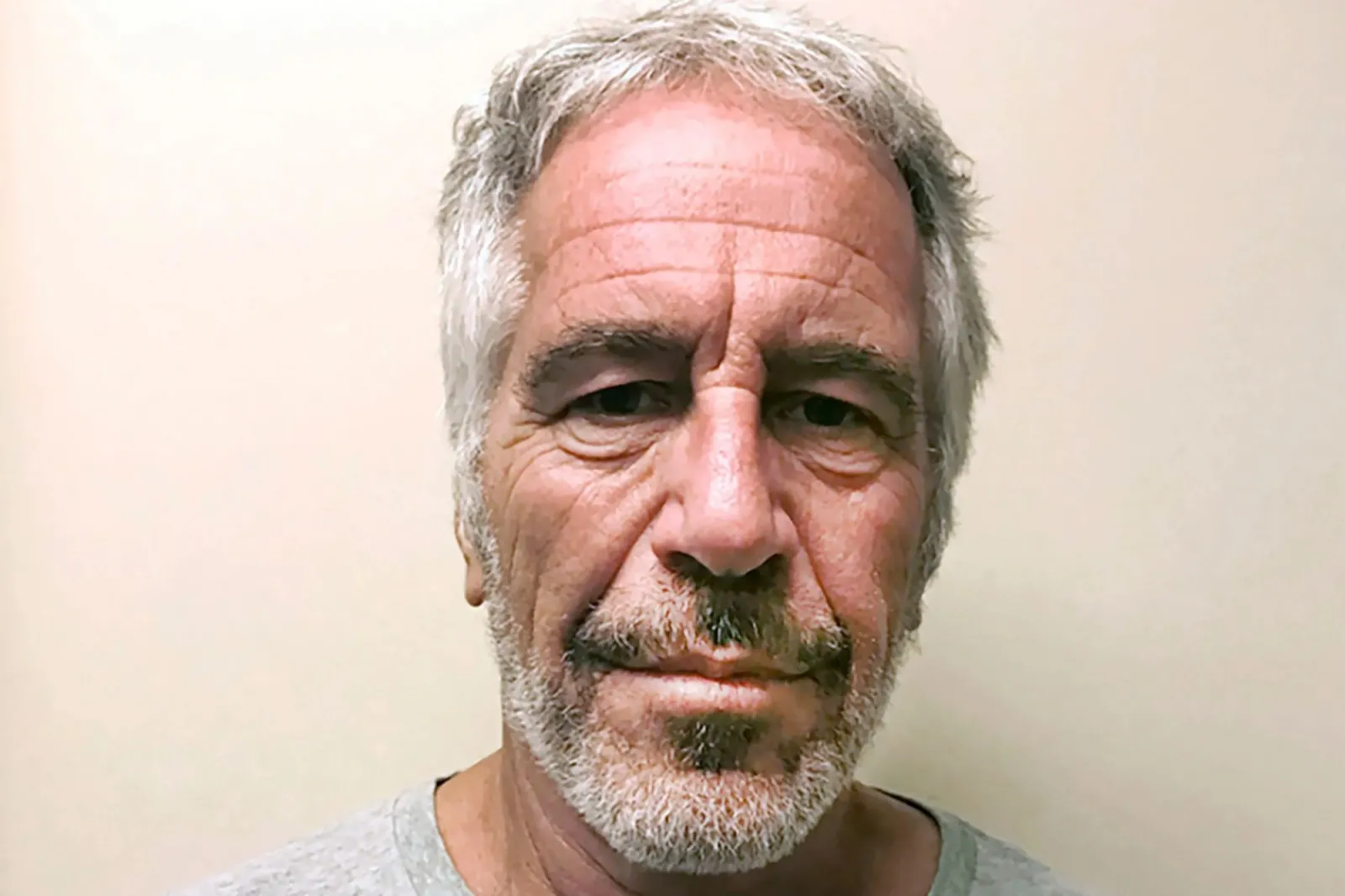
Newly published images from Jeffrey Epstein and his prison autopsy finally prove he was strangled, according to assertions made by a top forensic investigator. This bombshell set of graphic photographs was posted online by Epstein brother Mark amidst fresh claims that the disgraced financier was actually murdered.
Many of the pictures are too graphic for publication, but they clearly show multiple ligature wounds across both the front and back of the neck belonging to Epstein. These visual details led forensic scientist Dr Michael Freeman to claim that the death of the convicted sex offender was most likely a case of homicidal strangulation.
The file of images also reveals the first full picture of the New York prison cell used by Epstein after he was discovered unresponsive on August 10, 2019. Bed sheets are scattered across the room, while one of the orange coloured prison issue sandals and a defibrillator appear on the ground.
An oxygen mask is also visible strewn on the floor among a litter of plastic wrappers, medication and a book. Multiple images display a double knotted strip of orange fabric, which Dr Freeman believes was used to strangle Epstein.
Serving as the editor-in-chief of the Journal of Forensic and Legal Medicine, Dr Freeman spent months reviewing autopsy records provided by the brother of Epstein. Presenting his findings in London on Monday, he stated that the notorious sex abuser was likely attacked and killed by another person.
Dr Freeman told CBS News that the injuries documented by the medical examiner were not consistent with a suicidal hanging. He added that the injuries attributed to something other than potentially a physical struggle or assault were just overlooked.
This marks the second time a forensic expert has cast doubt on the official 2019 ruling delivered by the Chief Medical Examiner. Back in 2020, forensic pathologist Dr Michael Baden stated that the injuries found on the neck of Epstein pointed more strongly toward murder than suicide.
Meanwhile, the Federal Bureau of Investigation and the Department of Justice have consistently maintained their official positions that his death was a suicide. The trove of gruesome images now released by Mark shows his late brother laid out on a table while wearing a hospital gown and a neck brace.
Deep purple and red markings cover the back of Epstein, alongside a small cut pictured on his left forearm. However, the most compelling evidence, according to Dr Freeman, consists of pictures revealing the right side of the upper body and face of Epstein.
When Freeman saw this photograph, his first reaction was that it displayed a very unusual looking injury for a hanging on the neck. The initial report described the injury pattern as sloped or peaked, which is a typical description associated with hanging.
While one mark fit that particular description, Dr Freeman noticed a second wound situated beneath and angled differently than the mark positioned above it. He explained that there is no mechanism during a suicide to produce a second mark that would be lower.
When asked if this could have been caused by a false start and a second attempt, Dr Freeman stated that this explanation did not make sense. Furthermore, fingernail marks are visible above a ligature mark on the neck of Epstein, according to Dr Freeman.
The expert believes such marks would be consistent with strangulation, particularly from behind, and represent the attempt by the victim to try to remove the ligature from the neck. Upon finding Epstein unresponsive in his cell seven years ago, a guard claimed they discovered him hanging with an orange coloured strip of material around his neck in a near seated position.
Dr Freeman noted that he expected to see a photograph of the body before it was taken down from where it was suspended, but no such image existed in the file of Epstein. A previous report claimed that Epstein tried to end his life at least three times before his death and that those attempts were laughed off by jail guards.
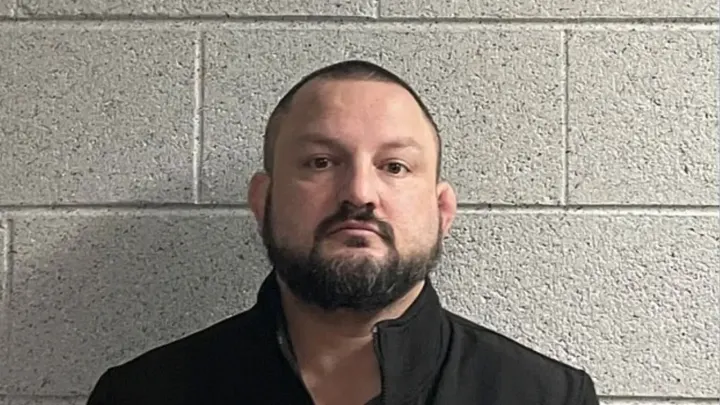
Ex cop and convicted murderer Nicolas Tartaglione was briefly the cell mate of Epstein as he awaited trial for child sex trafficking charges at the federal lockup. The 56-year-old told The New York Times that the child sex offender asked him how to make a noose before making a first attempt on July 22, 2019.
Epstein alleged that his cell mate had tried to kill him, but an internal investigation ultimately cleared Tartaglione of any wrongdoing. The sex offender told prison guards he was being harassed by a murderous inmate, with the alleged abuse causing him to try and take his own life, according to police files.
Notes recorded by prison officers document an attempt by Epstein to take his own life on July 23, 2019, which occurred less than a month before his eventual death. In May of this year, a suicide note written by the late sex offender was released by a court, wherein Epstein claimed investigators found nothing on him.
Epstein was convicted of soliciting prostitution from a minor back in 2008, but was spared a hefty jail sentence after securing a plea deal. At the time of his death, he was awaiting trial for allegedly running a network of underage girls for sex.
Background on the Jeffrey Epstein Case
Jeffrey Epstein was an American financier and convicted sex offender whose high profile social circle included politicians, business leaders, and royalty. His arrest in July 2019 by federal authorities in New York brought renewed public attention to allegations of sex trafficking involving underage girls spanning decades. The Metropolitan Correctional Center in Manhattan housed him prior to his death, placing intense scrutiny on federal prison operations and security protocols.
The initial official ruling by the New York City Chief Medical Examiner determined the cause of death to be suicide by hanging. That conclusion faced immediate skepticism from family members, legal teams, and independent medical professionals who pointed to injuries they argued were uncharacteristic of hanging. Subsequent investigations by the Department of Justice Office of the Inspector General identified numerous institutional failures, negligence, and administrative shortcomings at the detention facility, though investigators maintained their finding of suicide.
Forensic Analysis and Prison Cell Evidence
Forensic pathology relies on physical evidence such as ligature marks, petechial hemorrhages, and defensive wounds to determine the manner of death in cases involving asphyxiation. Independent experts reviewing autopsy materials look for discrepancies between physical trauma sustained by a body and the mechanical forces typically generated during suicidal hanging versus homicidal strangulation. The presence of multiple distinct markings, unusual angles of force, and associated fingernail abrasions frequently form the core of debates surrounding disputed death investigations.
Federal correctional facilities maintain strict protocols regarding inmate safety, monitoring, and evidence preservation following any critical incident or fatality. The release of internal cell photographs and official medical records through civil disclosures and family requests provides independent researchers with data to reexamine conclusions reached by government authorities. Legal battles over public records continue to shed light on the final days and hours spent inside the federal lockup.