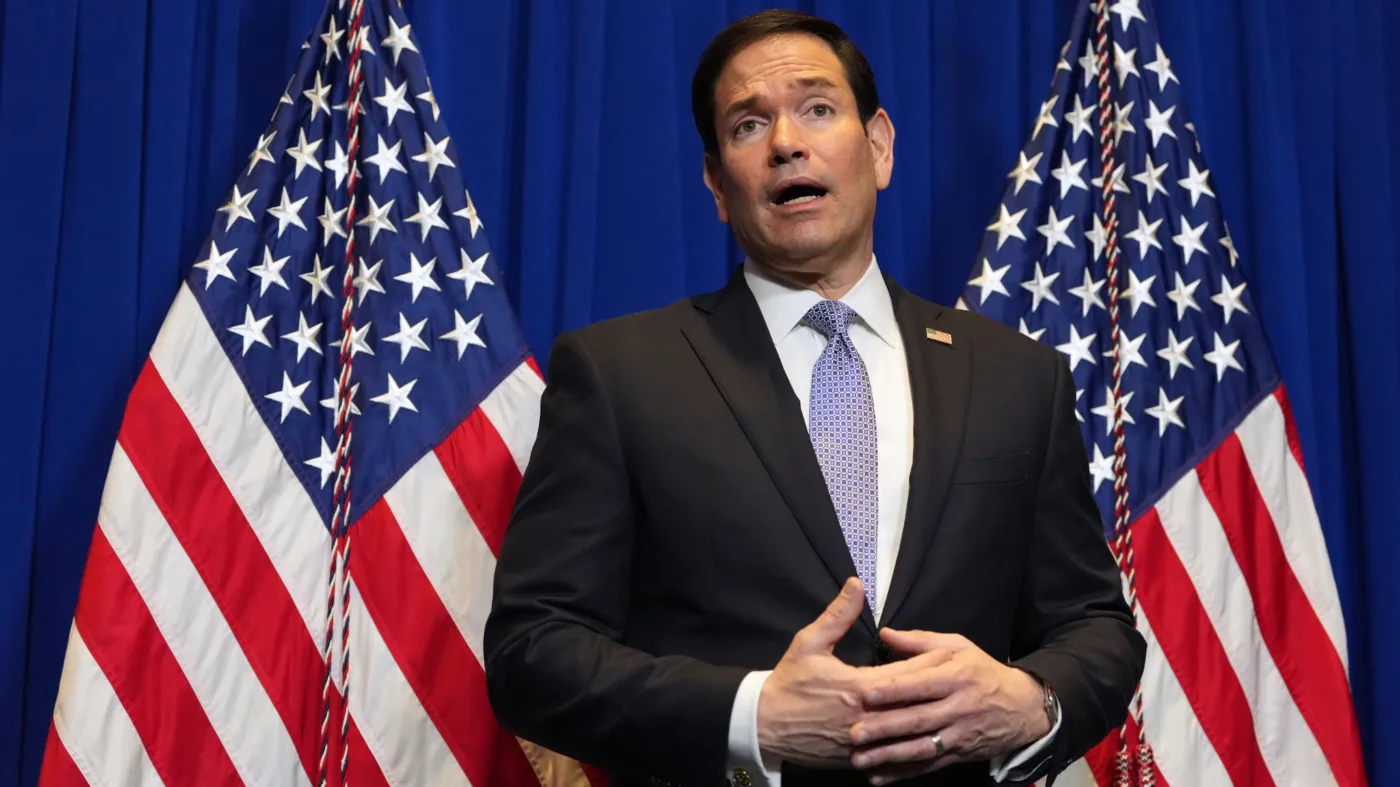
On Tuesday, Secretary of State Marco Rubio delivered a speech to a gathering of Federalist Society lawyers in Washington, D.C., that many described as "shameful" and "usefully revealing." The remarks, delivered in front of a group of legal scholars, were a stark display of Rubio's contempt for the rule of law both at home and abroad, and they offered a clear glimpse into the mindset of a man positioning himself for a future presidential bid.
What Happened at the Speech
Rubio began by dismissing criticism of the Trump administration's "deadly attacks on boats" in the Caribbean and Pacific Ocean. He said the killings, about 250 people, killed without due process or evidence of drug smuggling, were justified. The speech also touched on the International Criminal Court, a body designed to hold the world's worst human-rights abusers accountable, and Rubio's call for the Trump administration to destroy it. He invoked a Roman general's statement to officials who tried to make him comply with the law: "Stop quoting laws to men with swords."
Targeting Judges and the Legal System
Rubio's remarks were not limited to global institutions. He demeaning American judges who had "courageously held the line" against the administration's alleged law-breaking. He also criticized the "allies in the academy, the press, and the professional activist class." According to Rubio, the fundamental purpose of law, both American and international, was to weaken the United States, undermine its power, and hinder the government's ability to defend national interests at home and abroad.
Criticism of Historical Truth and Moral Standards
In his speech, Rubio praised the Federalist Society's power-building strategy, describing it as a "long march through the institutions of American law." He highlighted the society's role in funneling young conservatives into "pipelines to power," and in "seizing the levers of history." The remarks also included sweeping praise for the United States' "essential character," claiming it is defined by an "irrepressible ambition" to "explore and conquer." Rubio waved away criticism of slavery, the treatment of Native Americans, Jim Crow apartheid, and other darker aspects of U.S. history, insisting that moral doubt had never guided U.S. leaders.
Link to Trump's Vision and Global Power
Rubio's speech was framed within the broader context of the Trump administration's worldview. The president has declared that the only constraint on his exercise of power is his own "apparently nonexistent morality." Rubio rejected the idea that "great nations" cannot "impose ourselves upon the world." Critics argue that this worldview is dangerous, especially in the nuclear age, and that it mirrors the admiration Trump has shown for dictators such as Vladimir Putin and Xi Jinping, who act without "moral doubt."
Reactions and Implications for American Democracy
Critics of Rubio's remarks point out that the speech reflects a broader pattern of undermining democratic norms. The Trump administration has been accused of attacking the science and health infrastructure, engaging in televised brutality by Immigration and Customs Enforcement agents, shredding alliances, and waging trade wars. The speech also echoed the MAGA movement's "repression of truth and honest history," which critics say is being imposed on schools and public discourse.
What Happens Next
Rubio's speech is likely to fuel further debate about the role of the Federalist Society and the future of American law. The organization has long promoted conservative legal principles, including the repeal of the New Deal, while presenting itself as non-partisan. Justice Samuel Alito, a longtime member, has similarly defended the Supreme Court's right-wing agenda as a political project. The speech may prompt lawmakers to scrutinize the influence of the Federalist Society on judicial appointments and policy decisions.
Why It Matters
Rubio's comments affect all Americans, as they touch on the integrity of the legal system, the protection of human rights, and the nation's foreign policy. The speech signals a potential shift in the balance of power and raises questions about the future direction of U.S. governance.
Key Points
- Marco Rubio dismissed criticism of the Trump administration's boat-killing policy, citing 250 deaths without due process.
- He called for the destruction of the International Criminal Court and said, "Stop quoting laws to men with swords."
- Rubio attacked American judges and the "allies in the academy, the press, and the professional activist class."
- He praised the Federalist Society's power-building strategy and its influence on the U.S. legal landscape.
- Critics argue the speech undermines democratic norms and promotes a dangerous worldview.
FAQ
- What was the main focus of Rubio's speech? Rubio focused on dismissing criticism of U.S. maritime killings, attacking the International Criminal Court, and demeaning judges and allies who uphold the rule of law.
- How does Rubio view the role of law? He claims law's fundamental purpose is to weaken the United States and hinder its ability to defend national interests.
- What is the Federalist Society's role? The society is described by Rubio as a "long march" that funnels young conservatives into power and remakes the legal landscape.
Image Prompt
A press photo of a crowded conference hall in Washington, D.C., with a podium and a banner reading "Federalist Society," and a sea of lawyers and legal scholars listening to a speaker in a dark suit.