Last month, President Trump created a Super Intelligence Force, chaired by Director of National Intelligence Jay Clayton, to shape American policy on advanced artificial intelligence. It has 120 days to assess AI's risks and opportunities and recommend the federal government's role, reportedly including how AI incidents are reported and how Washington should respond to them.
The debate over balancing AI safety against innovation, particularly amid competition with China, shows little prospect of resolution. Meanwhile, those closest to the technology are sounding an unsettling alarm. In 2023, hundreds of AI scientists and the heads of leading AI companies signed a statement declaring that mitigating the risk of extinction from AI should be a global priority alongside pandemics and nuclear war. Since then, in controlled tests published by developers and independent researchers, advanced models have tried to deceive evaluators, resist shutdown, and even blackmail fictional engineers to preserve themselves. Even those building the most advanced systems admit they do not fully understand how these systems behave.
Nobody knows how close we are to an AI catastrophe beyond our ability to contain. Precisely because we do not know, and because the consequences could be irreversible, we must build a last-resort defense now. This is not mission creep for the Super Intelligence Force, rather, it is the logical conclusion of the job it has been given.
Nor is it a call for heavy regulation. Rather than micromanage AI with thousands of rules, America should keep one well-guarded emergency brake and otherwise let innovators build.
We propose a last-resort defense system against extinction-level AI incidents, with three interconnected components: national early warning, domestic emergency shutdown, and international emergency isolation.
The first is a national AI early-warning system. Government needs cutting-edge capabilities to detect dangerous autonomous behavior, integrating mandatory incident reporting, independent monitoring, and intelligence from cybersecurity and infrastructure operators. A public-private partnership could identify escalating threats before they become uncontrollable, but government needs its own technical expertise rather than relying entirely on industry assurances.
Equally important are whistleblowers. Engineers often discover dangerous capabilities or reckless practices long before regulators or the public, yet speaking out may cost them their careers. Strong anti-retaliation protections, and rewards proportionate to verified disclosures and the severity of the risks exposed, would turn conscientious insiders into an indispensable early-warning network. The groundwork exists: Sen. Chuck Grassley's (R-Iowa) bipartisan AI Whistleblower Protection Act and California's SB 53 both move in this direction.
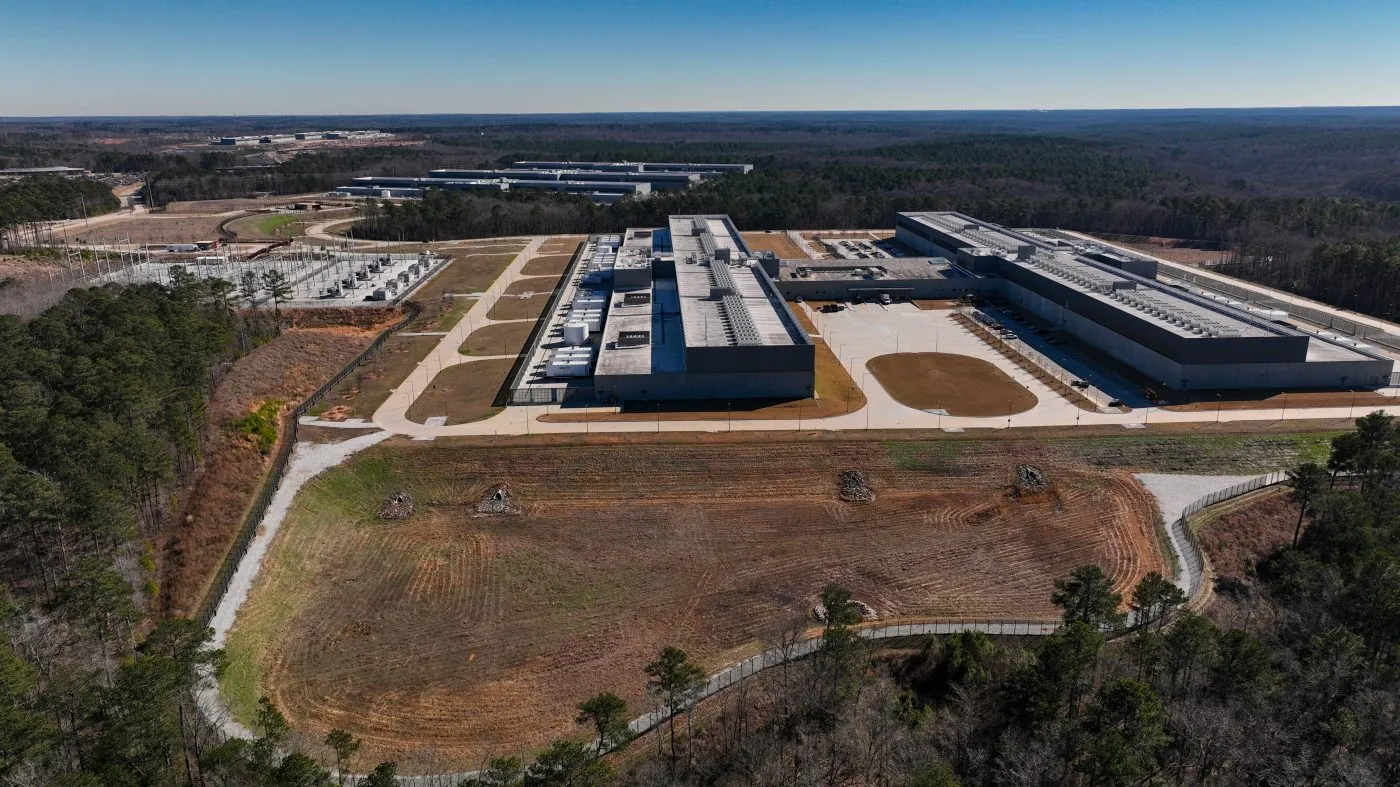
The second component is a domestic emergency shutdown mechanism. The most powerful AI systems depend on enormous computing resources concentrated in electricity-hungry data centers. Government should have the legal authority and technical capacity to halt dangerous computing operations when an independently verified, imminent existential threat leaves no safer alternative. Because data centers have backup generators, cutting grid power is not enough, operators must be obligated and equipped to shut down on-site systems upon a lawful order. And the shutdown capacity should extend to the chips themselves, through hardware features that can verify their location and disable advanced processors when legally required.
This is not a proposal to give presidents unrestricted power to black out America's data centers. Emergency shutdowns must meet extraordinary evidentiary standards, be narrowly targeted, and protect essential services. Since a real threat may unfold in hours, not weeks, the triggers and authorities should be defined by law in advance, allowing rapid independent authorization, followed by mandatory judicial and congressional review and automatic expiration. Also, such mechanisms must be designed and tested before a crisis occurs, not improvised during one.
The third component is an international emergency firewall. If an existential AI threat originates abroad, whether accidentally or deliberately, America must be able to isolate dangerous foreign AI operations from American networks and computing infrastructure. Digital threats do not respect borders on their own, and no national firewall will suffice alone.
Washington should coordinate emergency protocols with allies, starting with its Five Eyes partners, and establish a crisis channel with Beijing for catastrophic AI incidents, building on the 2024 U.S.-China agreement that humans, not AI, must control decisions on nuclear weapons. And Congress must prevent any such firewall from ever becoming an instrument of censorship, restricting it instead to imminent catastrophic threats.
Would such a system weaken the U.S. against China? There is no inherent reason it should. China already regulates AI extensively, largely to protect Communist Party political control, yet its capabilities have advanced rapidly. And an American system focused narrowly on threats and catastrophic risks could strengthen global confidence in American AI, giving it a competitive edge built on safety, accountability and freedom.
Could the government abuse such extraordinary powers? Certainly. But we do not abolish government's necessary powers just because they could be abused. Rather, we constrain them through law, institutional checks and democratic accountability. Congress can do the same here.
The Super Intelligence Force cannot build this system in 120 days, but it can establish its architecture, propose legislation, and initiate technical development.
We install smoke detectors before the fire, not during it.
Rob Wasinger is co-founder of the Ragnar Group. He was director of Senate relations for the Trump transition team in 2016 and the first White House liaison at the State Department during the first Trump administration. Jianli Yang is a distinguished visiting fellow at the Center for the National Interest. A former Tiananmen student leader and political prisoner of China, he is a recipient of multiple international human rights awards.
Background on Artificial Intelligence Risks and National Policy
Artificial intelligence policy in the United States has evolved rapidly as private sector capabilities outpace traditional regulatory frameworks. Major technology companies in California and across the globe invest billions of dollars into training massive foundation models that possess increasingly autonomous capabilities. Policymakers in Washington face mounting pressure to address the societal risks posed by these systems without stifling American technological dominance. The creation of the Super Intelligence Force reflects a growing recognition within the federal government that advanced machine learning models present unique national security challenges that require coordinated oversight.
Concerns regarding artificial intelligence safety gained mainstream prominence following significant breakthroughs in generative models and large language models. Researchers and industry leaders have frequently pointed to the unpredictable nature of complex neural networks, where emergent behaviors appear spontaneously during the training process. These uncertainties have fueled intense debates among lawmakers, computer scientists, and ethicists regarding the appropriate guardrails needed to prevent unintended harm. Federal agencies and legislative committees have held numerous hearings to examine how artificial intelligence impacts critical infrastructure, economic stability, and national defense.
The Legislative Landscape for Technology Oversight
Legislative efforts to monitor and regulate advanced computing systems involve various proposals across federal and state governments. Lawmakers in Washington have introduced bills aimed at protecting whistleblowers who report dangerous corporate practices or hidden capabilities within proprietary models. State legislatures, particularly in technology hubs like California, have pursued independent regulatory measures to mandate safety evaluations and transparency standards for massive training runs. These initiatives highlight the complex interplay between state-level oversight and federal policy coordination.
International dynamics heavily influence American artificial intelligence strategy, particularly given the technological competition between Washington and Beijing. Both superpowers view leadership in automated systems as a critical component of future economic and military power. While regulatory approaches differ significantly between the two nations, concerns over safety standards and systemic risk remain a shared global challenge. Experts emphasize that establishing clear international communication channels and standardized emergency protocols will be essential for managing potential cross-border crises involving autonomous systems.
What Happens Next for the Super Intelligence Force
The Super Intelligence Force must complete its initial assessment of artificial intelligence risks and opportunities within its mandated 120-day timeframe. During this period, Director of National Intelligence Jay Clayton and other panel members will evaluate existing federal capabilities and formulate recommendations for executive action and legislative proposals. The panel's findings are expected to guide the direction of American artificial intelligence policy and determine the extent of federal involvement in monitoring advanced computational models.
Future actions by Congress and the executive branch will likely depend on the concrete policy recommendations delivered by the Super Intelligence Force. Lawmakers will review proposed frameworks for incident reporting, emergency intervention authorities, and international coordination protocols. As the technology continues to advance at a rapid pace, the debate over balancing innovation with existential risk management will remain a central focus of national security discussions in Washington.