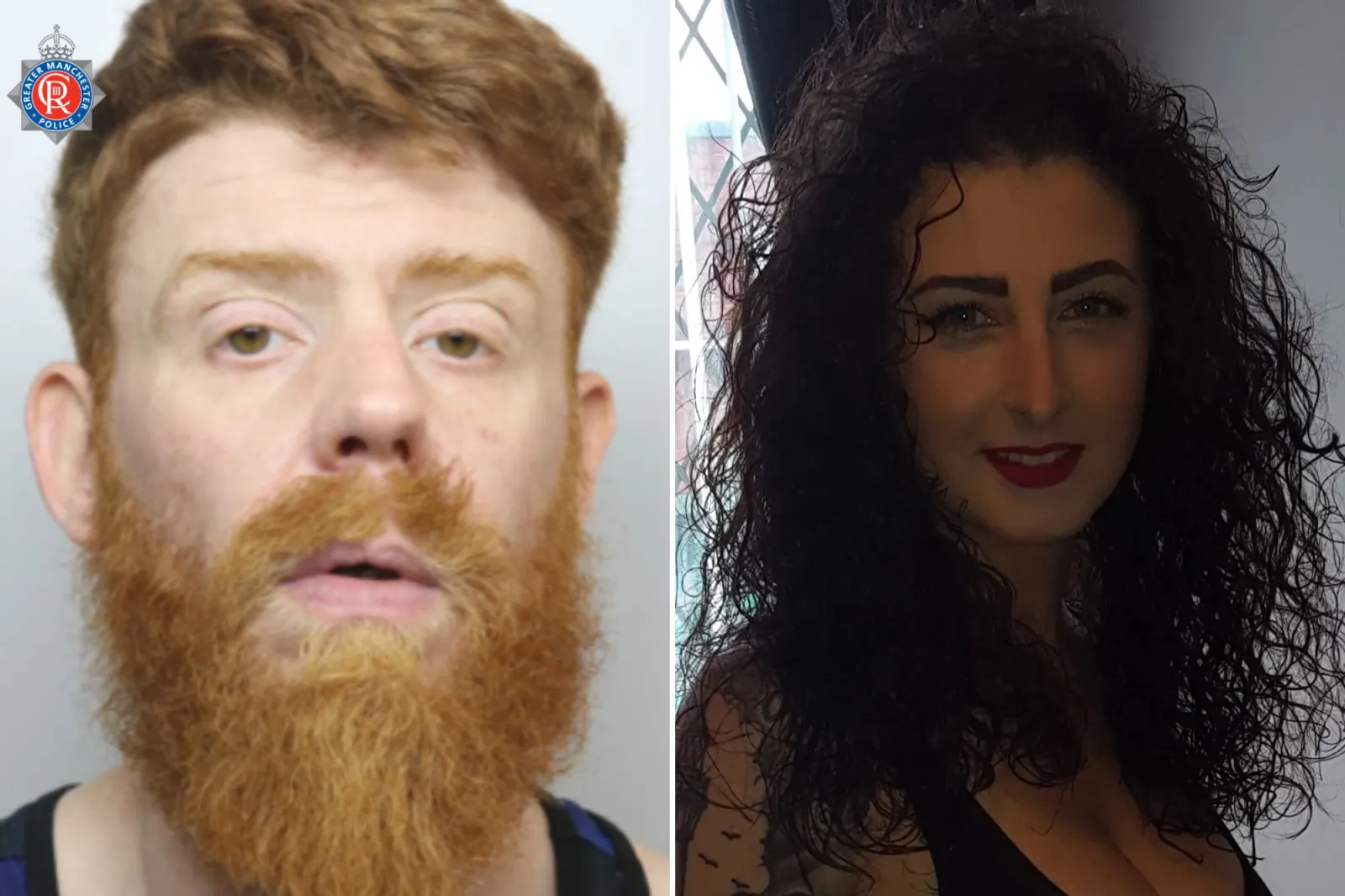
A MAN has been jailed for life after murdering his wife and hiding her under the bed for days. Kyle Howard, 26 and of Tweedale Street in Rochdale, has been sentenced to life in prison with a minimum term of 21 years and six months at Manchester Crown Court.
Howard called police on May 25, saying he had killed Keeley Aspinall, his wife, two days earlier. He told call handlers that he put her under the bed to keep her cool, but now she was starting to smell.
Officers arrived at the home and Howard directed them to Keeley stating, "She's in there. She's underneath the bed." Keeley, 44 and known to friends as Kiki, was found fatally stabbed in the chest under the bed and police arrested Howard on suspicion of murder.
He made several confessions while being processed by police, making comments such as "It's her own f***ing fault", "I'm not denying it" and "I'll admit it, I'm not bothered."
Howard claimed the couple had been drinking when they began to argue on May 23. Keeley was cooking and had a knife in her hand when the pair began to "tussle".
Howard told police during questioning that he had his hands around Keeley's neck, punched her but he could not remember exactly how the knife ended up in Keeley's chest. A Home Office post-mortem found that Keeley had suffered a stab wound to the chest, bruising to her neck consistent with strangulation and various other scratches and bruises on her body.
Throughout the investigation, Manchester Police's Major Incident Team found a pattern of domestic abuse from Howard toward Keeley. Whilst first appearing in court Howard denied murdering Keeley, but in court on November 16, he changed his plea to guilty.
In victim impact statements read out in court, Keeley's family paid tribute to her. Keeley's mother said, "She was bright, talented, funny, caring and full of confidence. She was an excellent dancer, a skilled hairdresser and someone who loved her family deeply. She was particularly close to her grandparents and adored her children. To me, she will always be the lively, outgoing and loving daughter that I knew growing up."
Keeley's sister said, "How do you put into words how dark and painful it is to lose your only sibling, my sister? It's a complete nightmare. I have nightmares about what has happened to her, but I have found that being awake is worse than the actual nightmares I have at night. There is numbness, hurt and confusion. I have a lost, heavy, scared and terrified feeling that will never leave me ever. I have never been so heartbroken in my life. I just wish I could have one more second with my sister, I miss her so much and I'll never get to see her again, that was his choice to take her away. I don't know how my life is going to ever continue the same ever again without her. I feel Keeley's life is always going to be remembered by her murder, this is heartbreaking for us. I can honestly say we as a whole family will never be the same again and that is down to him [Howard]."
Detective Inspector Neil Higginson, the senior investigating officer, said, "Today's sentence reflects the horrific nature of Kyle Howard's actions, but no amount of time in prison can ever undo the pain and loss caused by Keeley's murder. Keeley was killed by the man who was supposed to love her, support her and keep her safe. Instead, Howard subjected her to the ultimate act of violence, taking her life in her own home before concealing her body and leaving her there for days. This was a devastating act of domestic abuse which has robbed a family of a daughter, a relative and a loved one. The consequences of Howard's actions will be felt by those who knew and loved Keeley for the rest of their lives. Throughout our investigation, Keeley's family have shown immense strength, dignity and courage in the face of unimaginable grief. Despite enduring the most devastating of losses, they have remained determined to ensure Keeley received the justice she deserved. Our thoughts remain firmly with them as they continue to navigate life without Keeley. We hope today's sentence provides some measure of justice and demonstrates that violence against women and girls will never be tolerated."
Background on domestic homicide investigations in Greater Manchester
Domestic homicide cases involve complex police investigations handled by specialist units such as the Major Incident Team mentioned in this case. Greater Manchester Police operate across multiple districts including Rochdale, responding to reports of serious crimes and managing emergency calls. When emergency services receive reports of sudden deaths or suspicious circumstances, forensic teams and Home Office pathologists conduct detailed examinations to establish the exact cause of death, including post-mortem analyses for stab wounds and signs of strangulation.
Court proceedings for serious offences in the United Kingdom take place in Crown Courts, such as Manchester Crown Court, where defendants face charges including murder. Trials and sentencing hearings involve judges determining minimum terms for life sentences based on statutory guidelines and aggravating factors. Victim personal statements are a formal part of the British criminal justice process, allowing bereaved families to express the emotional and psychological impact of crimes before the court passes sentence.
Judicial process and sentencing guidelines for murder
Under English law, a conviction for murder carries a mandatory life sentence, with judges setting a minimum term that the offender must serve in prison before becoming eligible for parole. Defendants may enter initial not-guilty pleas during early court appearances before changing their pleas to guilty at later stages of the legal process. Changing a plea to guilty can occur as a case proceeds towards trial, though the mandatory nature of a life sentence for murder means the primary judicial decision involves determining the length of the minimum custodial term.
Law enforcement agencies across the United Kingdom maintain specialized protocols for supporting victims of domestic abuse and investigating violent crimes against women and girls. Multi-agency safeguarding arrangements and police investigative procedures aim to uncover patterns of controlling or abusive behavior during criminal inquiries. Support services and victim liaison officers work alongside investigators to assist families through the trauma of court cases and public inquiries following violent tragedies.