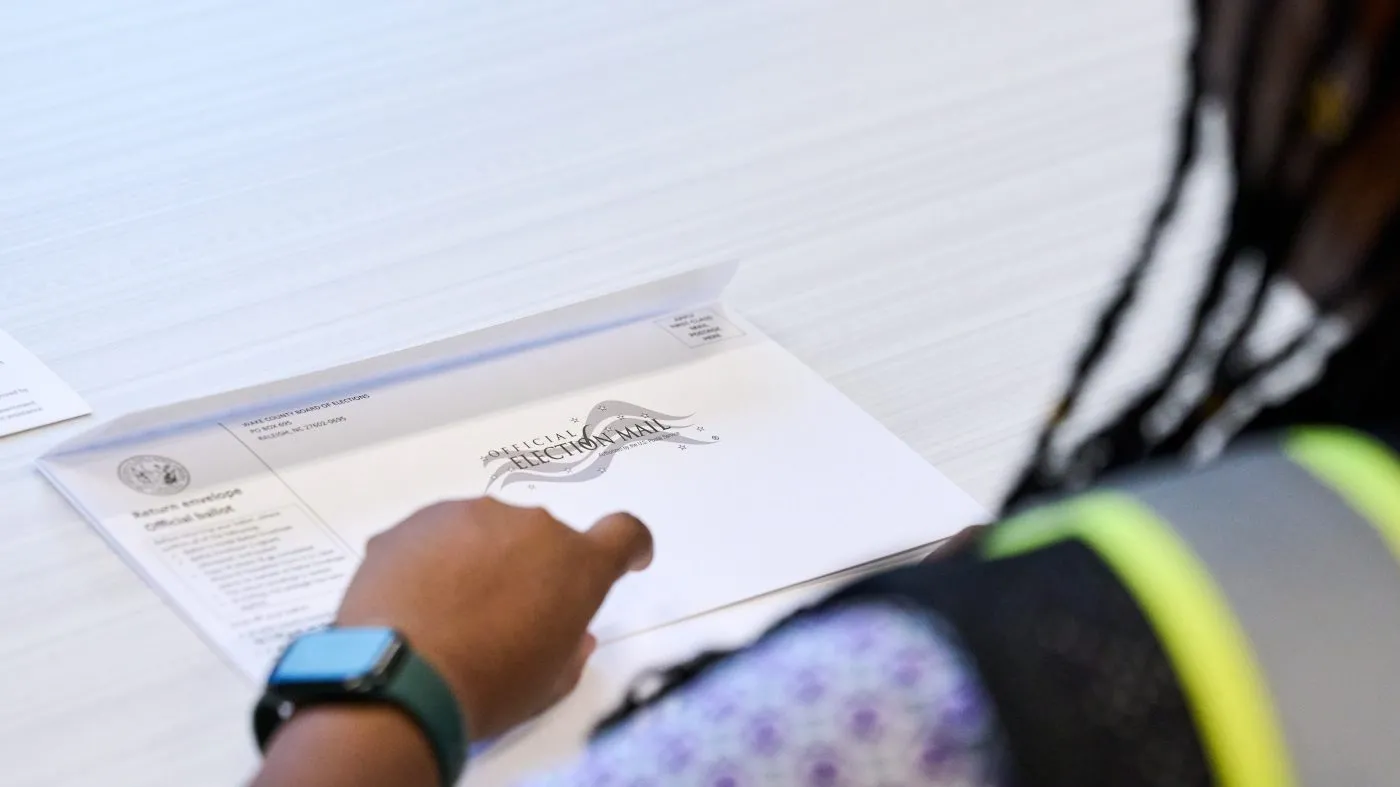
U.S. District Judge David Carter on Wednesday denied the Justice Department's request to separate roughly 20,000 mail ballots in California that the Trump administration claims are likely cast by non-citizens.
Carter ruled the state may continue to process the contested ballots like any others, stating the request "violates longstanding constitutional principles mandating that states have control over their elections."
He warned that granting the last-minute relief could allow either side to create chaos for political ends, adding that "over 20,000 registered Californians would potentially lose the right that generations of Americans have fought to preserve."
California has questioned the accuracy of the administration's list and says it is not required to verify each voter's citizenship. The state noted it cannot feasibly separate a ballot once processed, and such a ballot would be counted even if later deemed fraudulent. With Election Day on Tuesday, hundreds of thousands of ballots have already been returned.
The Justice Department, seeking a faster outcome, attempted to bypass Carter and go directly to the U.S. Court of Appeals for the 9th Circuit. That appeals court declined the request after agreeing to hear the case over the weekend.
Carter, a Clinton appointee, became the latest judge to reject the effort, describing the administration's bid as something that would "wreak havoc." He added, "Eroded trust in our democracy is irreparable," and warned that once a vote is segregated, lasting harm occurs.
The Justice Department had sued California earlier this month, alleging the state was sending about 20,000 likely non-citizen ballots for the midterm elections. California's universal mail-in voting program sends ballots to all active voters.
California and Los Angeles County attorneys criticized the administration for not revealing the source of its list, arguing they are not obligated to prove citizenship merely because an administration raises concerns, especially given the tight timeline.
The Hill has reached out to the Justice Department for comment.