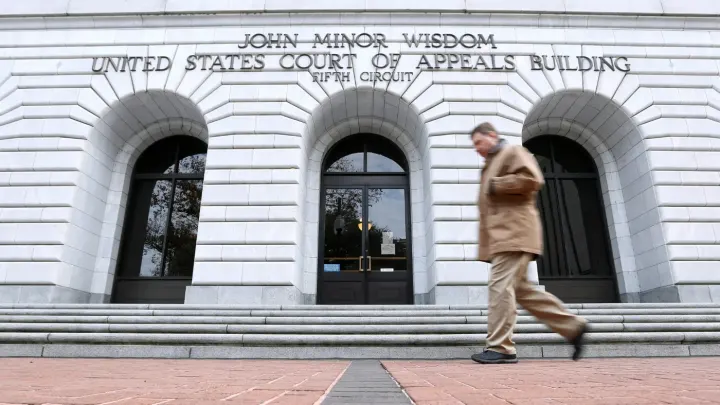
Trump Says He Will Defer to Courts and Gov.-Elect Over Lead Detonation
President Trump stated on Monday that he would not move forward with a controlled demolition of lead-containing munitions at the Iowa Army Ammunition Plant if Gov.-elect Rob Sand or the Eighth Circuit Court of Appeals objected. Trump added that the decision would be fully subject to the incoming governor's agreement.
Gov.-Elect Sand Calls for Federal Decision
Rob Sand released a statement saying, "The Administration should make this decision." He urged that everyday Iowans deserve to know how Middletown came to this situation and why the administration believes the detonation is the best path forward.
Lead Exposure Risks for Iowans
Local residents near Middletown could face exposure to lead, a neurotoxic metal harmful to children. Lead can damage the brain, lower IQ, cause learning and behavioral problems, and in rare cases lead to seizures, coma, or death. Adults may experience decreased kidney function, heart issues, and fertility problems.
Environmental Impact and Expert Views
Professor Alex Souchen of the University of Guelph noted that a controlled explosion may limit toxic byproducts but will still produce a debris cloud. He questioned how the issue was only now discovered and the protocols in place for long-term storage.
Professor Peter DeCarlo of Johns Hopkins University warned that lead dust, once airborne, remains for a long time and can settle on the ground, posing a risk to children who play on floors. He emphasized that a controlled detonation allows some control over wind direction and weather conditions.
Army's Detonation Timeline and Legal Challenges
On November 15, the Army issued a public advisory that it planned to detonate degraded lead azide in five days, creating a plume of lead-containing particles. The detonation was moved first to Monday and later to Wednesday. The appeals court declined to halt the detonation, denying an emergency request from environmental groups.
Alternative Chemical Neutralization Option Canceled
The Army had considered chemically treating the munitions instead of detonating them, which could process the stockpile in 22 days or less. However, the company MuniRem Environmental, hired to perform the treatment, said the contract was later canceled for safety reasons. The Army's environmental analysis eliminated chemical neutralization because it would require opening drums and agitating shock-sensitive crystals, creating an extreme risk of accidental detonation.
Uncertain Evacuation and Fallout Plans
Despite knowing about the unstable material for months, the Army has not released an evacuation plan or a map of potential fallout. It has admitted that a plume containing toxic lead could travel up to 20 miles, while the Iowa Environmental Council estimates up to 100 miles. Questions remain about the impact on nearby farms, livestock, vulnerable individuals, and military personnel.