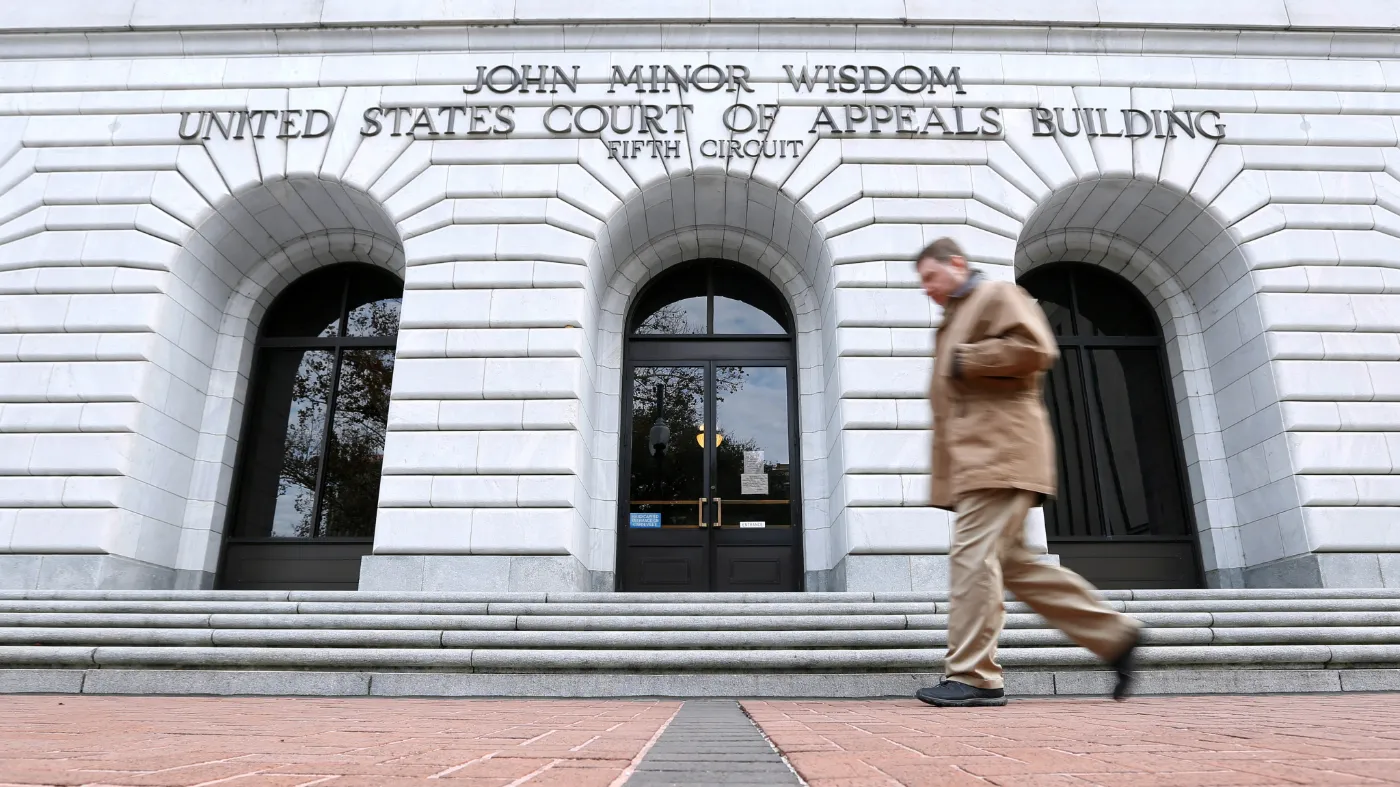
A divided federal appeals court on Friday struck down a law that requires employers to provide accommodations to pregnant women, ruling that Congress violated the Constitution by passing it using pandemic-era proxy voting. The New Orleans-based 5th U.S. Circuit Court of Appeals voted 9-8 against the legislation, stating that voting by proxy went against the Constitution's Quorum Clause.
The court explained that text, context, original understanding, and unbroken historical application all indicate that members of Congress must be present for quorum purposes. The Pregnant Workers Fairness Act (PWFA) was approved as part of a spending package in December 2022. The law protects accommodations for pregnant workers such as bathroom and water breaks, relief from heavy lifting, and time off for prenatal appointments.
Inimai Chettiar, president of A Better Balance, a women's legal advocacy group that wrote an amicus brief in favor of upholding the law, said in a statement that the 5th Circuit has put the health, livelihoods, and economic security of millions of American women and their families at risk. Chettiar added that this decision could force countless women out of the workforce at a moment made even worse by the fact that the administration is already poised to gut the regulations governing the law.
The appeals court declared the entire $1.7 trillion government funding bill, which was passed during the peak of the pandemic, unconstitutional. At the time, lawmakers authorized remote and proxy votes as a safety precaution. The ruling bars the federal government from enforcing the law against the State of Texas as an employer.
Because the 5th Circuit covers Texas, Louisiana and Mississippi, advocates said employers in all three states will try to use the ruling to fight claims that they did not properly accommodate pregnant workers. Texas Attorney General Ken Paxton, who earlier this month lost his Senate bid, brought the case in 2023 to block the PWFA from being enforced in Texas.
The dissenting judges questioned why the ruling only applied to the PWFA instead of the entire legislation. They noted that no explanation was offered to explain why, if the entirety of the statute was unconstitutionally passed, this court's judgment should be limited only to one small sliver of the multitrillion-dollar bill. The dissenters also pointed out that no members of Congress objected to the lack of a quorum, and that the State of Texas accepted the vast majority of the funds that Congress appropriated to it before contending that the portion providing protections for pregnant women violates the Quorum Clause.
Background on the Pregnant Workers Fairness Act
The Pregnant Workers Fairness Act represents a major federal effort to mandate workplace modifications for expectant mothers across the United States. Before its enactment, millions of female employees often faced difficult choices between their health and their jobs when employers denied basic adjustments like resting seating or hydration breaks. Advocacy groups spent years pushing for federal legislation to bridge gaps left by existing civil rights laws, which frequently required pregnant individuals to prove that non-pregnant workers with similar limitations received better treatment.
The Role of the 5th U.S. Circuit Court of Appeals
The 5th U.S. Circuit Court of Appeals handles federal legal challenges originating from district courts within Texas, Louisiana, and Mississippi. Known for its conservative judicial philosophy, the court frequently hears high-profile constitutional challenges regarding federal authority and legislative procedures. The 9-8 vote highlights deep divisions among the judges concerning how historical constitutional doctrines apply to modern legislative practices adopted during public health emergencies.
Implications for Employers and Workers
Legal experts and labor advocates are assessing how the ruling affects ongoing employment practices across the three affected states. While the immediate injunction applies directly to the State of Texas as an employer, private companies within the 5th Circuit jurisdiction may cite the precedent in future employment disputes. Meanwhile, federal agencies and legal defense organizations continue to review the broader consequences for congressional funding bills passed via remote procedures during recent years.